 Visit Turkey
 Visit Vietnam
 Visit Cambodia
 Visit Dubai
 Visit Jordan


Amman Guide 2026 - Things to Do and Visitor Tips
Plan your trip with this Amman travel guide covering top sights, food, neighborhoods, transport, day trips, where to stay, and practical visitor tips.



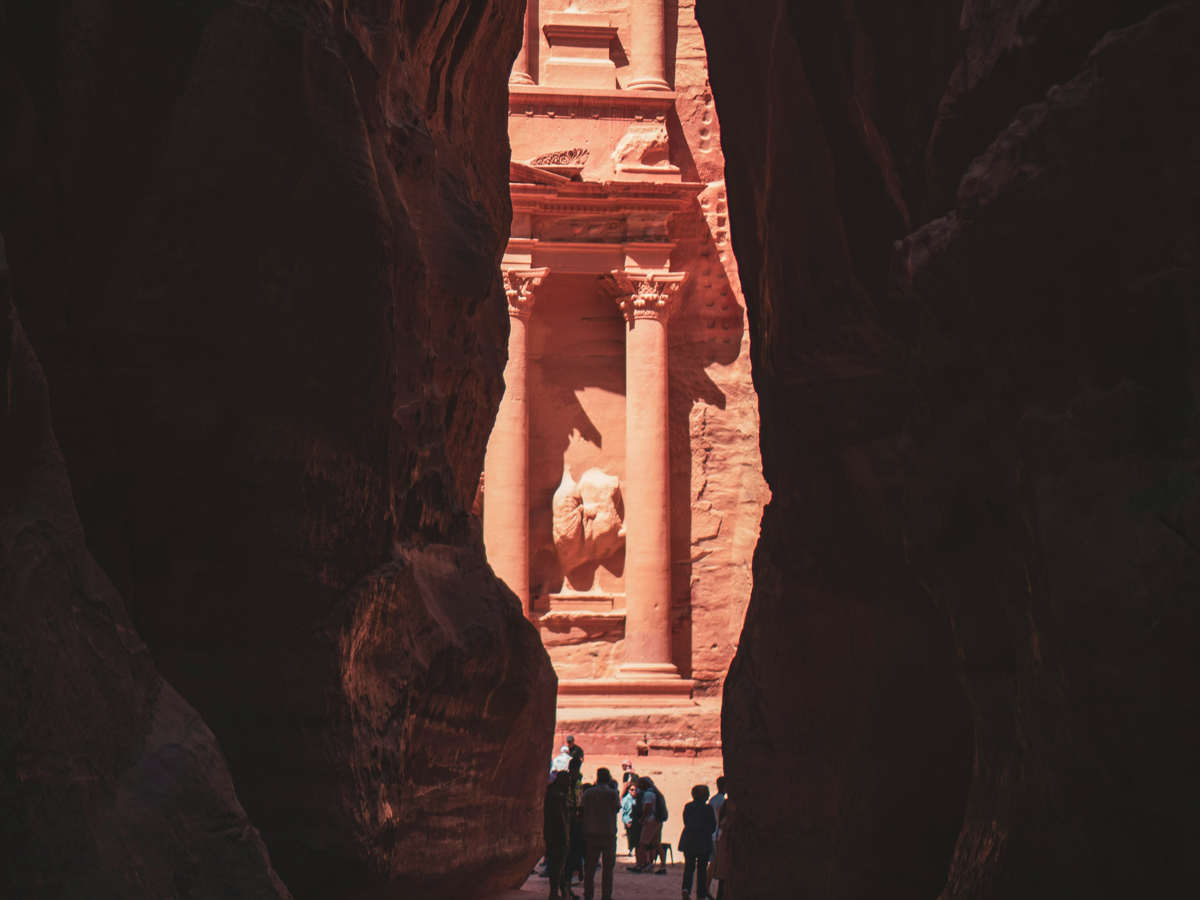
The Siq Petra is the narrow sandstone passage that leads visitors from the outer approach of Petra toward Al-Khazneh, the Treasury. For many travelers, it is remembered for the final moment when the Treasury appears between the rock walls, but concentrating only on that view means missing much of what makes the Siq important.
Along its winding route are traces of Nabataean water engineering, ancient paving, religious niches, sacred stones, and evidence of how Petra's inhabitants controlled water and movement through the city. The gorge itself is natural, while many of the features within it were engineered or adapted by the Nabataeans.
Knowing what to look for turns the walk from an entrance route into one of Petra's most interesting archaeological experiences.
The Siq is a natural sandstone gorge forming the main traditional entrance into ancient Petra. Official Petra information describes it as just over 1.2 km long, with some sections narrowing to approximately 3 meters before the passage finally opens in front of the Treasury.
The Nabataeans did not carve the entire canyon out of solid rock. Natural geological processes created the passage, but the Nabataeans adapted it extensively. They constructed water channels, improved the road, cut religious features into the walls, and developed flood-management systems around its entrance.
That combination of natural geography and human engineering made the Siq useful on several levels. It served as an approach to the city, carried water toward Petra, helped organize movement, and created an impressive entrance for residents, merchants, pilgrims, and visitors.
Its importance also continued after the Nabataean period. The official Petra site notes that the Nabataean road through the Siq was later repaved during Roman rule following the annexation of the Nabataean kingdom in AD 106.
One of the easiest mistakes for first-time visitors is assuming that the Siq begins as soon as they leave Petra Visitor Center.
It does not.
The first part of the route passes through Bab Al-Siq, meaning the gateway or entrance to the Siq. This wider approach begins roughly 400 meters from the Visitor Center area and contains several archaeological monuments before the narrow gorge itself begins.
Among the first important features are the Djinn Blocks, large square monuments carved from the sandstone. Farther along stands the Obelisk Tomb and Bab el-Siq Triclinium, where funerary architecture provides an early introduction to the Nabataean landscape.
This distinction matters when planning walking time. The commonly quoted 1.2 km refers to the Siq itself, not the entire route from Petra Visitor Center to the Treasury.
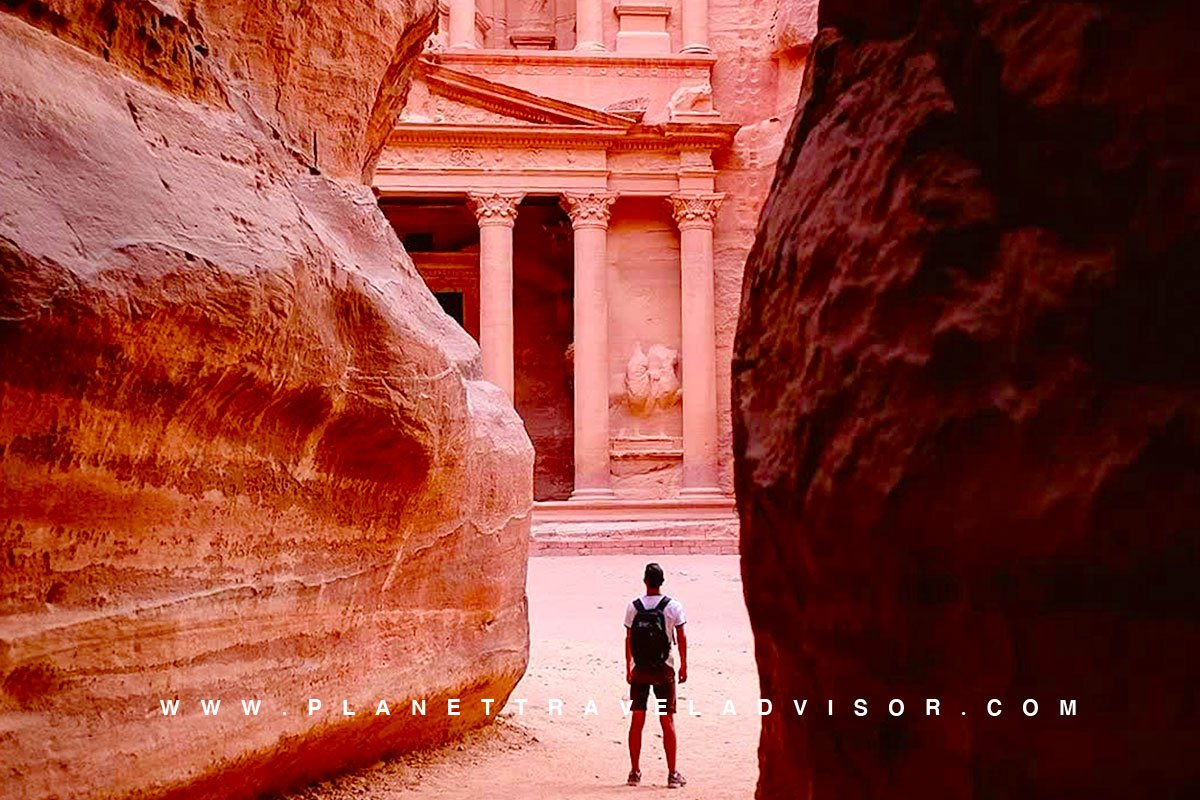
The best way to experience the Siq is not to rush toward Al-Khazneh. Some of its most informative details are easy to miss unless you know where to look.
Before entering the narrowest part of the gorge, look for evidence of Petra's flood-control system.
The Nabataeans built a dam and cut a tunnel through the rock to redirect floodwater away from the Siq and toward Wadi Al-Mudhlim. The official Petra trail describes the rock-cut diversion tunnel as approximately 88 meters long. A modern dam constructed in 1964 stands over the earlier Nabataean structure.
This was not simply an architectural feature. Seasonal floods could make a confined gorge dangerous, so controlling runoff was essential to protecting both the route and the city beyond it.
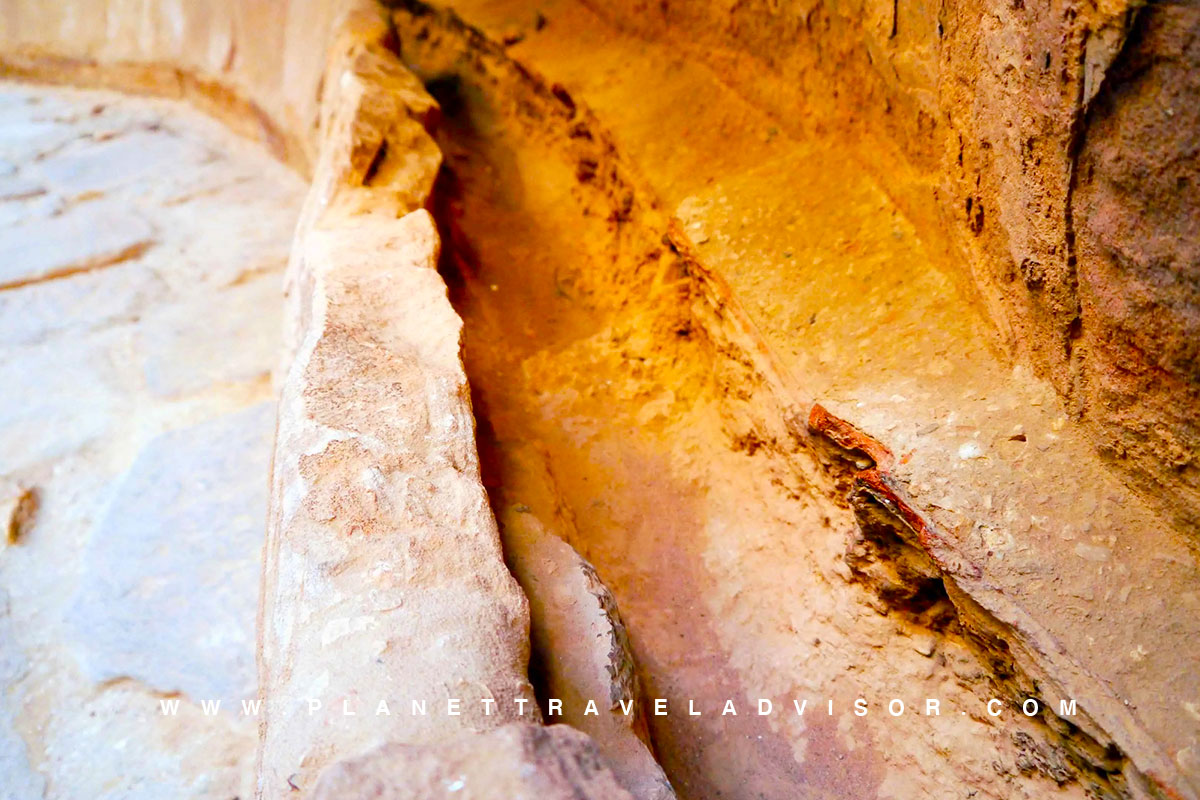
Two water systems can still be identified along the sides of the Siq.
On the northern side, a clay pipeline transported fresh water from springs around Wadi Musa toward Petra. On the southern side, the Nabataeans carved a channel into the rock and covered it with stone.
They are easy to overlook because they run beside one of Petra's most visually dramatic landscapes, but they reveal something fundamental about the city: managing water was essential to sustaining life in this arid environment.
Parts of the old paved road remain visible underfoot. The route once carried residents, merchants, travelers, and pilgrims into Petra, making the modern visitor's walk part of an ancient circulation route.
A monumental arch also once crossed the entrance of the Siq. It no longer survives intact; official Petra information records that it collapsed in 1895.
Knowing that an architectural gateway once marked this transition helps explain why the Siq was more than a convenient gap through the mountains. The approach into Petra was deliberately monumental.
Look closely at the walls rather than focusing only on the sandstone formations.
Small niches and baetyls, or sacred stones associated with Nabataean religious practices, appear along the passage. Petra's official interpretation notes that these sacred features were connected with protecting people entering and leaving the city.
Carved features elsewhere along the route add another layer to the walk. Some visitors pass them without realizing they are ancient rather than natural markings.
A guide can be particularly helpful here because many of these details are subtle.
The Siq exists because the sandstone massif naturally fractured, creating the narrow passage later used and modified by the Nabataeans.
Its walls change constantly as you walk. Some sections become tight enough to restrict the view ahead, while others widen and allow more light to reach the rock.
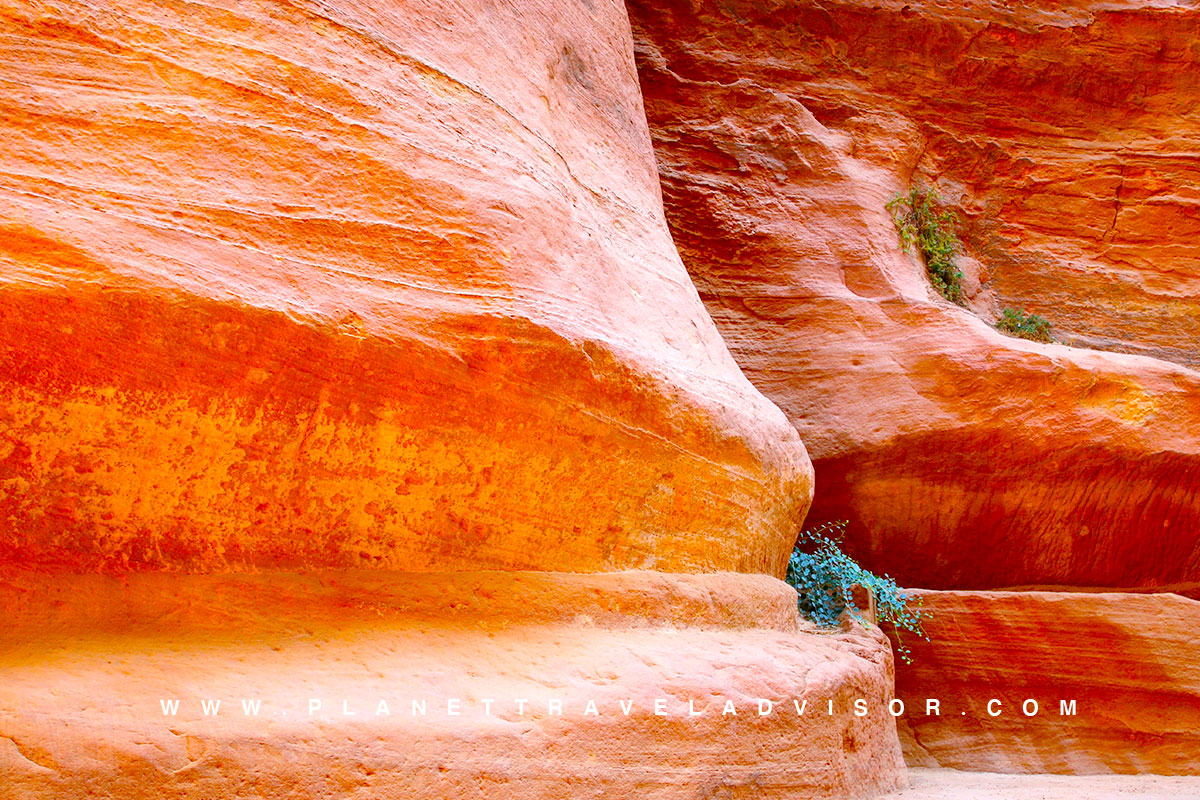
The sandstone itself also shifts in appearance. Bands, weathered surfaces, irregular formations, and changing light produce different shades throughout the day. Areas in deep shadow may appear muted, while exposed sections reveal warmer reds, oranges, creams, and pinks.
This changing geometry is part of what makes the Siq so effective as an approach to Petra. You rarely see very far ahead, and each curve alters what is visible.
Water is one of the keys to understanding Petra.
The city's location required its inhabitants to manage a difficult combination: water could be scarce for long periods, yet intense rainfall could produce dangerous runoff through the surrounding valleys.
The Nabataeans responded with an interconnected system involving channels, pipes, dams, cisterns, reservoirs, and diversion routes. Research into Petra's hydraulic engineering shows how water captured from springs and seasonal runoff was controlled and distributed through the settlement.
The Siq formed part of that larger system.
The channels visible along its sides demonstrate how carefully the Nabataeans integrated infrastructure into the landscape. Water had to reach the urban center while destructive floodwater needed to be redirected or controlled.
Once you recognize this, the Siq looks different. What initially appears to be a spectacular natural canyon also functions as evidence of how Petra supported a substantial ancient population in a challenging environment.
Al-Khazneh remains largely concealed during most of the walk.
As the final section narrows and bends, small portions of the Treasury begin to appear between the sandstone walls. The façade gradually becomes larger until the gorge opens into the space directly in front of it.
The setting is one reason the first view is so memorable. The architecture is framed by irregular natural rock rather than revealed across an open landscape.
The Treasury itself reaches about 39.5 meters high, according to Petra's official Main Trail information. Its façade reflects strong Hellenistic architectural influences, while archaeological evidence indicates that the monument had a funerary function rather than storing treasure as its modern name suggests.
For this guide, however, the important point is not to turn the section into a complete Treasury history. The experience is about understanding how the Siq controls the approach and the first view of Petra's best-known façade.
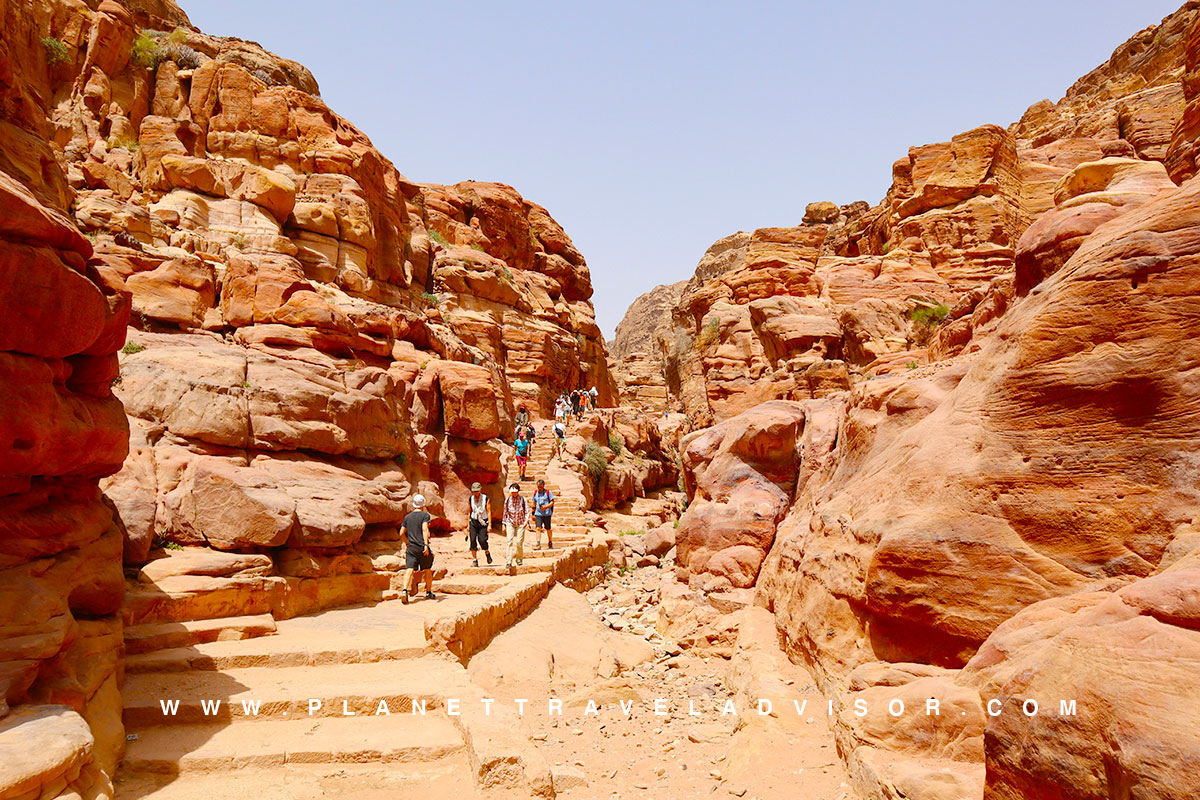
The Siq itself runs for just over 1.2 km, but that figure should not be confused with the total distance visitors walk inside Petra.
You first travel through Bab Al-Siq before reaching the gorge. After the Treasury, Petra continues considerably farther.
The official Main Trail runs from Petra Visitor Center to Qasr al-Bint and covers 3.9 km one way. The tourism authority estimates a non-stop walking time of around 1 hour 30 minutes to 1 hour 45 minutes for that full route.
Your actual pace through the Siq should be slower if you want to understand it.
Allow additional time for:
Archaeological details
Water channels
Photography
Short stops
Guide explanations
Crowds
Different mobility levels
Treating the Siq simply as the quickest path to the Treasury means passing some of Petra's most revealing details without noticing them.
Early morning is generally the most practical time for visitors who want a quieter and more comfortable walk.
Starting near opening time can mean fewer people in the narrow passage, especially before larger groups arrive. It also gives you more time to continue beyond the Treasury rather than making the Siq your only experience of Petra.
Season matters too. Petra's official visitor information identifies spring, from March to May, and autumn, from September to November, as particularly suitable periods because of milder conditions.
Light inside the Siq is less predictable than in an open landscape. High walls create strong areas of shade, while direct sunlight may illuminate individual rock surfaces for relatively short periods.
For photographers, that means there is no single perfect moment for every part of the gorge. Early visits are often useful for fewer people, while changing daylight can reveal different sandstone textures as the day progresses.
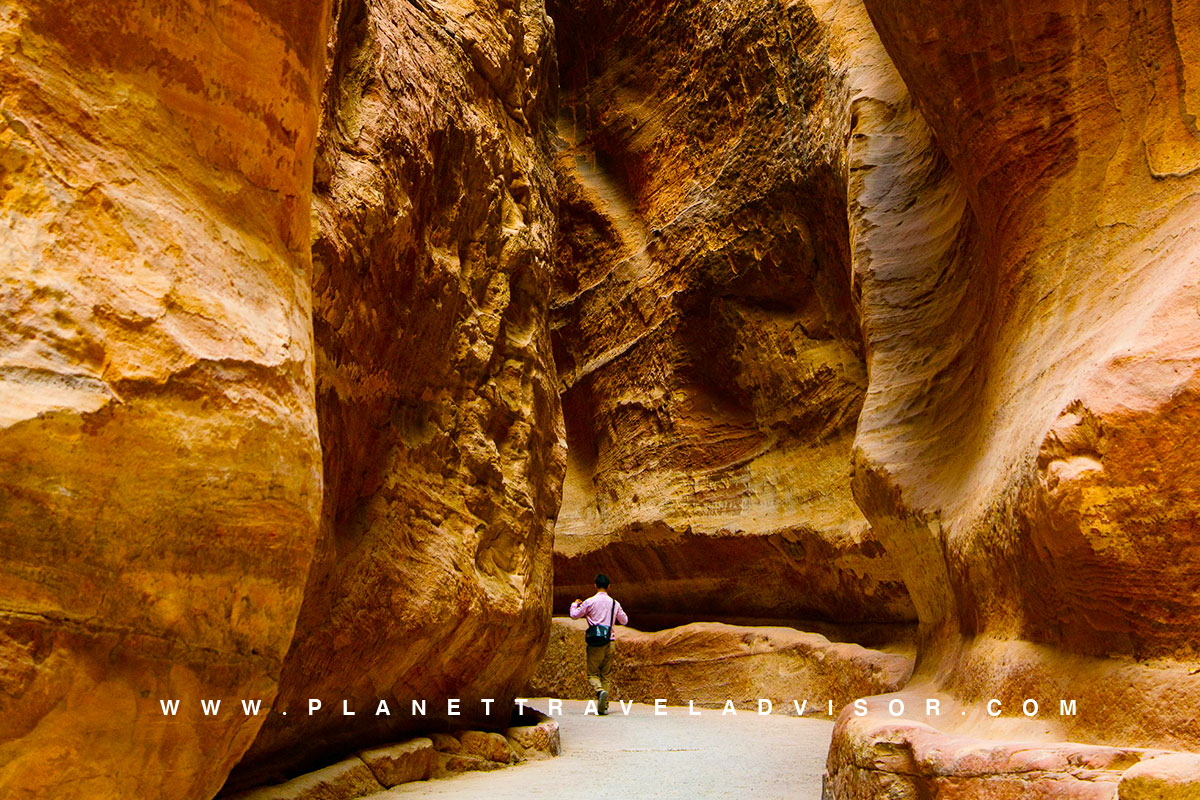
The Treasury reveal may be the most photographed view, but the Siq provides many other worthwhile subjects.
Look for curves where the canyon walls overlap, narrow openings that emphasize scale, details in the ancient water channels, surviving paving, rock textures, and people silhouetted against brighter sections of the passage.
When approaching the Treasury, avoid waiting until you have completely exited the gorge to take every photograph. The composition changes continuously during the last section, and several points provide different amounts of the Treasury framed between the sandstone walls.
Be considerate when stopping. The Siq is a working pedestrian route, and narrow sections can become congested when people stand in the middle of the passage for photographs.
The Siq also forms the approach used during Petra by Night, but the nighttime experience is very different from visiting during daylight.
As of September 2026, the official Petra by Night schedule runs Sunday through Thursday from 8:30 PM to 10:30 PM. The current group-experience price is 30 JOD per person, with tickets sold on-site at Petra Visitor Center. Online booking is currently unavailable.
Visitors follow the illuminated Siq toward the Treasury before the evening program takes place in front of Al-Khazneh.
Night should not replace a daytime walk if you are interested in archaeology. In daylight, you can properly see the water channels, carvings, ancient paving, sandstone formations, and other details along the walls.
Petra by Night works better as a separate atmospheric experience.
Current official information also states that Petra by Night requires a separate ticket and is not included with standard daytime admission or the Jordan Pass. A valid daytime ticket is required to attend.
Because schedules and prices may change, confirm them again close to your travel date.
You do not buy a separate daytime ticket just for the Siq. It forms part of the Petra archaeological site.
As of September 2026, official admission prices list a one-day ticket at 50 JOD for accommodated visitors, while a one-day ticket for non-accommodated visitors in Jordan is listed at 90 JOD. Two- and three-day accommodated visitor tickets are currently 55 and 60 JOD respectively.
Opening hours change seasonally.
For March 2 to October 1, 2026, Petra Archaeological Site and Visitor Center operate from 6:00 AM to 6:00 PM. From October 2, 2026 to March 1, 2027, the listed winter hours are 6:30 AM to 5:00 PM.
Always verify current prices and hours before visiting because both can change.
Comfort matters more than dressing specifically for the Siq.
Wear sturdy walking shoes because Petra involves considerable walking and sections of historic or uneven surfaces. Carry drinking water, use sun protection, and choose clothing suited to the season.
The official Petra visitor guidance also recommends comfortable clothes, strong walking shoes, a hat, sunscreen, and enough water.
A light layer can be useful during cooler periods, particularly if you start early or remain for evening activities.
Petra's official Siq listing currently describes the route as wheelchair accessible. However, that label should not be interpreted as meaning every part of the experience is effortless for every traveler.
Historic surfaces, distance, gradients, crowds, and continuing farther into Petra can all affect mobility.
Official Petra information also lists club-car services between the Visitor Center and Treasury, while Petra by Night notes that wheelchair users may require assistance because of uneven terrain.
Travelers with limited mobility should therefore check current assistance arrangements directly before arrival rather than relying only on a general accessibility label.
The Siq is a natural drainage corridor, which explains why Nabataean engineers invested so much effort in controlling water around its entrance.
Heavy rainfall can therefore affect access.
If unstable weather is forecast, follow instructions from Petra Archaeological Park staff and local authorities. Do not enter restricted areas or ignore temporary closures.
The ancient diversion tunnel and dam are reminders that flash-water management has been an important part of Petra's landscape for more than two thousand years.
Reaching the Treasury does not mean you have reached the end of Petra.
Continue beyond Al-Khazneh and the landscape opens toward the Street of Facades, followed by important monuments and areas including the Theater, Royal Tombs, Colonnaded Street, Great Temple, and Qasr al-Bint.
Travelers with enough time can also continue toward Ad-Deir, the Monastery, although reaching it requires considerably more walking and climbing.
This is why a full Petra visit needs more planning than the relatively short distance of the Siq suggests. The gorge is the entrance to the experience, not the complete archaeological site.
Petra works particularly well as part of a broader Jordan itinerary rather than as an isolated stop.
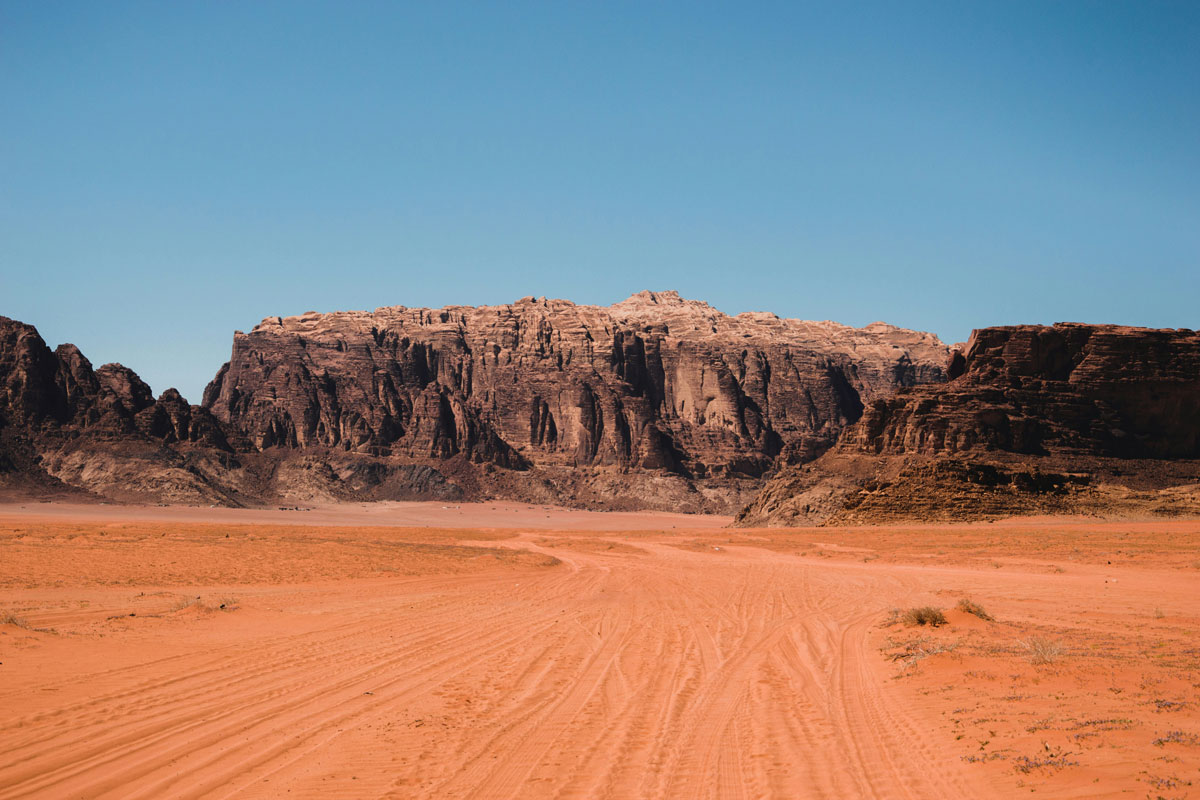
Many itineraries combine the archaeological city with Wadi Rum, where the landscape and desert experience contrast sharply with Petra, followed by destinations such as Amman, the Dead Sea, or other historical sites across Jordan.
Travelers who prefer to arrange these connections as one itinerary can compare Jordan tours that include Petra alongside other major destinations rather than organizing every transfer separately.
The amount of time you have should guide the itinerary. Petra rewards at least one substantial day, while travelers interested in longer trails, quieter exploration, or a second visit through the Siq may benefit from staying longer.
The Siq deserves more attention than simply being described as the road to the Treasury. Its narrow sandstone walls preserve evidence of Petra's natural geology, Nabataean religion, road building, hydraulic engineering, and careful management of water.
Slow down enough to notice the channels, surviving paving, carved niches, and changing rock formations before reaching Al-Khazneh. The Treasury provides the famous final view, but much of the story has already unfolded along the walk.
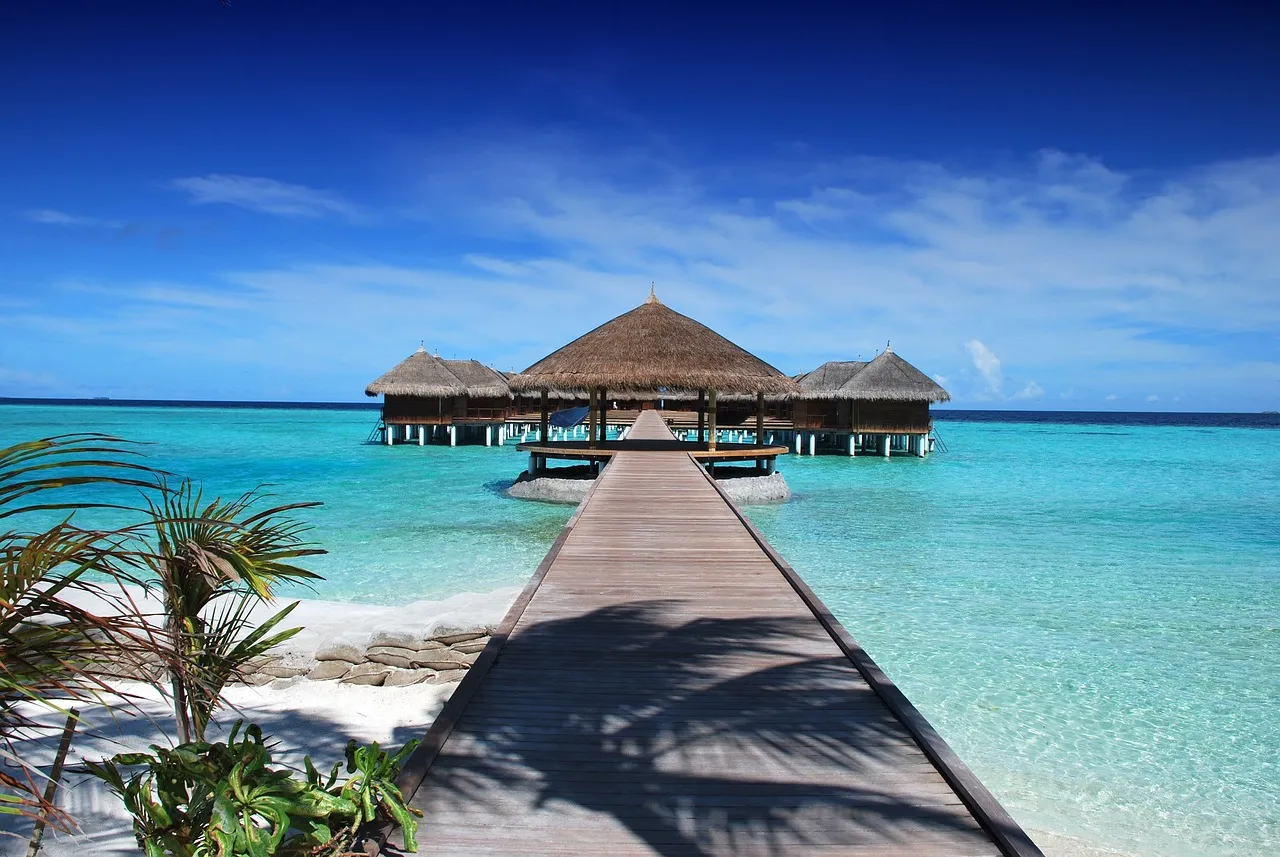
A curated list of the most popular travel packages based on different destinations.
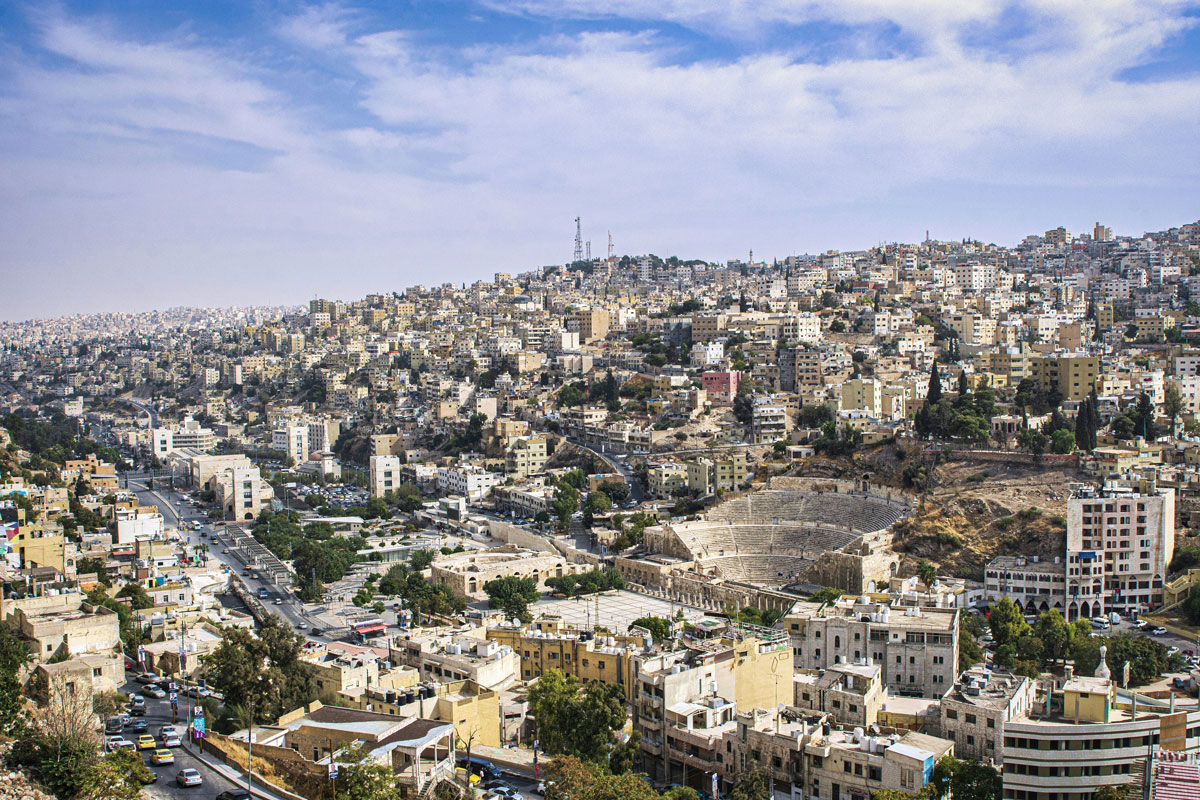
Plan your trip with this Amman travel guide covering top sights, food, neighborhoods, transport, day trips, where to stay, and practical visitor tips.
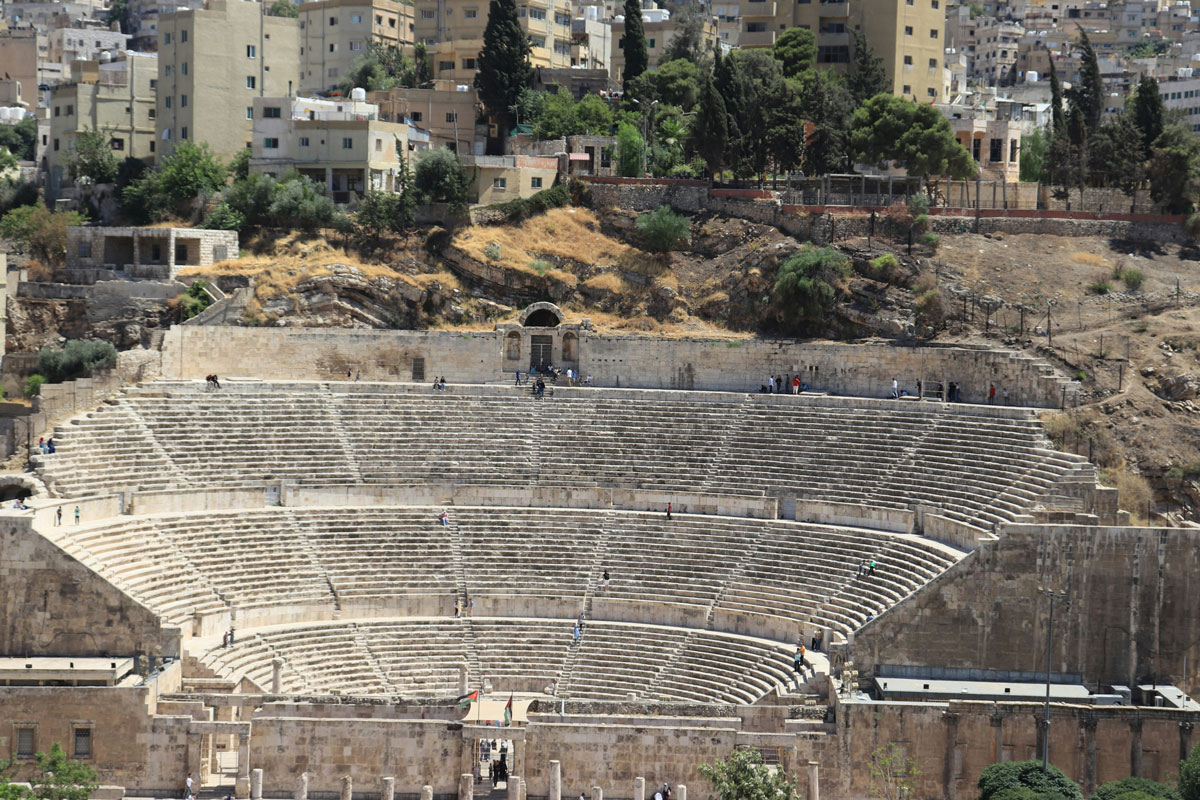
Plan your Amman Roman Theatre visit with current ticket prices, opening hours, Jordan Pass details, history, nearby sights, and practical travel tips.
Explore the best souqs in Amman, from Al-Balad and the Gold Souq to Souq Jara, with shopping tips, souvenirs, timing, and nearby sights.
Explore Amman Citadel with practical tips on history, top sights, tickets, opening hours, Jordan Pass access, timing, transport, and nearby attractions.
Explore the Jordan Archaeological Museum in Amman, including top artifacts, tickets, Jordan Pass, opening hours, Citadel tips, and visitor advice.
Plan your visit to the Baptism Site in Jordan with its biblical history, archaeology, tickets, opening hours, Jordan Pass details, and nearby stops.
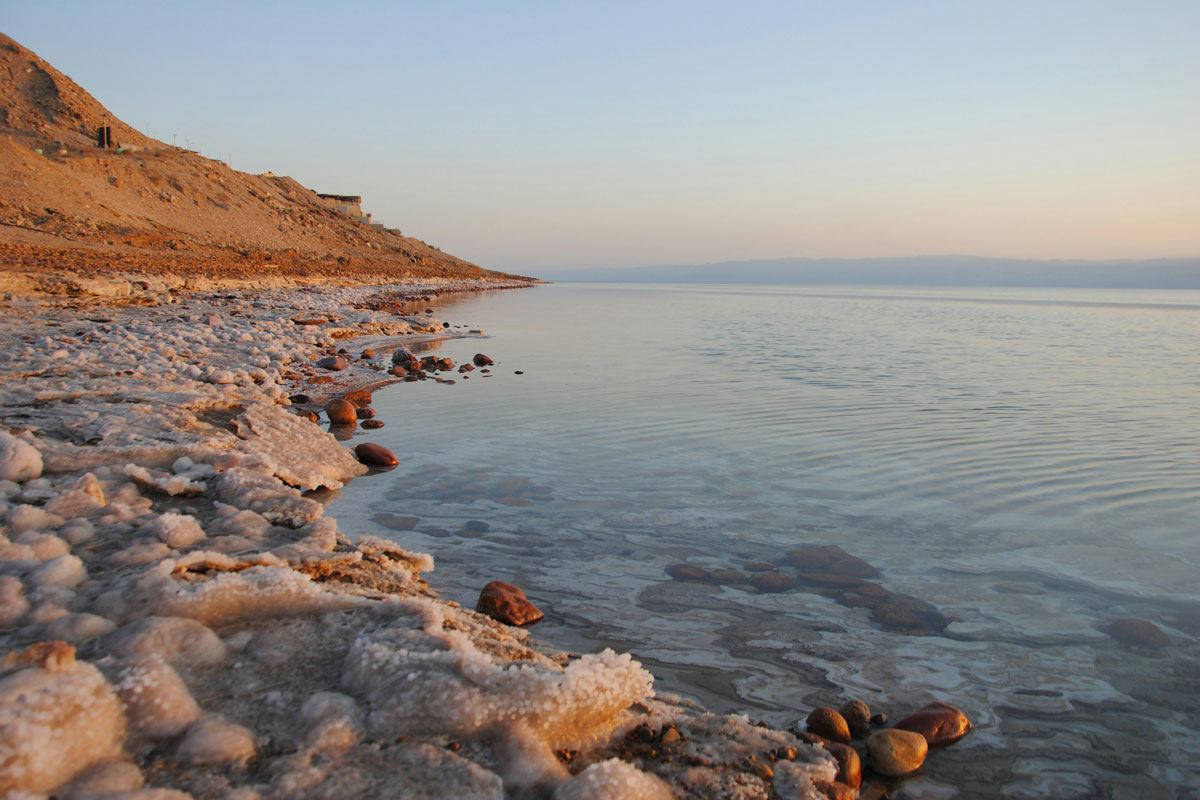
Plan your Dead Sea Jordan visit with tips on floating, beaches, resorts, transport, best times, safety, nearby attractions, and how long to stay.
Explore Downtown Amman with tips on the Roman Theatre, souks, local food, walking routes, the Citadel, safety, transport, and the best time to visit.
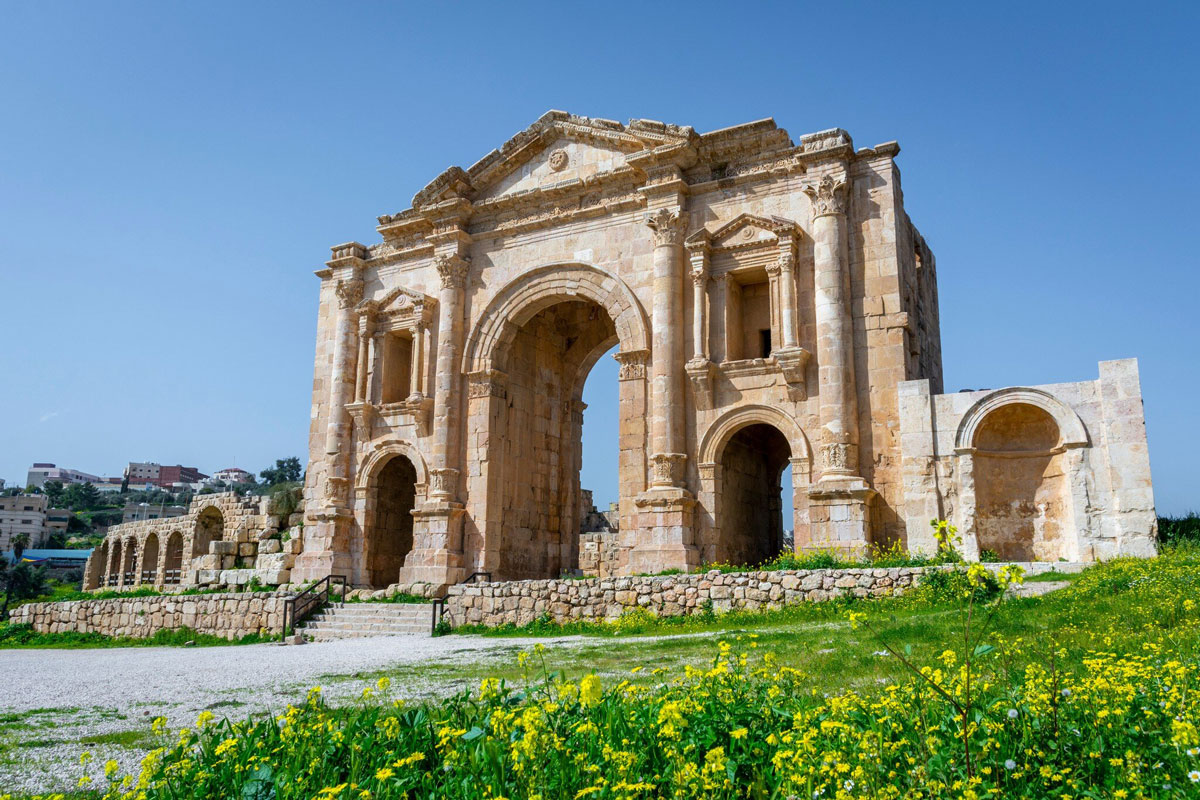
Plan your visit to Hadrian’s Arch Jerash with its history, architecture, tickets, opening hours, Jordan Pass details, nearby sites, and travel tips.
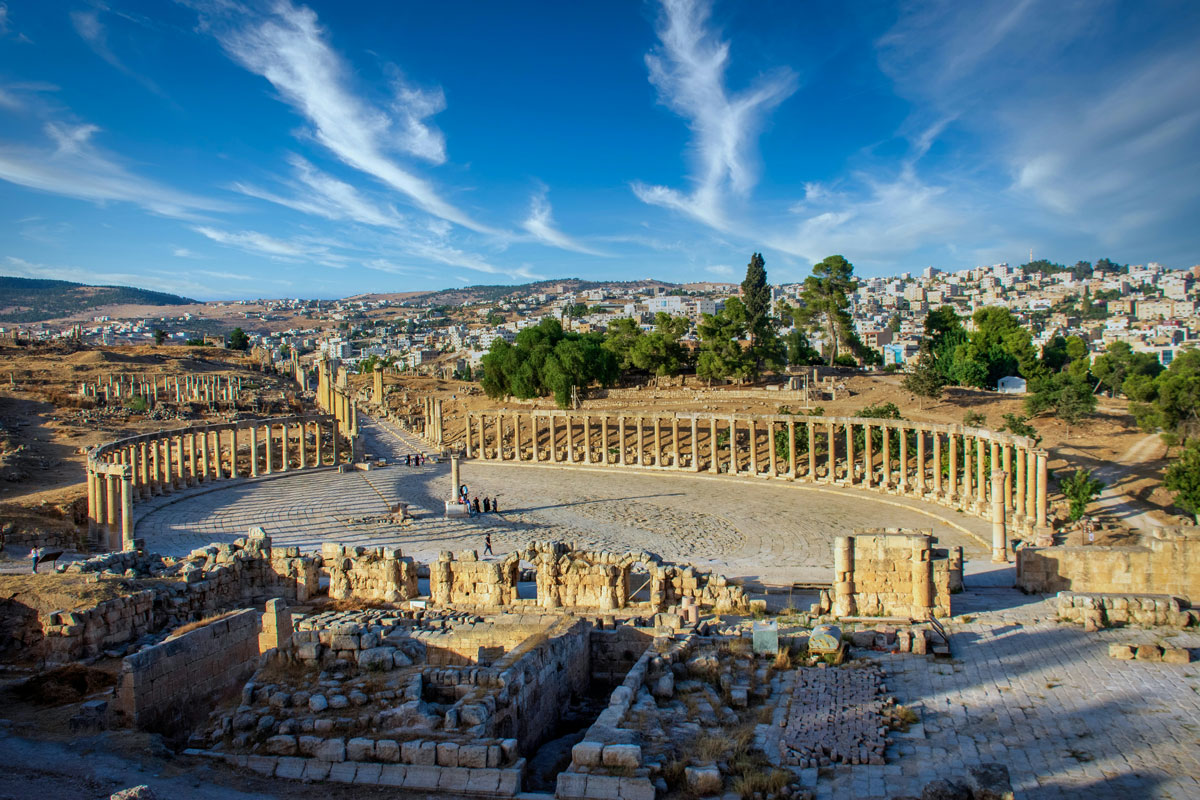
Plan your first visit to Jerash Jordan with the best ruins to see, walking route, tickets, Jordan Pass details, opening hours, timing, and travel tips.
Explore the best Jordan Valley attractions and things to do, from ancient Pella and the Jordan River to the Dead Sea, with practical tips for planning your visit.
Explore the Jordan River's biblical history, where Jesus was baptized, how to visit from Amman, and the best nearby places to include on your Jordan trip.
We go beyond just booking trips—we create unforgettable travel experiences that match your dreams!


This trip exceeded all our expectations. We booked the "Discover Turkey in 6 Days from Istanbul to Ephesus" package and were impressed by how professionally everything was arranged. The itinerary gave us enough time to enjoy Istanbul and Ephesus without feeling rushed, and all transfers and day tours ran on time. The communication before arrival was clear and helpful, which made planning much easier. What we appreciated most was the balance between guided sightseeing and free time, so the whole trip felt comfortable and enjoyable. If you are looking for a reliable way to explore Turkey, this is a great option. We would absolutely recommend it to anyone visiting this destination.
One of the smoothest tours we have ever booked. We booked the "9 Days Angkor and Mekong Expeditions Package" package and were impressed by how professionally everything was arranged. The itinerary gave us enough time to enjoy the Mekong and Angkor without feeling rushed, and all transfers and day tours ran on time. The communication before arrival was clear and helpful, which made planning much easier. What we appreciated most was the balance between guided sightseeing and free time, so the whole trip felt comfortable and enjoyable. If you are looking for a reliable way to explore Vietnam, this is a great option. It was the perfect mix of sightseeing, comfort, and great logistics.
A beautifully organized journey from start to finish. We booked the "9 Day Vietnam Itinerary with Top Highlights" package and were impressed by how professionally everything was arranged. The itinerary gave us enough time to enjoy Vietnam without feeling rushed, and all transfers and day tours ran on time. The communication before arrival was clear and helpful, which made planning much easier. What we appreciated most was the balance between guided sightseeing and free time, so the whole trip felt comfortable and enjoyable. If you are looking for a reliable way to explore Vietnam, this is a great option. The itinerary was well balanced and never felt rushed.
One of the smoothest tours we have ever booked. We booked the "Petra Day Tour from Amman in Jordan" package and were impressed by how professionally everything was arranged. The itinerary gave us enough time to enjoy Petra, Amman, and Jordan without feeling rushed, and all transfers and day tours ran on time. The communication before arrival was clear and helpful, which made planning much easier. What we appreciated most was the balance between guided sightseeing and free time, so the whole trip felt comfortable and enjoyable. If you are looking for a reliable way to explore Jordan, this is a great option. It was the perfect mix of sightseeing, comfort, and great logistics.
We loved how easy and enjoyable this entire experience was. We booked the "8 Days Gallipoli, Pergamum, Pamukkale, Ephesus & Cappadocia Tour" package and were impressed by how professionally everything was arranged. The itinerary gave us enough time to enjoy Cappadocia, Ephesus, Pamukkale, Gallipoli, and Pergamum without feeling rushed, and all transfers and day tours ran on time. The communication before arrival was clear and helpful, which made planning much easier. What we appreciated most was the balance between guided sightseeing and free time, so the whole trip felt comfortable and enjoyable. If you are looking for a reliable way to explore Turkey, this is a great option. We came home with amazing memories and would book again.










Comments (02)
Mr. Bowmik Haldar,
05 June, 2024Outstanding News & Insight! Thank you so much for sharing like this article
Jacoline Juie,
05 June, 2023However, here are some well-regarded car dealerships known for their customer service, inventory, and overall reputation. It's always a good idea to research and read reviews specific...
Leave Your Comment: