 Visit Turkey
 Visit Vietnam
 Visit Cambodia
 Visit Dubai
 Visit Jordan


Amman Guide 2026 - Things to Do and Visitor Tips
Plan your trip with this Amman travel guide covering top sights, food, neighborhoods, transport, day trips, where to stay, and practical visitor tips.



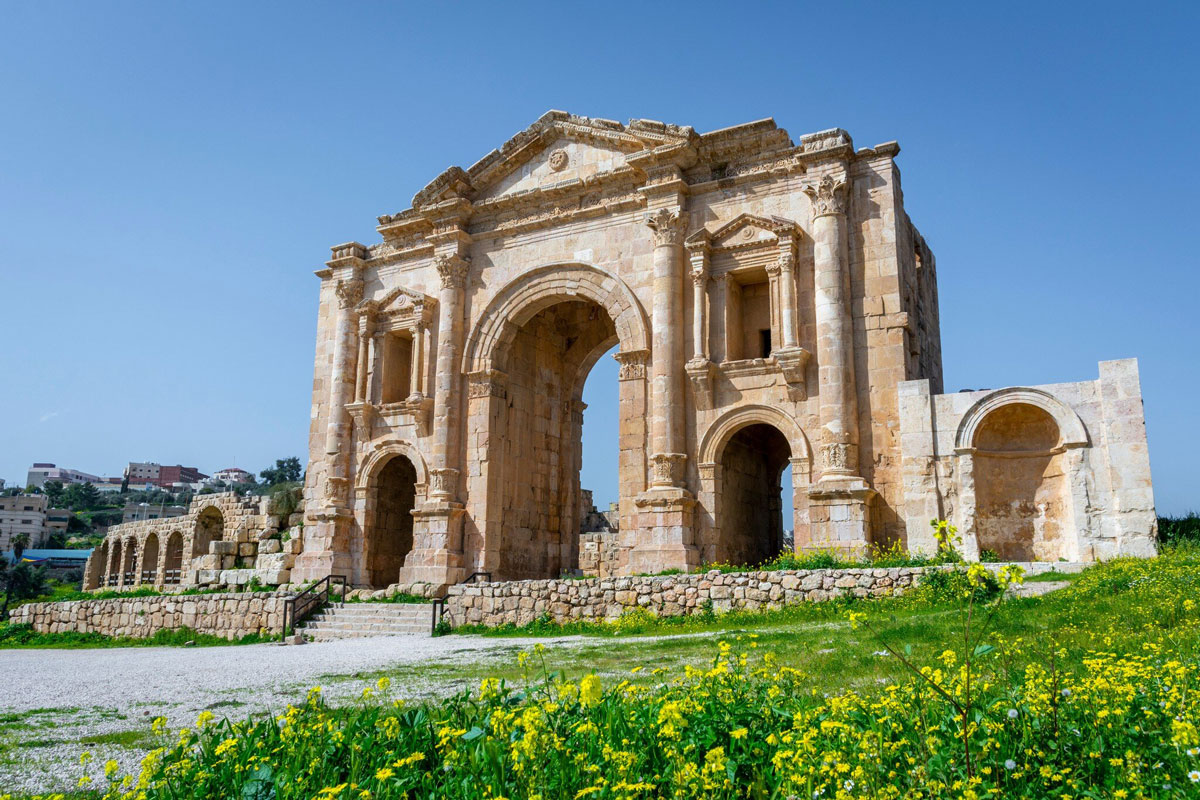
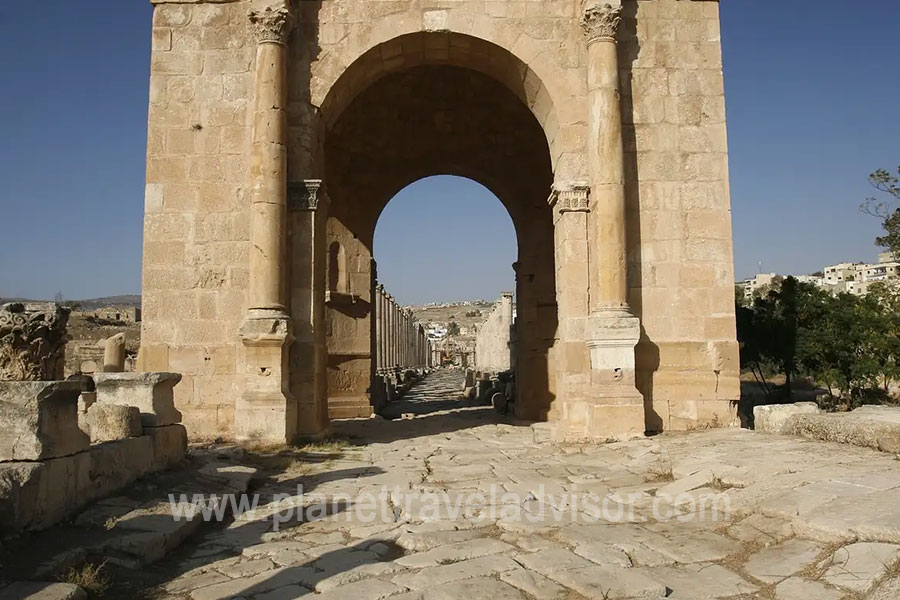
Hadrian’s Arch is one of the first major monuments travelers encounter when exploring the ancient city of Jerash in northern Jordan. Built to honor the Roman emperor Hadrian during his visit to Gerasa in AD 129/130, the monumental gateway immediately introduces the scale and ambition of one of the best-preserved Roman provincial cities in the region.
But there is more to the arch than its impressive façade. Its position outside Jerash’s later city walls, the abandoned expansion project connected with it, and details such as its Greek inscription help explain how ancient Gerasa was developing during the height of Roman rule.
This guide covers what Hadrian’s Arch is, why it matters, what to notice when you stand in front of it, and the practical information you need to include it in a visit to Jerash. Travelers combining Jerash with Petra, Amman, Wadi Rum, or the Dead Sea can also explore organized vacation packages to Jordan when planning a wider itinerary.
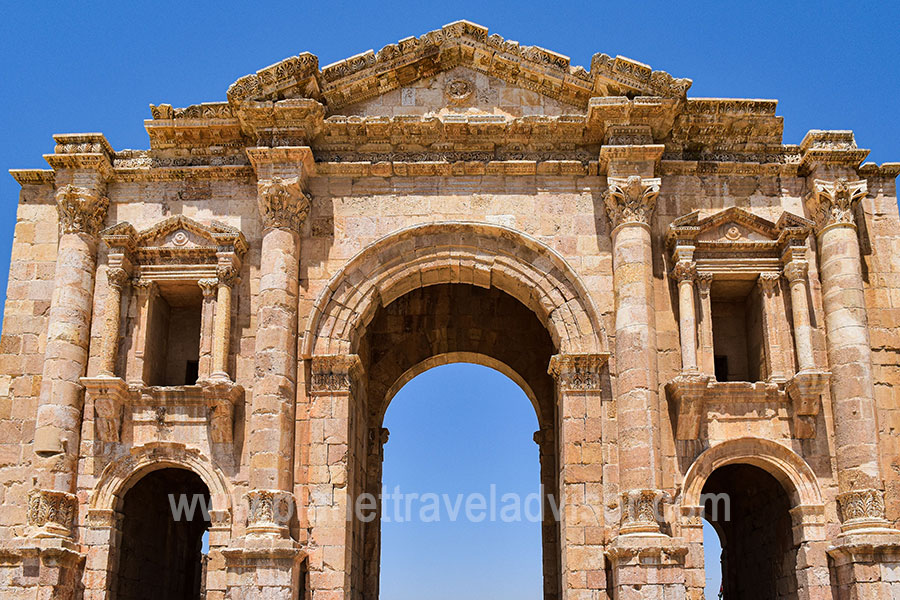
Hadrian’s Arch was constructed in honor of Emperor Hadrian’s visit to Gerasa, the Roman name for Jerash, in AD 129/130. Rather than functioning simply as a defensive gate, it was conceived as a monumental ceremonial entrance associated with the emperor’s arrival.
That distinction matters when you visit. The arch was designed to make an impression. It has three passageways, with a dominant central opening flanked by smaller side openings, and its exterior was decorated with columns carrying composite capitals. The Jordan Tourism Board describes it as one of the largest known arches of the Roman Empire.
Jerash itself had flourished under Roman rule as Gerasa. Its surviving streets, temples, theatres, plazas, fountains, walls, and gates show the scale of Roman urban development in this part of the eastern Mediterranean. Hadrian’s Arch should therefore be understood as part of a much larger city rather than as an isolated Roman monument.
You may also hear it called the Arch of Hadrian, Hadrian’s Gate, or Bab Amman. The last name means “Amman Gate.” According to the official Jerash tourism site, the name reflects the arch’s position on the road leading toward ancient Philadelphia, modern Amman.
One of the most interesting surviving details is associated with the arch’s northern façade. A Greek inscription once faced the city, and the official interpretation notes that several honorary titles connected with Gerasa were erased shortly after the inscription was created. Part of the inscription can now be seen on the ground.
For visitors, this is a useful reminder not to look only at the size of the structure. Some of the monument’s most revealing historical evidence survives in smaller architectural and inscribed details.
The best way to appreciate Hadrian’s Arch is to spend a few minutes examining it before continuing into Jerash.
Start by stepping far enough back to see the complete façade. The central passage immediately establishes the hierarchy of the design, while the smaller openings on either side make the main arch appear even larger.
Then move closer.
Look at the columns attached to the façade and their elaborate capitals. The official tourism description highlights the use of composite capitals as a distinctive feature of this monument. Floral decoration and carefully arranged architectural elements also show that this was intended as a prestigious ceremonial structure rather than an ordinary entrance.
It is also worth looking for differences in the surviving stonework. Hadrian’s Arch has undergone restoration, so the structure visitors see today is not simply an untouched building preserved exactly as it stood in the second century. The restoration was intended to give visitors a clearer sense of its former monumental appearance.
Photography works particularly well when you use the architecture itself rather than trying only to capture the whole façade. Try framing the landscape or people through the central arch, photographing the capitals at closer range, or including a person in the composition to communicate scale.
Most importantly, turn around and consider where the arch sits in relation to the rest of Jerash. Its unusual location is one of the keys to understanding the monument.
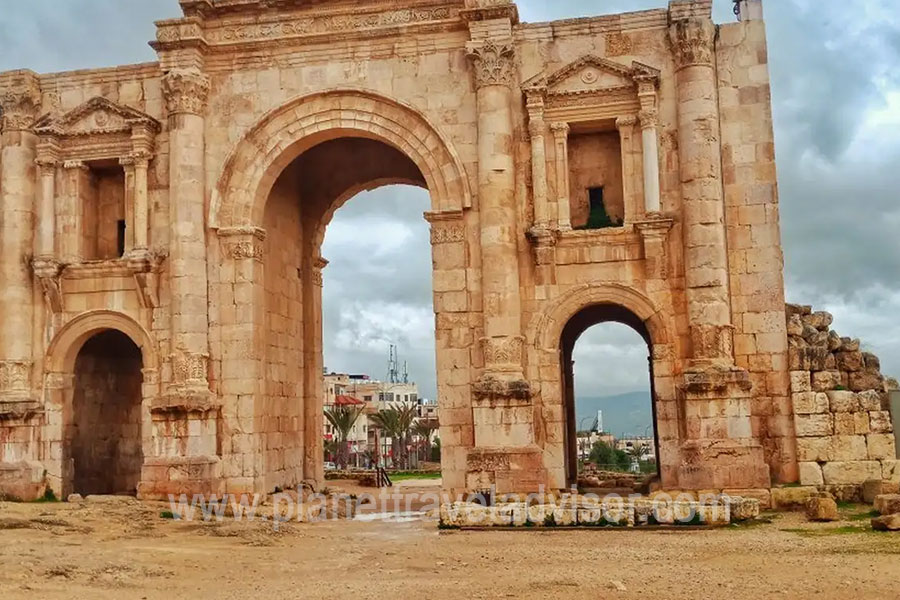
Travelers often assume Hadrian’s Arch was simply the southern city gate. The archaeological story is more interesting.
The arch was intended to become part of an expanded southern entrance to Gerasa. Official Jordan tourism material explains that it was planned as the principal southern gateway, but the proposed urban expansion was never completed.
Evidence elsewhere in Jerash supports this interpretation. The official description of the Hippodrome refers to a Hadrianic project to expand the city over the southern necropolis. When that project was abandoned, land beside the Gerasa–Philadelphia road later became available for the Hippodrome.
This explains something visitors can still perceive today: Hadrian’s Arch seems unusually detached from the fortified entrance farther north.
Instead of treating that separation as an oddity, think of it as evidence of a plan that never fully materialized.
The monument effectively marks an unrealized version of Gerasa—a city whose planners expected its monumental southern quarter to extend beyond the boundaries visitors see today.
That context makes the walk from Hadrian’s Arch toward the South Gate much more meaningful. You are moving between a projected ceremonial entrance and the actual fortified urban area that continued to define the city.
Hadrian’s Arch is visited as part of the Jerash Archaeological Site, so travelers generally do not need to plan it as a separate attraction.
Jerash is around 45 km north of Amman, and the Jordan Tourism Board describes the drive from Amman as roughly 40 minutes under normal leisurely driving conditions. This makes Jerash practical as a day trip from the capital or as part of a longer northern Jordan route.
The current official Jordan Tourism Board fee list shows admission to Jerash at 10 JOD for foreign visitors, with entry to the archaeological museum included. Prices can change, so travelers should confirm the official fee again shortly before visiting.
Jerash is also included among the attractions covered by the official Jordan Pass.
The official published schedule currently lists seasonal hours for the Jerash Archaeological Site and Museum:
Winter: 8:00 AM–4:00 PM
Summer: 8:00 AM–6:30 PM
April and May: 8:00 AM–5:30 PM
Ramadan: special hours apply
Because seasonal schedules and Ramadan hours can change, check the official Jerash or Jordan Pass website immediately before your visit rather than building a tight itinerary around an old timetable.
The Jerash Visitor Center is a useful starting point. It provides maps, brochures, information about the site, and access to local guides.
Hadrian’s Arch itself does not require a long visit. Around 10–20 minutes can be enough if you mainly want to understand the structure, photograph it, and continue onward.
Jerash is different.
For a first visit, a practical planning estimate is around 2.5 to 4 hours for the broader archaeological site. Travelers particularly interested in Roman history, architecture, or photography may want longer.
Avoid planning Jerash as a quick stop just because the arch can be seen relatively quickly. The value of visiting Hadrian’s Arch comes largely from following it into the rest of Gerasa.
If you prefer to combine Jerash with other Jordan highlights without arranging transport and timing independently, a multi-day itinerary through Jordan tours can connect the site naturally with Amman and the country's southern attractions.
Do not leave after photographing the arch. It should be the beginning of your visit rather than the final objective.
The Hippodrome is one of the first important structures nearby. Built during the second century AD, it was used for horse racing and later adapted for other forms of entertainment. Its location also helps explain what happened to the abandoned southern expansion project associated with Hadrian’s Arch.
Continue toward the South Gate. This is especially useful after seeing Hadrian’s Arch because it makes the difference between a ceremonial monumental arch and a functional entrance into the fortified city much easier to understand. The South Gate itself has three semicircular openings, with a wider central entrance flanked by smaller passages.
Beyond it, the archaeological landscape opens into the core monuments of Gerasa.
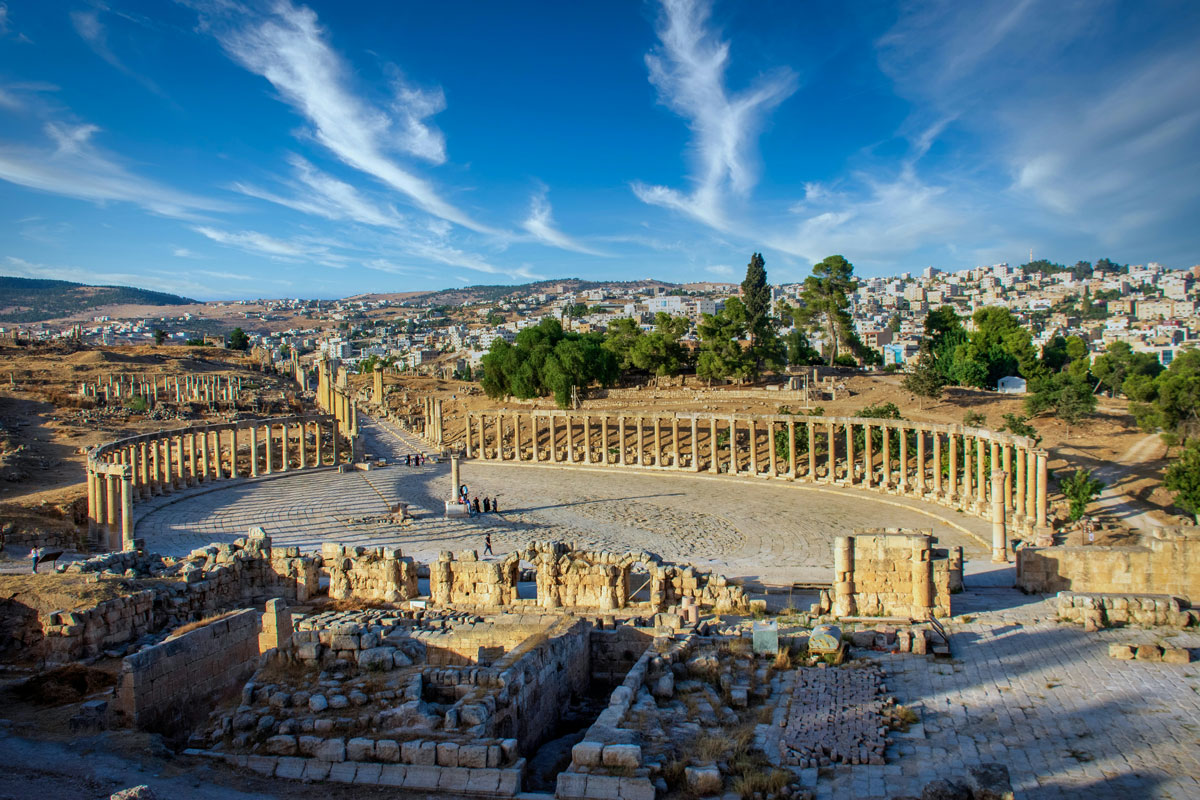
The Oval Plaza is one of Jerash’s most recognizable spaces, surrounded by a sweeping colonnade and positioned where the main street meets the sanctuary of Zeus.
From there, the route naturally connects with the Temple of Zeus and the Cardo Maximus, the principal colonnaded street running through the ancient city. Continue farther into the site and you can reach monuments including the Nymphaeum, Temple of Artemis, North Theatre, and other civic and religious structures listed by the official Jerash archaeological guide.
Thinking of these monuments as a sequence improves the experience:
Hadrian’s Arch → Hippodrome → South Gate → Oval Plaza → Temple of Zeus → Cardo Maximus → central and northern Jerash
That route allows the ancient city to reveal itself gradually instead of becoming a checklist of disconnected ruins.
Jerash involves considerably more walking than the short distance around Hadrian’s Arch might initially suggest. Comfortable footwear is therefore more useful than trying to dress specifically for a single monument.
Carry water and sun protection, particularly during warmer months. Much of the archaeological site is outdoors, and moving between major monuments can take time.
An earlier visit can also make the experience easier if you want more comfortable temperatures and cleaner photographs before the site becomes busier. Conditions vary by season, so treat this as a practical preference rather than a fixed rule.
At Hadrian’s Arch itself, spend time on both wide and close views. Photograph the complete façade, then examine the capitals, passages, inscription area, stonework, and views toward the rest of Jerash.
If history is a major reason for your visit, consider hiring a licensed local guide through the visitor center. Jerash contains enough overlapping Roman, Byzantine, and later history that interpretation can make the structures much easier to connect. The official visitor center states that local guides are available for the archaeological site.
Finally, avoid squeezing Jerash between too many other stops. It can be combined comfortably with Amman and, depending on your itinerary, northern destinations such as Ajloun, but the archaeological city deserves enough time to be explored on foot rather than rushed.
Hadrian’s Arch is worth more than a quick photo at the entrance to Jerash. Its connection with Emperor Hadrian, monumental three-bay design, surviving inscription, and unusual position outside the ancient city all reveal something about the ambitions of Roman Gerasa.
Give yourself time to examine the structure, then continue beyond it. The Hippodrome, South Gate, Oval Plaza, temples, theatres, and Cardo Maximus provide the context that turns Hadrian’s Arch from an impressive gateway into the opening chapter of a much larger archaeological story.
For travelers building Jerash into a journey that also includes Amman, Petra, Wadi Rum, or the Dead Sea, explore Jordan tours to compare routes that connect the country's major historical sites.


A curated list of the most popular travel packages based on different destinations.
Plan your trip with this Amman travel guide covering top sights, food, neighborhoods, transport, day trips, where to stay, and practical visitor tips.
Plan your Amman Roman Theatre visit with current ticket prices, opening hours, Jordan Pass details, history, nearby sights, and practical travel tips.
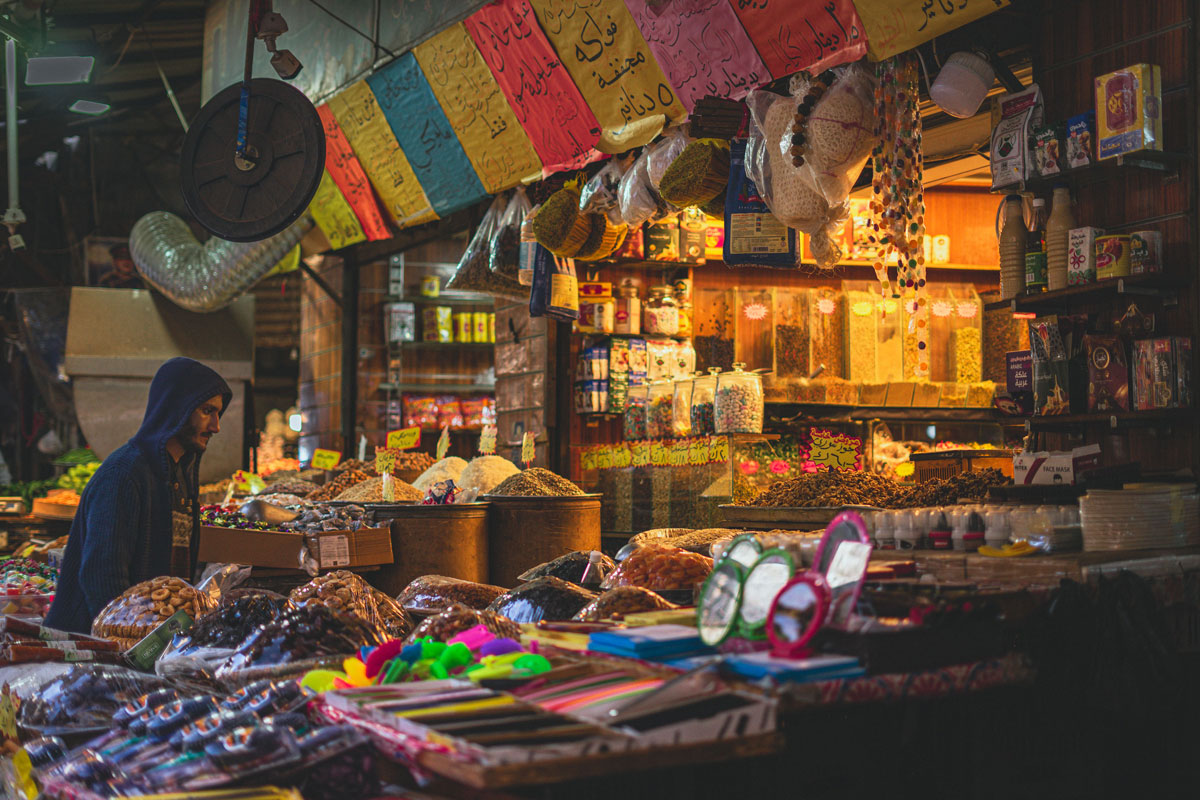
Explore the best souqs in Amman, from Al-Balad and the Gold Souq to Souq Jara, with shopping tips, souvenirs, timing, and nearby sights.
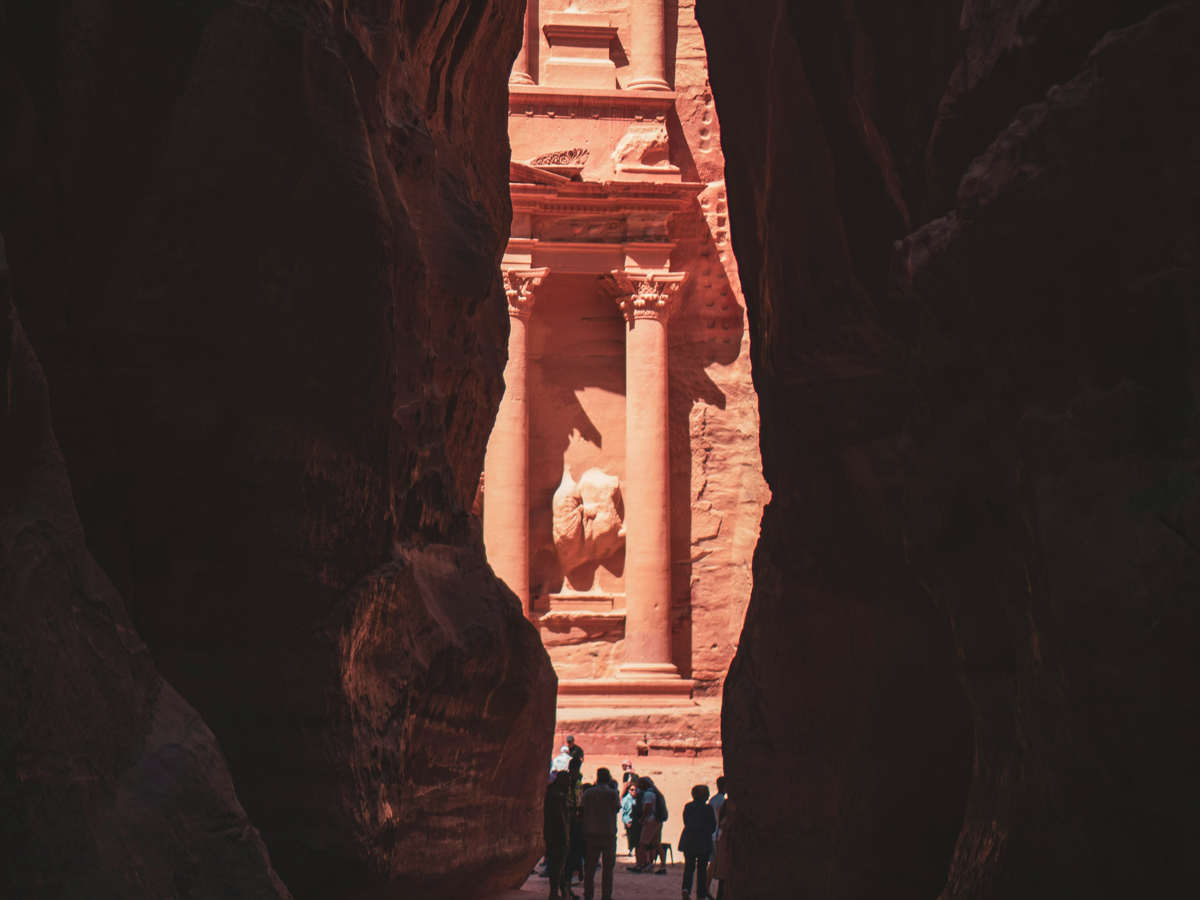
Explore Siq Petra, its Nabataean water system, ancient carvings, Treasury walk, history, opening hours, tickets, photography tips, and visitor advice.
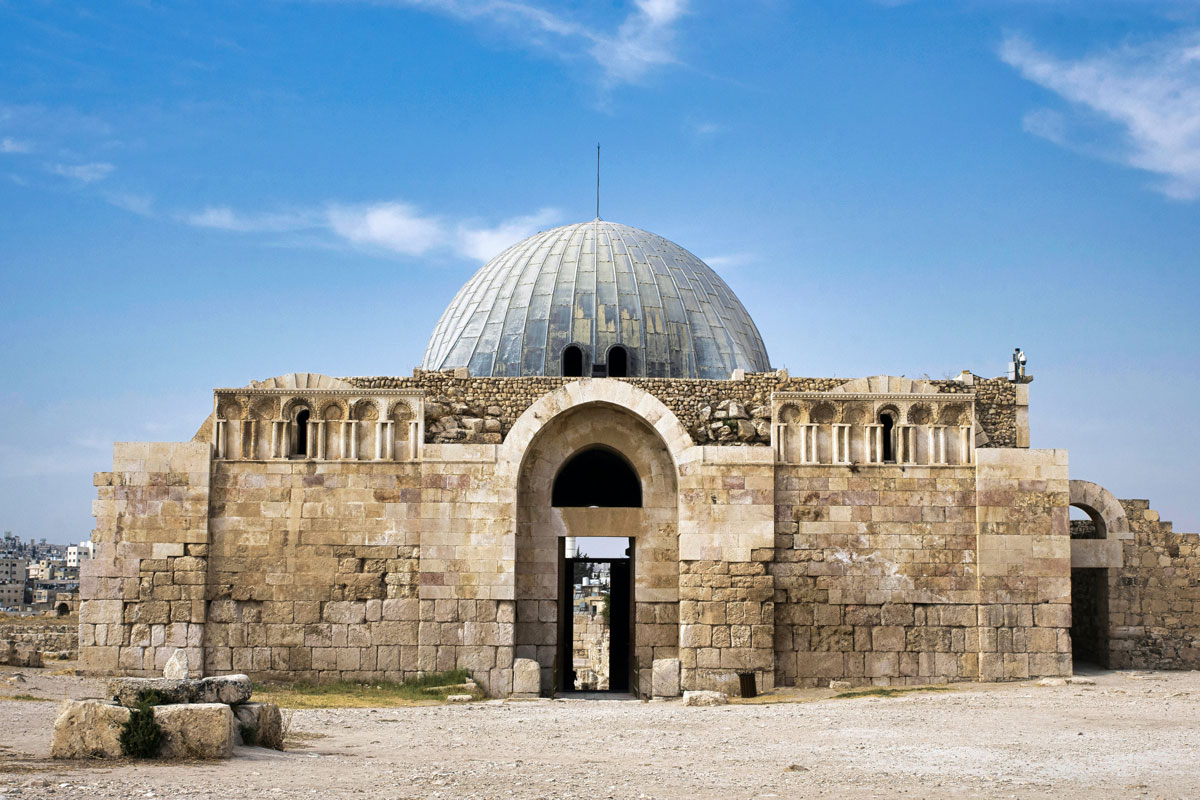
Explore Amman Citadel with practical tips on history, top sights, tickets, opening hours, Jordan Pass access, timing, transport, and nearby attractions.
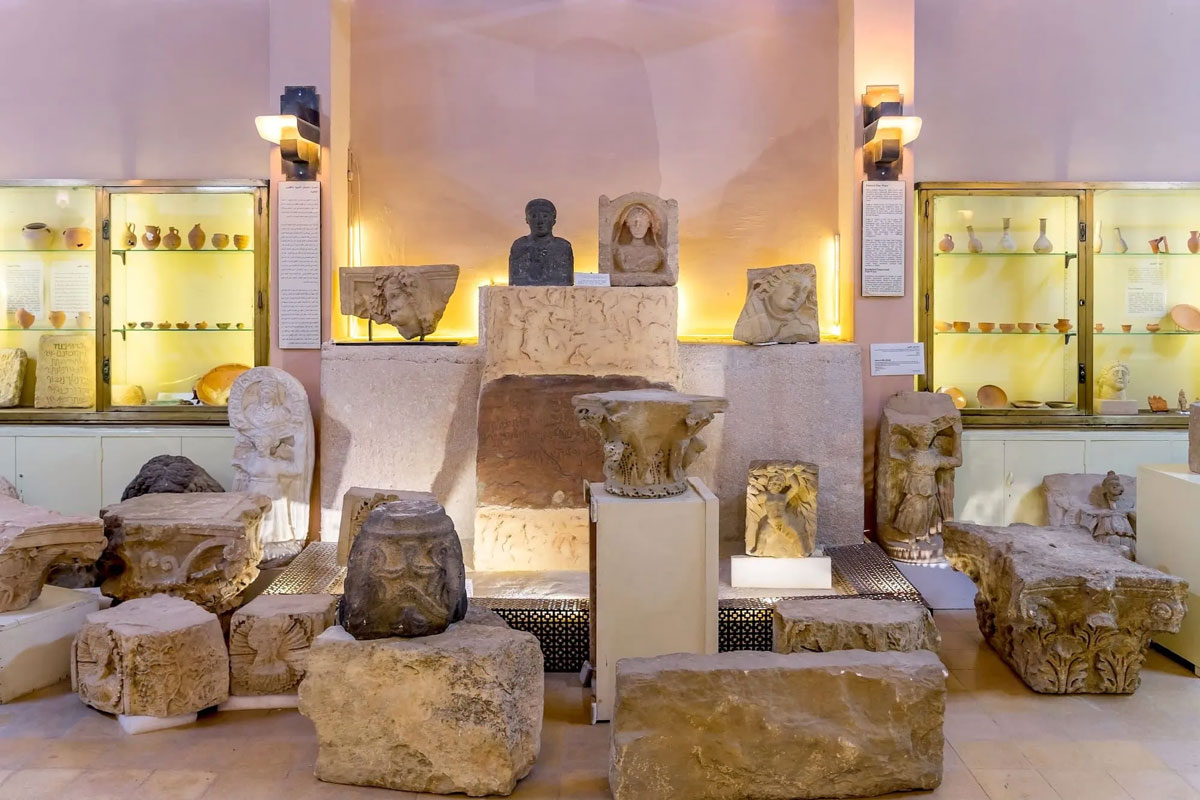
Explore the Jordan Archaeological Museum in Amman, including top artifacts, tickets, Jordan Pass, opening hours, Citadel tips, and visitor advice.
Plan your visit to the Baptism Site in Jordan with its biblical history, archaeology, tickets, opening hours, Jordan Pass details, and nearby stops.
Plan your Dead Sea Jordan visit with tips on floating, beaches, resorts, transport, best times, safety, nearby attractions, and how long to stay.
Explore Downtown Amman with tips on the Roman Theatre, souks, local food, walking routes, the Citadel, safety, transport, and the best time to visit.
Plan your first visit to Jerash Jordan with the best ruins to see, walking route, tickets, Jordan Pass details, opening hours, timing, and travel tips.
Explore the best Jordan Valley attractions and things to do, from ancient Pella and the Jordan River to the Dead Sea, with practical tips for planning your visit.
Explore the Jordan River's biblical history, where Jesus was baptized, how to visit from Amman, and the best nearby places to include on your Jordan trip.
We go beyond just booking trips—we create unforgettable travel experiences that match your dreams!



A beautifully organized journey from start to finish. We booked the "8 Day Tour of Istanbul Cappadocia and Ephesus" package and were impressed by how professionally everything was arranged. The itinerary gave us enough time to enjoy Istanbul, Cappadocia, and Ephesus without feeling rushed, and all transfers and day tours ran on time. The communication before arrival was clear and helpful, which made planning much easier. What we appreciated most was the balance between guided sightseeing and free time, so the whole trip felt comfortable and enjoyable. If you are looking for a reliable way to explore Turkey, this is a great option. The itinerary was well balanced and never felt rushed.
We loved how easy and enjoyable this entire experience was. We booked the "5 Day Tour of Istanbul and Cappadocia Highlights" package and were impressed by how professionally everything was arranged. The itinerary gave us enough time to enjoy Istanbul and Cappadocia without feeling rushed, and all transfers and day tours ran on time. The communication before arrival was clear and helpful, which made planning much easier. What we appreciated most was the balance between guided sightseeing and free time, so the whole trip felt comfortable and enjoyable. If you are looking for a reliable way to explore Turkey, this is a great option. We came home with amazing memories and would book again.
One of the smoothest tours we have ever booked. We booked the "4 Day Trip to Cappadocia and Ephesus Highlights" package and were impressed by how professionally everything was arranged. The itinerary gave us enough time to enjoy Cappadocia and Ephesus without feeling rushed, and all transfers and day tours ran on time. The communication before arrival was clear and helpful, which made planning much easier. What we appreciated most was the balance between guided sightseeing and free time, so the whole trip felt comfortable and enjoyable. If you are looking for a reliable way to explore Turkey, this is a great option. It was the perfect mix of sightseeing, comfort, and great logistics.
One of the smoothest tours we have ever booked. We booked the "Petra Day Tour from Amman in Jordan" package and were impressed by how professionally everything was arranged. The itinerary gave us enough time to enjoy Petra, Amman, and Jordan without feeling rushed, and all transfers and day tours ran on time. The communication before arrival was clear and helpful, which made planning much easier. What we appreciated most was the balance between guided sightseeing and free time, so the whole trip felt comfortable and enjoyable. If you are looking for a reliable way to explore Jordan, this is a great option. It was the perfect mix of sightseeing, comfort, and great logistics.
A beautifully organized journey from start to finish. We booked the "14 Days Exploring the Panorama of Vietnam" package and were impressed by how professionally everything was arranged. The itinerary gave us enough time to enjoy Vietnam without feeling rushed, and all transfers and day tours ran on time. The communication before arrival was clear and helpful, which made planning much easier. What we appreciated most was the balance between guided sightseeing and free time, so the whole trip felt comfortable and enjoyable. If you are looking for a reliable way to explore Vietnam, this is a great option. The itinerary was well balanced and never felt rushed.











Comments (02)
Mr. Bowmik Haldar,
05 June, 2024Outstanding News & Insight! Thank you so much for sharing like this article
Jacoline Juie,
05 June, 2023However, here are some well-regarded car dealerships known for their customer service, inventory, and overall reputation. It's always a good idea to research and read reviews specific...
Leave Your Comment: