 Visit Turkey
 Visit Vietnam
 Visit Cambodia
 Visit Dubai
 Visit Jordan


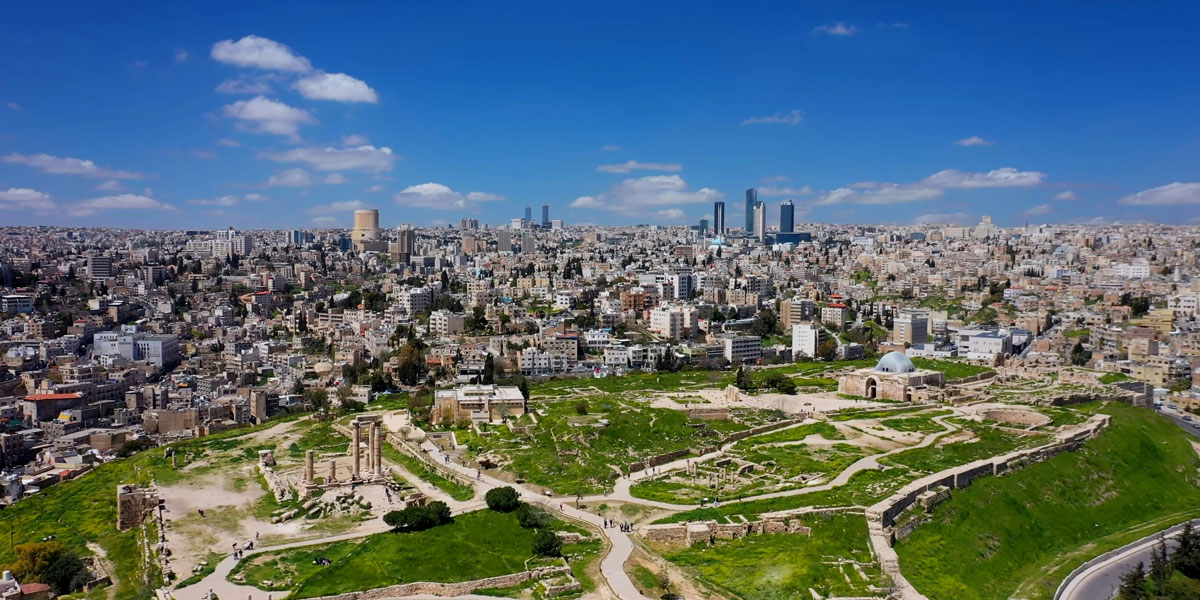
Amman Guide 2026 - Things to Do and Visitor Tips
Plan your trip with this Amman travel guide covering top sights, food, neighborhoods, transport, day trips, where to stay, and practical visitor tips.



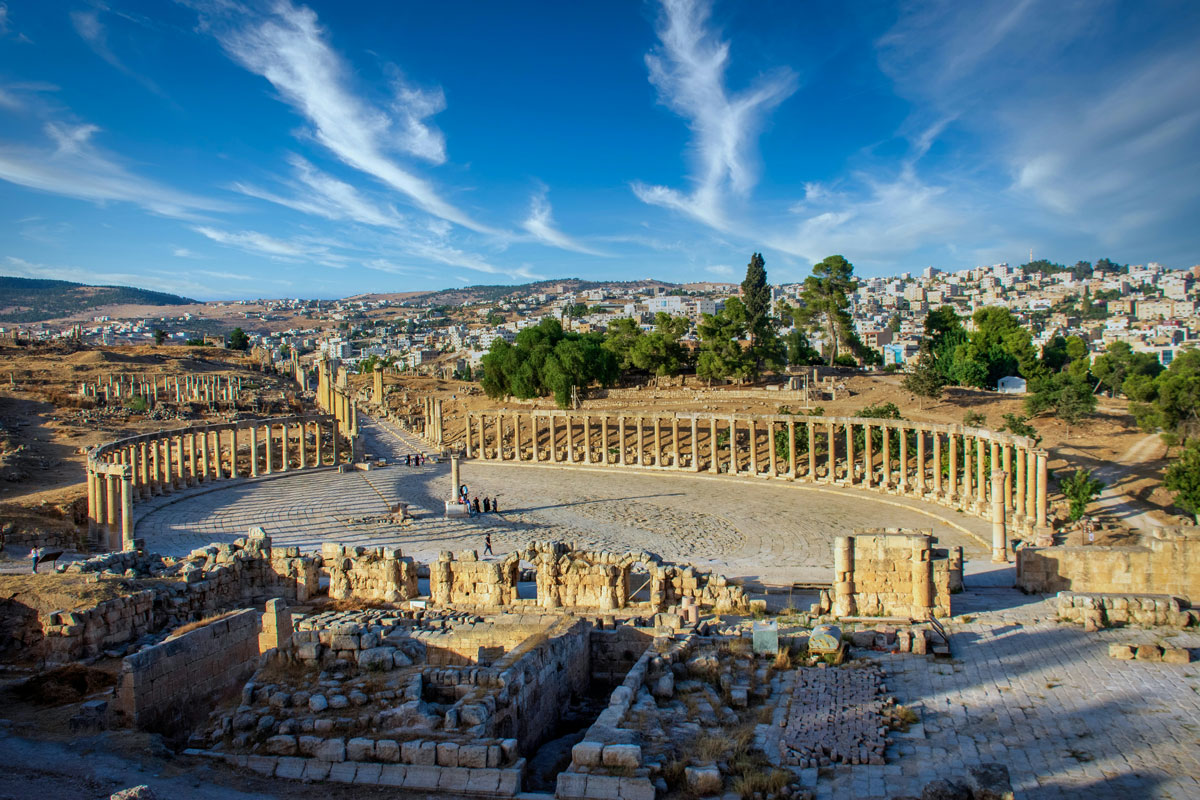
Jerash is easier to understand once you stop looking at it as a collection of Roman ruins.
Walk through the archaeological site from south to north and a city begins to take shape. A ceremonial arch announces the approach. A racetrack sits beside the old road. Beyond the city gate, an oval plaza solves an awkward piece of urban planning before feeding directly into a long colonnaded street. Temples occupy higher ground, fountains face public roads, markets sit beside the main thoroughfare, and theatres reveal where thousands once gathered.
The ancient city is commonly known as Gerasa in historical and archaeological sources, while Jerash is the name travelers use today. The site has much deeper origins than the Roman period and continued through Byzantine and Islamic eras, but Roman Gerasa left the urban framework that dominates a first visit.
For most travelers staying in Amman, Jerash also works comfortably as a day trip. Those building it into a longer route through the country can compare Jordan vacations that connect the north with Petra, the Dead Sea, Wadi Rum, and other major stops.
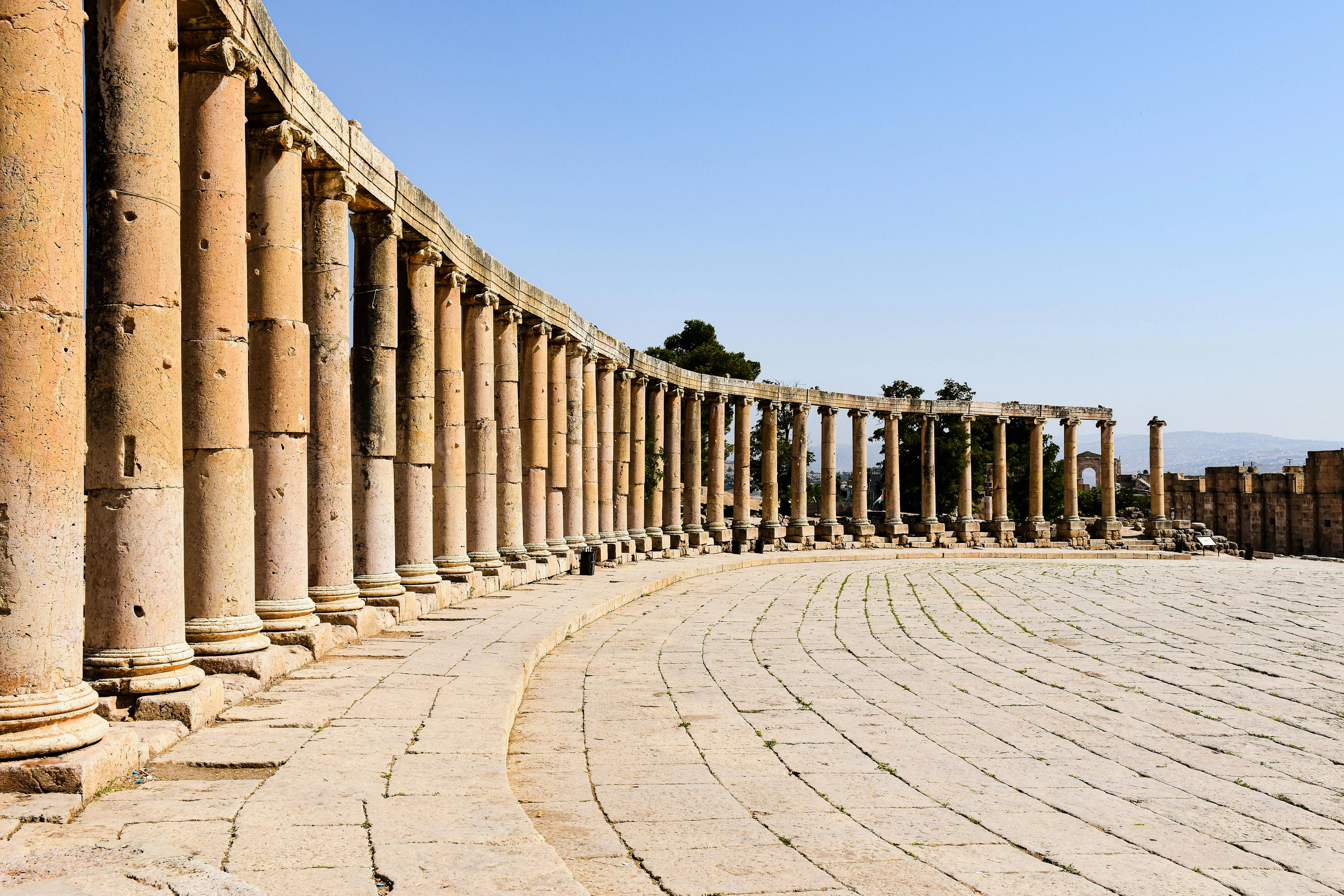
Jerash works because you can still read the city.
At many archaeological sites, individual structures survive while the spaces between them have largely disappeared. Here, streets, plazas, gateways, temples, theatres, fountains, and civic buildings remain connected well enough to show how different parts of Gerasa related to one another.
The Oval Plaza is a good example. Its unusual shape was not chosen simply for visual effect. The plaza helped connect the main Cardo with the Sanctuary of Zeus even though the two axes did not line up. The official archaeological interpretation describes the space as an architectural solution that widened the street into an oval before the sanctuary entrance.
That kind of detail makes Jerash rewarding for travelers who want more than a photograph of an isolated monument. You can see where crowds entered, where merchants worked, where water was distributed, where performances took place, and how religious buildings were positioned above public spaces.
Jerash also refuses to fit neatly into a single historical period. The Temple of Artemis, for example, appears to have been reused in later centuries, possibly as a church during the Byzantine period and by pottery workers under the Umayyads.
Allowing time for those layers gives a very different impression from rushing through the site as simply "Roman Jerash."
A first visit makes the most sense when you follow the ancient city roughly from south to north.
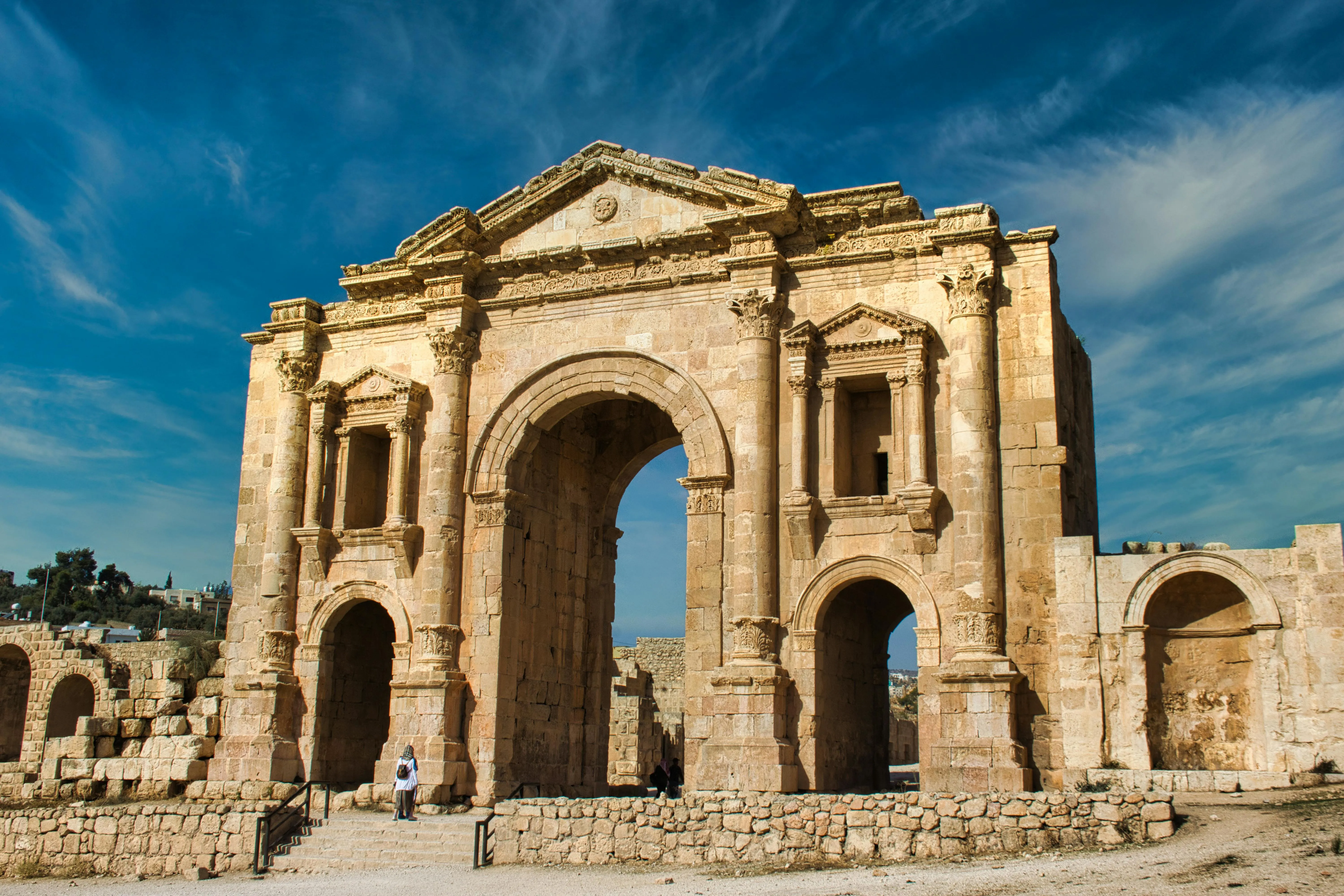
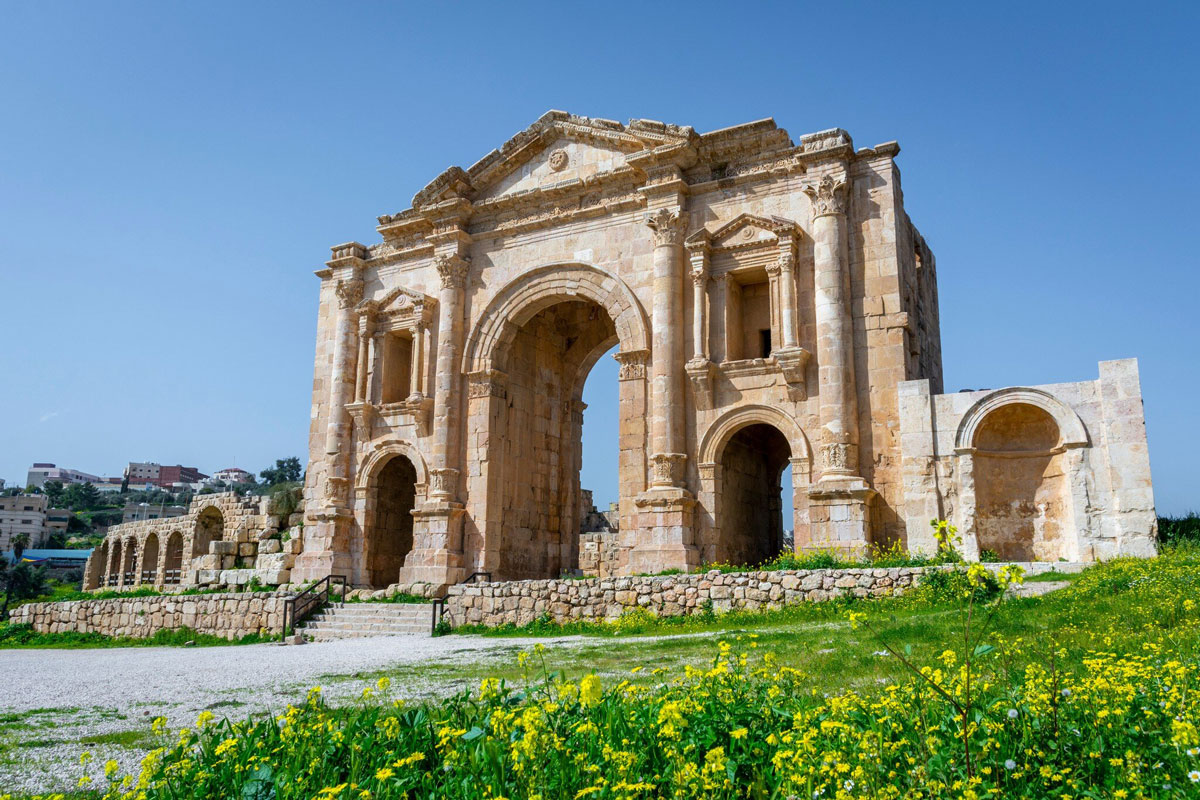
Hadrian's Arch sets the scale before you have technically entered the main fortified city. It was built for Emperor Hadrian's visit to Gerasa in AD 129/130 and consists of three bays. Its location makes more sense once you know that a proposed southward expansion of the city was never completed.
Nearby, the Hippodrome introduces another side of Roman public life. It was constructed in the second century for horse racing and was later partly adapted for other forms of entertainment and activity. The surviving starting gates are particularly useful because they make the original function of the structure easier to visualize.
The South Gate marks the transition into the fortified city. This is worth noticing because it prevents a common misunderstanding: Hadrian's Arch and the South Gate are not the same monument. The South Gate has three semicircular entrances, with a wider central passage and narrower openings on either side.
Then Jerash opens dramatically.
The Oval Plaza is one of the site's defining spaces, but rather than crossing it immediately, stop near its edge and look at the geometry. The curving colonnade manages the shift between the line of the Cardo and the Sanctuary of Zeus. Its pavement also belongs to a later phase than parts of the surrounding architecture, another reminder that the city did not appear in a single building campaign.
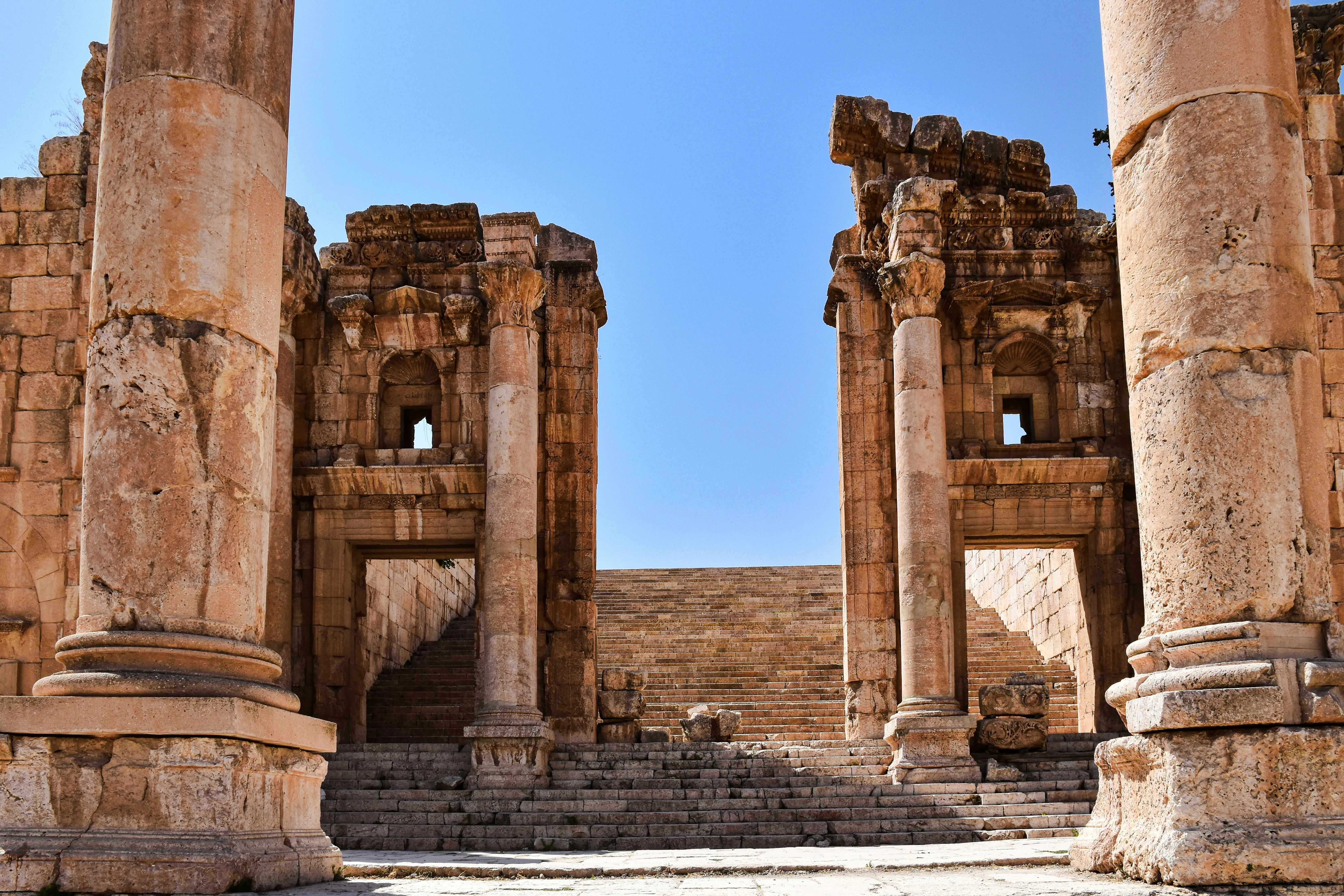
Above the plaza sits the Temple of Zeus. Its elevated position is part of the experience: from higher ground, the relationship between sanctuary, plaza, street, and the rest of the ancient city becomes much easier to understand. The temple complex occupies one of Jerash's oldest sacred areas.
From the northern end of the Oval Plaza, the Cardo Maximus pulls you into the city proper. The official Jerash site measures the colonnaded street at roughly 805 meters from the Oval Plaza toward the northern gate. Instead of simply walking down the middle, pay attention to how the columns change, where larger entrances interrupt the rhythm, and how side buildings meet the main street.
The Cardo was not just a ceremonial avenue. Commercial and civic life gathered around it. The Macellum, or food market, occupied a prominent position beside the street. Archaeologists identified what appears to have been a butcher's workspace from a heavily marked stone slab and carved animal heads on its supports.
Farther along is the Nymphaeum, built around AD 190/191. This was more than decoration. Water flowed from carved lion heads into a large basin, while overflow connected with the street's drainage system. The monument helps you see that Roman urban planning involved infrastructure as much as columns and temples.
The Temple of Artemis deserves time because Artemis was the patron goddess of Gerasa. Construction began in the second century, but the project was never fully completed: only 12 of the intended 32 columns were erected. Those surviving columns still dominate this part of the site.
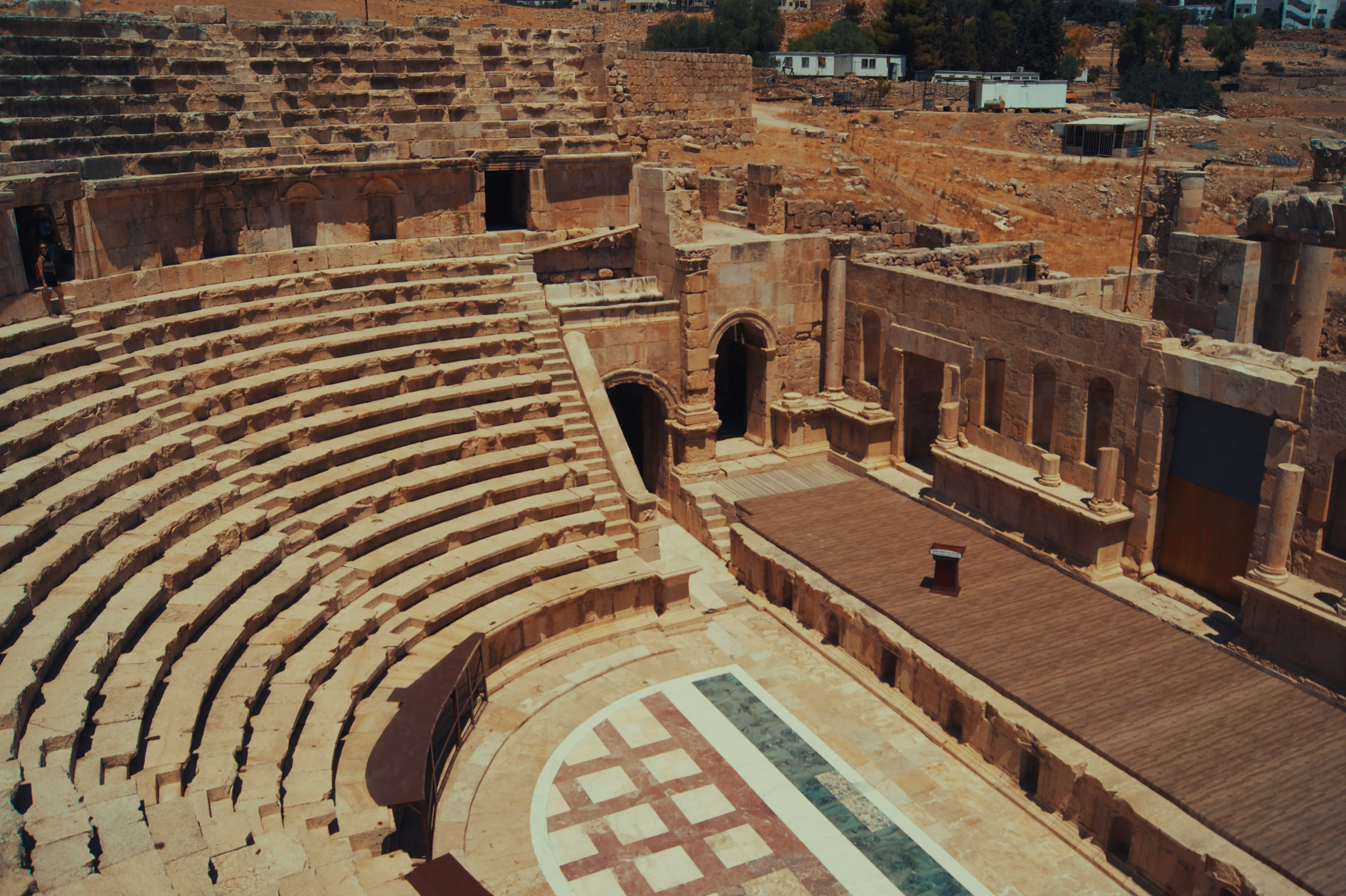
Jerash's theatres add another dimension. The South Theatre, built between AD 80 and 96 according to the official archaeological description, could hold more than 3,000 spectators and remains in use for cultural events. The smaller North Theatre served several possible functions, including musical performances, speeches, public gatherings, and poetry.
Following Jerash this way turns the visit into a sequence rather than a checklist.
The largest monuments naturally attract attention, but some of Jerash's best evidence is under your feet or beside the route.
Look at the paving rather than only the columns. The Northern Decumanus preserves a cambered road surface, paving stones, sewer access points, and even iron lifting rings on some manhole covers. These details reveal a working city far better than another distant photograph of a temple.
Notice reuse as well. Stones did not necessarily remain in the buildings for which they were first cut. Columns and architectural blocks could be moved, incorporated into later structures, or adapted as the city changed.
The same is true of entire buildings. A market could become a dye workshop. A temple could gain another function centuries later. A hippodrome could be altered after horse racing declined.
Jerash is therefore better read as a place that was repeatedly changed rather than a Roman city somehow frozen in one century.
With limited time, prioritize the physical relationships between the South Gate, Oval Plaza, Zeus sanctuary, Cardo, Nymphaeum, and Artemis precinct. Understanding those connections will usually tell you more about Gerasa than attempting to photograph every named ruin on the map.
There is no single correct duration.
Around two hours can cover the major highlights if your schedule is tight. You will need to keep moving and accept that smaller ruins, the museum, and architectural details may receive little attention.
Three to four hours is a better target for most first-time visitors. It gives you enough room to walk the principal route, climb toward the temples, stop inside a theatre, photograph the Cardo, and examine details without constantly watching the clock.
A half day or longer makes sense for travelers particularly interested in archaeology, Roman urbanism, architecture, or photography.
Heat also changes the calculation. The archaeological zone is large and exposed, and ancient paving is slower to cross than a modern pedestrian street. A duration that feels comfortable on a cool morning can feel rushed during hotter weather.
Treat these as planning estimates rather than official visit times.
Current official pricing lists Jerash at 10 JOD for foreign visitors, with admission to the archaeological museum included. Jerash is also listed among the attractions covered by the Jordan Pass. Since admission policies can change, verify both shortly before travel.
Official seasonal opening hours currently show:
Winter, November through April: 8:00 AM–4:00 PM
Summer: 8:00 AM–6:30 PM
April and May: 8:00 AM–5:30 PM
There is currently an inconsistency in official Ramadan information. The Jerash destination site lists Ramadan hours as 8:30 AM–6:00 PM, while the Jordan Pass opening-hours page lists 9:00 AM–5:00 PM. If visiting during Ramadan, check again close to your travel date rather than relying on either schedule months in advance.
Start at the Jerash Visitor Center. The official tourism site says it provides maps, brochures, route information, explanatory displays, and access to local guides. That can be useful if you want more archaeological context than signs alone provide.
For the site itself, comfortable walking shoes matter more than dressing formally. Bring water, sun protection, and clothing appropriate to the season. Expect old paving, open ground, and changes in elevation around some of the temples.
A guide is not essential for simply finding the major monuments, but it can add value if the reason you came is to understand how Gerasa developed and how different periods overlap.
Jerash is straightforward to include from Amman. The official Jerash tourism site estimates the drive north at around 40 minutes at a leisurely speed, although actual road time naturally depends on your starting point and traffic.
For many international visitors, a private car with driver or an organized excursion is the simplest option because it removes the need to coordinate onward transportation after leaving the archaeological site.
The more important decision is not simply how to reach Jerash, but what you want the rest of that day to look like.
If Jerash is your main interest, give it the larger part of the day and return to Amman without forcing another archaeological site into the schedule. If you want a broader northern Jordan route, combining it with Ajloun can make sense.
Travelers who prefer to arrange the northern sites as part of a longer itinerary can also use Jordan tours to connect Jerash with the rest of the country's route rather than arranging each transfer independently.
Jerash and Ajloun can work well together, but only if you are comfortable giving up some depth at Jerash.
Choose Jerash on its own if Roman archaeology is one of the main reasons for your Jordan trip, you like photography, or you want time to visit smaller structures beyond the best-known monuments.
Choose Jerash and Ajloun together if you prefer variety within one day. Jerash gives you an ancient urban environment, while Ajloun adds a different historical setting and landscape.
What usually weakens the day is adding too much. Jerash, Ajloun, Umm Qais, and other northern sites may look close enough on a map to combine aggressively, but driving and sightseeing time accumulate.
It is better to understand two places than to spend the entire day arriving at and leaving four.
For walking, the cooler parts of the year are generally more comfortable than peak summer heat.
Time of day matters almost as much as season. An earlier start gives you more flexibility to explore before midday temperatures rise and leaves enough time for slower sections of the archaeological site.
Morning light can also work well for architectural photography, but the best position depends on the monument and season. Do not build the entire visit around a single supposed "golden hour." Jerash is too large, and its monuments face different directions.
During warmer weather, prioritize shade breaks, water, and realistic pacing. During winter, remember that official site hours are shorter, so arriving late can dramatically reduce the usable sightseeing window.
The practical rule is simple: arrive early enough that you can slow down once the city becomes interesting.
The best reason to visit Jerash is not simply that many ruins survive. It is that enough of the ancient city survives in relation to everything around it.
Start at Hadrian's Arch, notice why the South Gate is different, pause where the Oval Plaza redirects the city plan, then follow the Cardo past fountains, markets, temples, and civic spaces. Give the smaller evidence—the paving, drainage, reused stones, and changing architecture—as much attention as the monumental columns.
For most first-time visitors, three to four hours and an early start create a good balance between depth and practicality. If Jerash forms part of a longer journey through the country, well-planned Jordan trips can also help connect northern Jordan with the rest of the itinerary without compressing the archaeological site into a rushed stop.
A curated list of the most popular travel packages based on different destinations.
Plan your trip with this Amman travel guide covering top sights, food, neighborhoods, transport, day trips, where to stay, and practical visitor tips.
Plan your Amman Roman Theatre visit with current ticket prices, opening hours, Jordan Pass details, history, nearby sights, and practical travel tips.
Explore the best souqs in Amman, from Al-Balad and the Gold Souq to Souq Jara, with shopping tips, souvenirs, timing, and nearby sights.
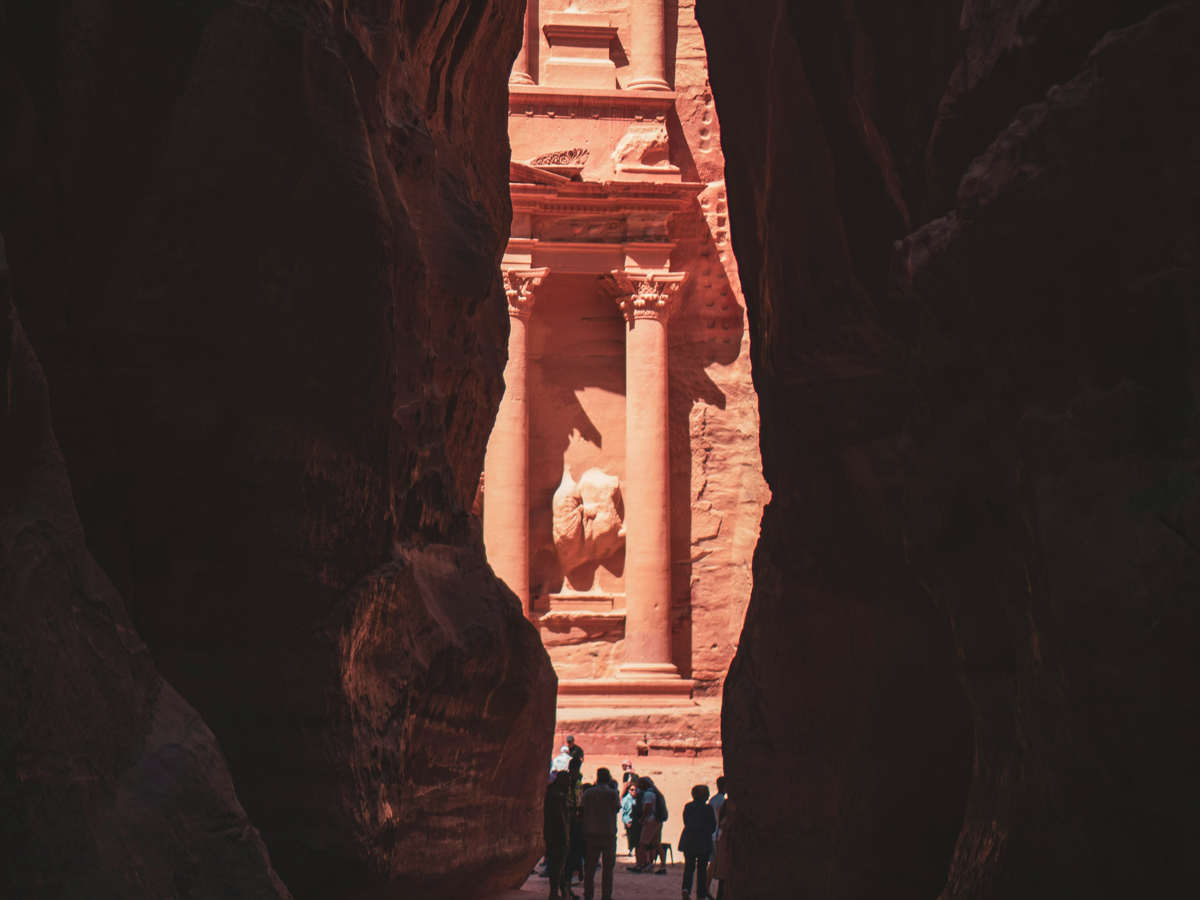
Explore Siq Petra, its Nabataean water system, ancient carvings, Treasury walk, history, opening hours, tickets, photography tips, and visitor advice.
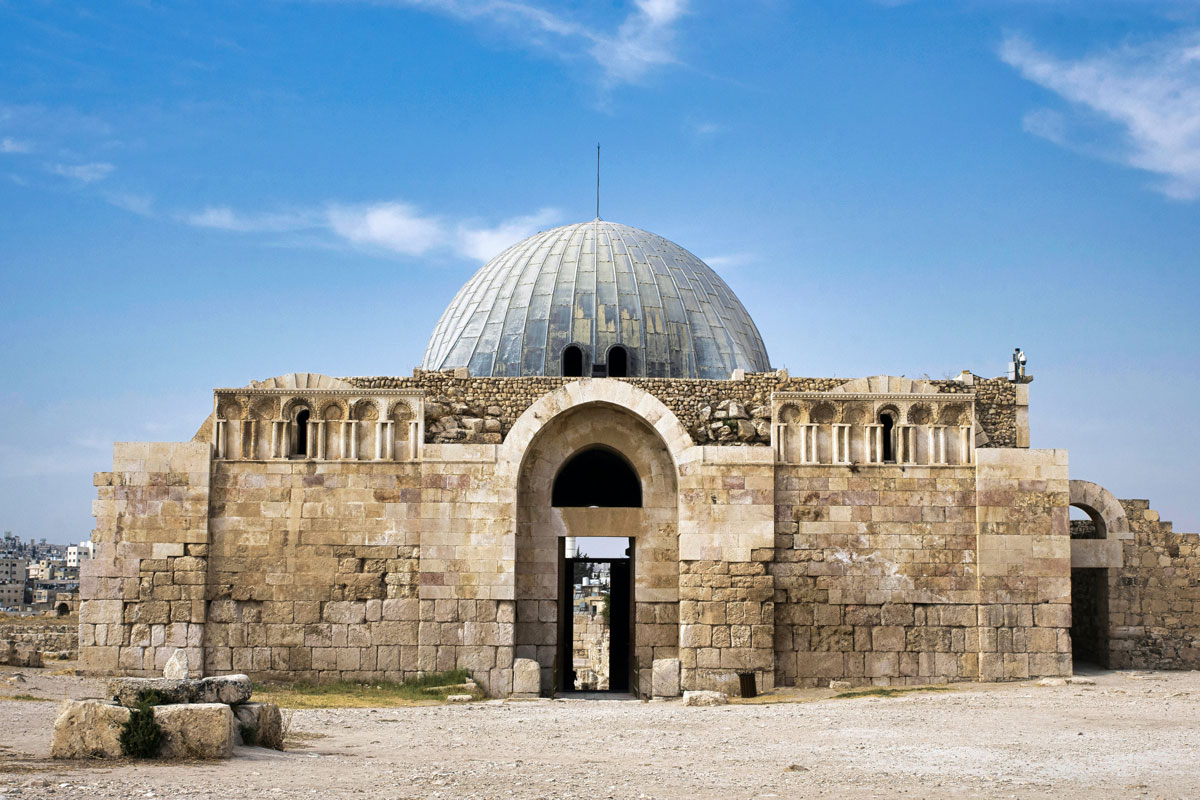
Explore Amman Citadel with practical tips on history, top sights, tickets, opening hours, Jordan Pass access, timing, transport, and nearby attractions.
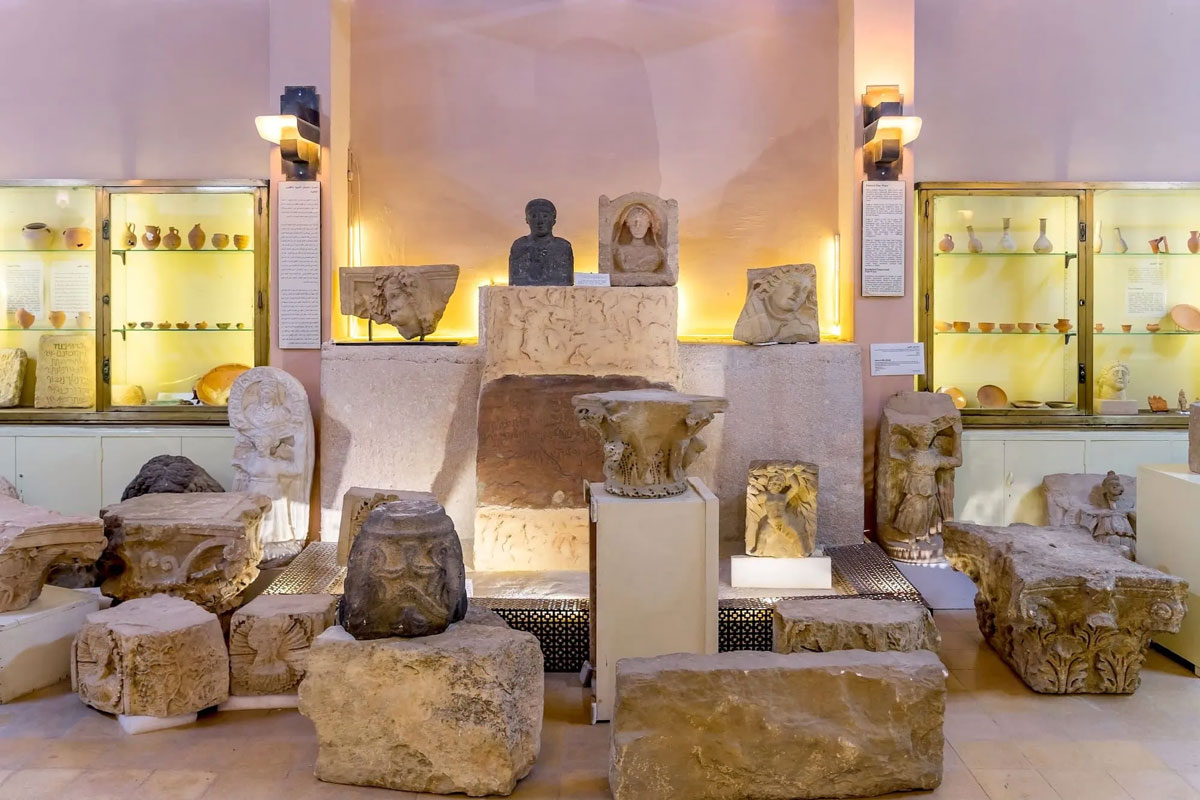
Explore the Jordan Archaeological Museum in Amman, including top artifacts, tickets, Jordan Pass, opening hours, Citadel tips, and visitor advice.
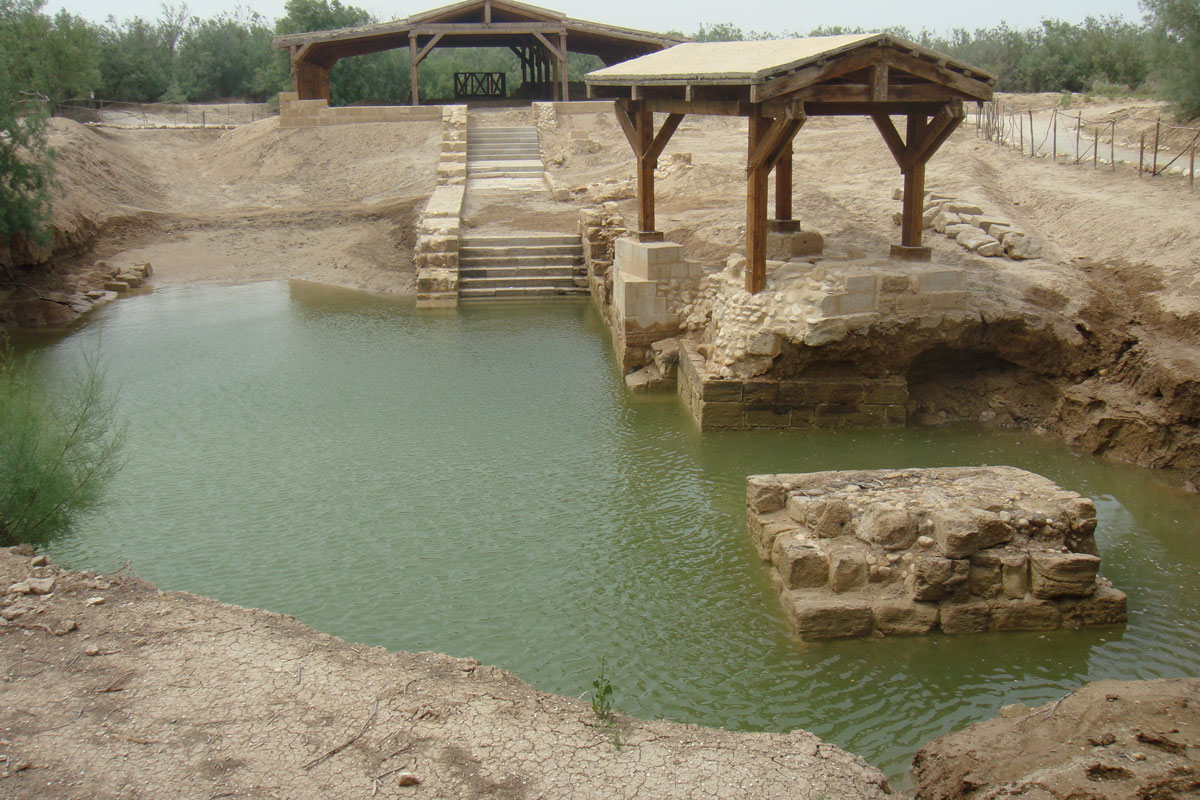
Plan your visit to the Baptism Site in Jordan with its biblical history, archaeology, tickets, opening hours, Jordan Pass details, and nearby stops.
Plan your Dead Sea Jordan visit with tips on floating, beaches, resorts, transport, best times, safety, nearby attractions, and how long to stay.
Explore Downtown Amman with tips on the Roman Theatre, souks, local food, walking routes, the Citadel, safety, transport, and the best time to visit.
Plan your visit to Hadrian’s Arch Jerash with its history, architecture, tickets, opening hours, Jordan Pass details, nearby sites, and travel tips.
Explore the best Jordan Valley attractions and things to do, from ancient Pella and the Jordan River to the Dead Sea, with practical tips for planning your visit.
Explore the Jordan River's biblical history, where Jesus was baptized, how to visit from Amman, and the best nearby places to include on your Jordan trip.
We go beyond just booking trips—we create unforgettable travel experiences that match your dreams!


We loved how easy and enjoyable this entire experience was. We booked the "15 Days Egypt & Jordan Tour Package" package and were impressed by how professionally everything was arranged. The itinerary gave us enough time to enjoy Egypt and Jordan without feeling rushed, and all transfers and day tours ran on time. The communication before arrival was clear and helpful, which made planning much easier. What we appreciated most was the balance between guided sightseeing and free time, so the whole trip felt comfortable and enjoyable. If you are looking for a reliable way to explore Jordan, this is a great option. We came home with amazing memories and would book again.
This trip exceeded all our expectations. We booked the "Discover Vietnam on a 21 Day Journey" package and were impressed by how professionally everything was arranged. The itinerary gave us enough time to enjoy Vietnam without feeling rushed, and all transfers and day tours ran on time. The communication before arrival was clear and helpful, which made planning much easier. What we appreciated most was the balance between guided sightseeing and free time, so the whole trip felt comfortable and enjoyable. If you are looking for a reliable way to explore Vietnam, this is a great option. We would absolutely recommend it to anyone visiting this destination.
We loved how easy and enjoyable this entire experience was. We booked the "8 Days Tour to Hill Tribe Heaven in North Vietnam" package and were impressed by how professionally everything was arranged. The itinerary gave us enough time to enjoy Vietnam without feeling rushed, and all transfers and day tours ran on time. The communication before arrival was clear and helpful, which made planning much easier. What we appreciated most was the balance between guided sightseeing and free time, so the whole trip felt comfortable and enjoyable. If you are looking for a reliable way to explore Vietnam, this is a great option. We came home with amazing memories and would book again.
Everything about this package felt thoughtfully planned. We booked the "3 Days Cappadocia and Pamukkale Tour by Plane & Bus" package and were impressed by how professionally everything was arranged. The itinerary gave us enough time to enjoy Cappadocia and Pamukkale without feeling rushed, and all transfers and day tours ran on time. The communication before arrival was clear and helpful, which made planning much easier. What we appreciated most was the balance between guided sightseeing and free time, so the whole trip felt comfortable and enjoyable. If you are looking for a reliable way to explore Turkey, this is a great option. The guides, transfers, and pacing all worked together perfectly.
Everything about this package felt thoughtfully planned. We booked the "4 Days Gallipoli, Troy, Pergamum, Ephesus & Pamukkale Tour" package and were impressed by how professionally everything was arranged. The itinerary gave us enough time to enjoy Ephesus, Pamukkale, Gallipoli, Troy, and Pergamum without feeling rushed, and all transfers and day tours ran on time. The communication before arrival was clear and helpful, which made planning much easier. What we appreciated most was the balance between guided sightseeing and free time, so the whole trip felt comfortable and enjoyable. If you are looking for a reliable way to explore Turkey, this is a great option. The guides, transfers, and pacing all worked together perfectly.










Comments (02)
Mr. Bowmik Haldar,
05 June, 2024Outstanding News & Insight! Thank you so much for sharing like this article
Jacoline Juie,
05 June, 2023However, here are some well-regarded car dealerships known for their customer service, inventory, and overall reputation. It's always a good idea to research and read reviews specific...
Leave Your Comment: