 Visit Turkey
 Visit Vietnam
 Visit Cambodia
 Visit Dubai
 Visit Jordan


Amman Guide 2026 - Things to Do and Visitor Tips
Plan your trip with this Amman travel guide covering top sights, food, neighborhoods, transport, day trips, where to stay, and practical visitor tips.



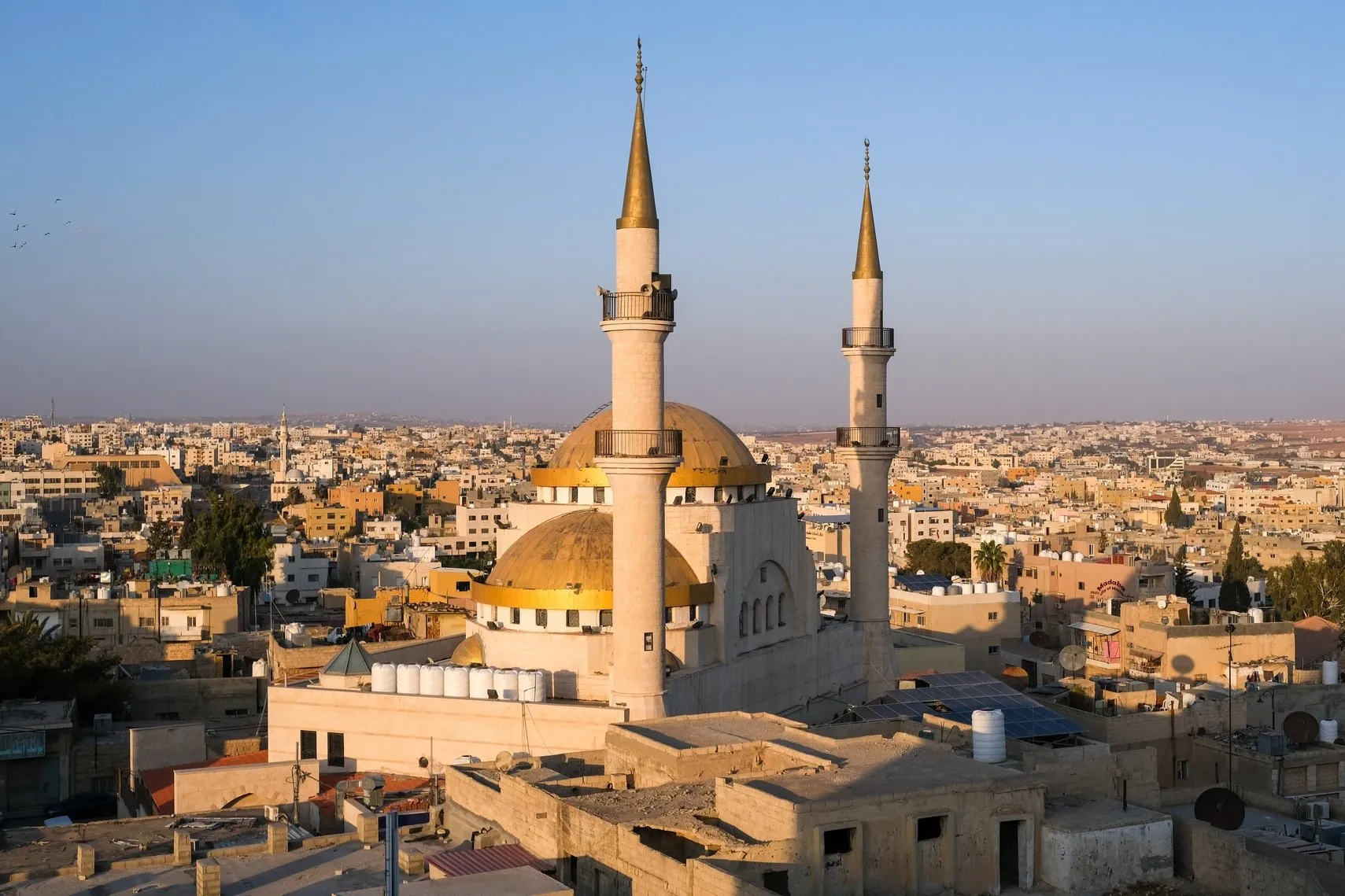
Madaba is one of Jordan's most interesting cities for travelers who enjoy history, art, and cultural discoveries. Located southwest of Amman, this historic city is best known for its remarkable Byzantine mosaics, particularly a sixth-century floor map depicting Jerusalem and other places across the Holy Land.
Often called the City of Mosaics, Madaba has preserved an extraordinary collection of ancient churches, archaeological remains, and intricate stone artworks. Yet its appeal extends beyond its historical monuments. Traditional workshops, welcoming streets, and its convenient location near Mount Nebo make it a rewarding stop on a journey through Jordan.
This Madaba Jordan travel guide explains the city's most important attractions, the stories behind its mosaics, entrance fees, transportation options, and practical tips to help you plan your visit.
Madaba earned its title as the City of Mosaics because of the extraordinary collection of ancient mosaic floors discovered throughout its churches, houses, and archaeological sites. Many date to the Byzantine period, particularly the fifth and sixth centuries, when the city developed into an important center of religious architecture and artistic production.
These mosaics were created by arranging small pieces of colored stone, known as tesserae, into detailed designs. Some depict plants, animals, hunting scenes, and geometric patterns, while others illustrate biblical landscapes or stories from classical mythology.
Madaba's artistic tradition continued into the early Islamic period, and the surviving remains reveal how different cultural influences shaped the city's architecture and decoration.
What makes Madaba especially interesting is that its mosaics are not confined to a single museum. Many remain in or near their original settings, allowing visitors to discover ancient artwork inside churches and archaeological complexes. The tradition also survives through local artisans and specialist restoration training, connecting the city's historical identity with contemporary craftsmanship.
The Madaba Mosaic Map is the city's most celebrated historical attraction. Preserved inside the Greek Orthodox Church of St. George, this sixth-century artwork is among the earliest surviving geographical representations of the Holy Land.
Unlike a modern map, it was created as a decorative church floor using thousands of carefully arranged stone pieces. The surviving sections depict Jerusalem, the Jordan River, the Dead Sea, and numerous ancient settlements, with Greek inscriptions identifying important locations.
Jerusalem occupies a particularly prominent position. Visitors can recognize elements of its Byzantine street layout, fortified walls, and religious buildings. These details have made the mosaic valuable to historians and archaeologists studying the geography of the region during late antiquity.
The map originally covered a substantially larger area than the surviving fragments. Although parts were lost over the centuries, the remaining artwork preserves remarkable geographical and architectural information.
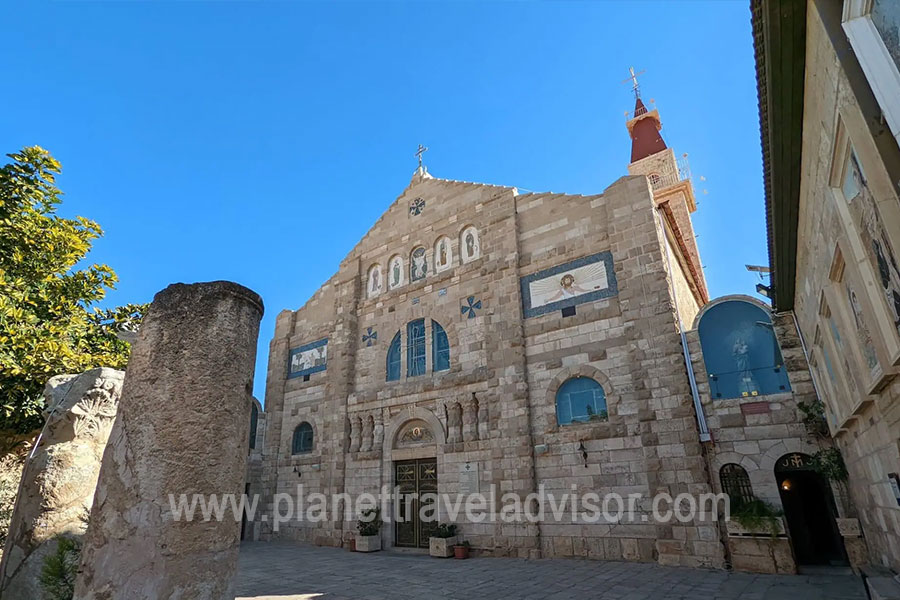
One detail worth understanding before visiting is that the mosaic is much older than the church surrounding it. The map dates to the sixth century, while the present St. George's Church was completed in 1896 above the remains of an earlier Byzantine building.
Visitors can examine the protected mosaic from designated viewing areas inside the church. Taking time to identify Jerusalem and the Dead Sea makes the experience more meaningful than simply viewing it as a decorative floor.
Because St. George's remains an active place of worship, visitors should dress respectfully, keep noise low, and follow any restrictions during religious services. Admission is charged separately from the Jordan Pass.
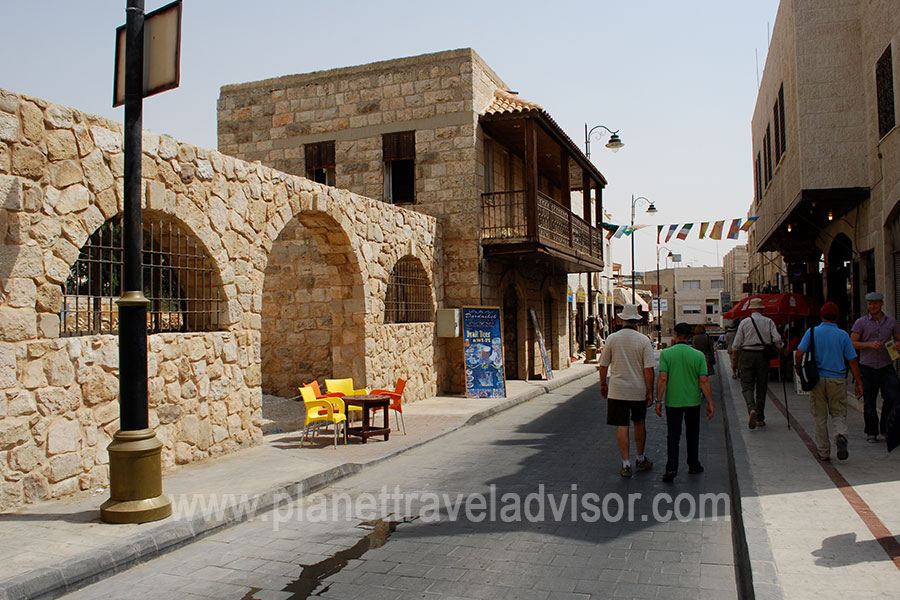
Although the Mosaic Map attracts most first-time visitors, several other historical and cultural sites deserve attention. The following Madaba attractions offer a broader understanding of the city's Roman, Byzantine, and later heritage.
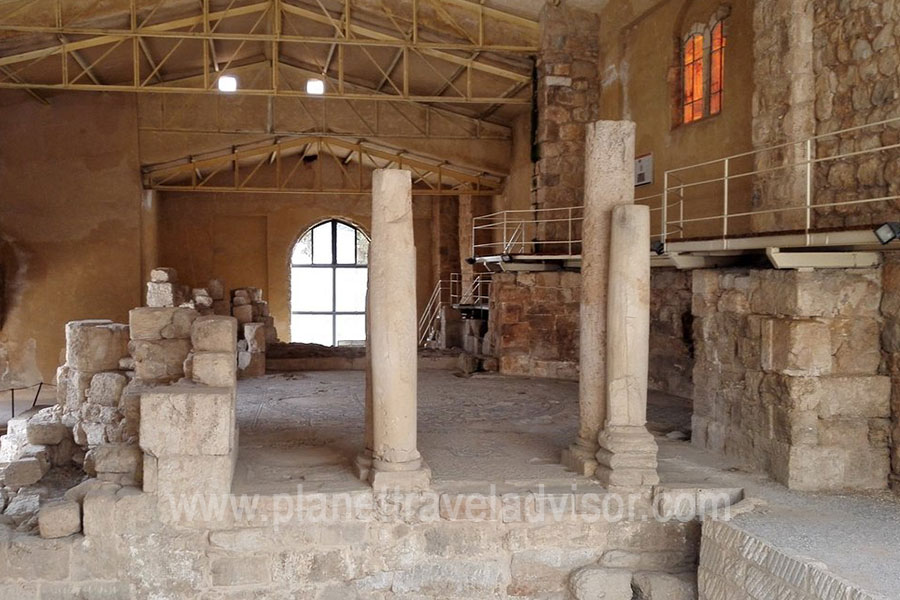
Madaba Archaeological Park preserves some of the city's most significant ancient remains, including sections of a Roman road, Byzantine mosaics, and the foundations of historical religious buildings.
One of its most interesting features is Hippolytus Hall, which contains mosaic scenes inspired by Greek mythology. The artwork includes figures associated with the story of Phaedra and Hippolytus, alongside decorative patterns and representations of the seasons.
Visitors can also examine remains associated with the Church of the Virgin Mary and other structures developed across different periods of Madaba's history.
The park is particularly valuable for understanding how the city developed over time. Instead of viewing individual mosaics in isolation, visitors can see how ancient streets, buildings, and religious spaces formed part of a larger urban settlement.
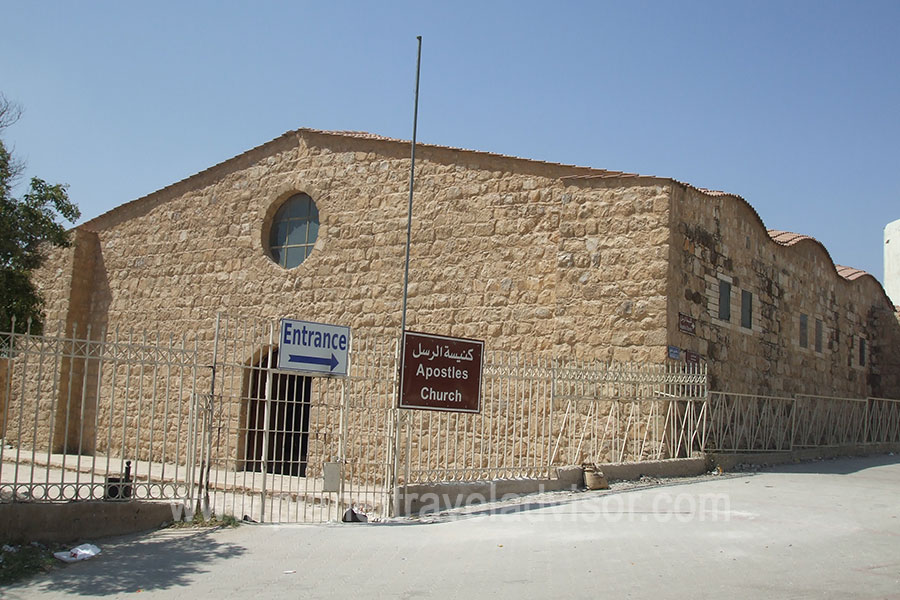
The Church of the Apostles is another important destination for anyone interested in Madaba's mosaic heritage. Dating to the late sixth century, the church preserves an extensive decorative floor featuring birds, plants, animals, and geometric compositions.
Its most recognizable feature is a central medallion representing Thalassa, the personification of the sea. Fish and other marine imagery surround the figure, creating an artistic composition that combines classical traditions with Byzantine craftsmanship.
An ancient inscription also records the name of the mosaicist, Salaman, offering a rare connection to one of the artists responsible for these works.
The church is located southeast of Madaba's historical center. It is a worthwhile addition for visitors who want to see another major mosaic without traveling far beyond the city.
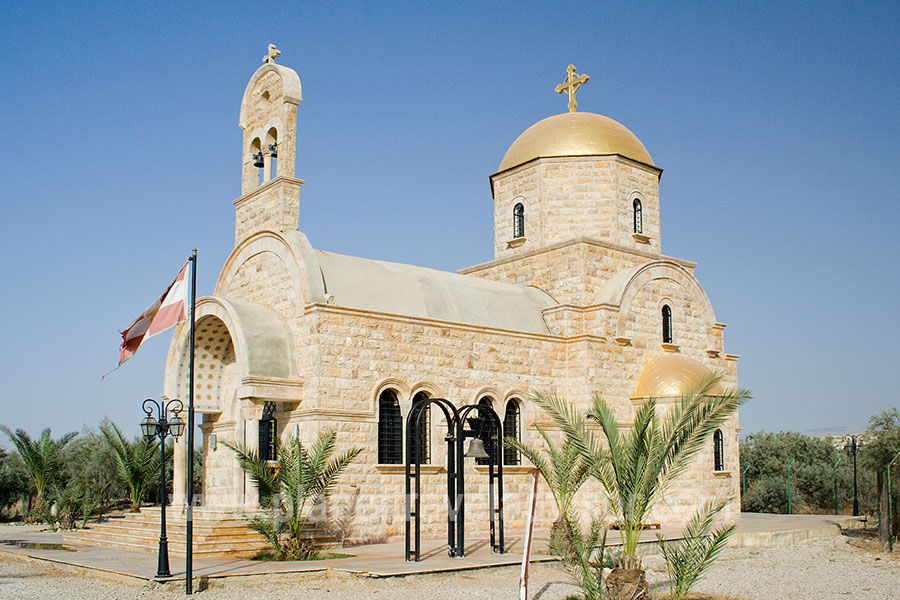
The Roman Catholic Church of St. John the Baptist offers a different perspective on Madaba's religious and archaeological history. The church stands on a historic part of the city associated with several earlier periods of settlement.
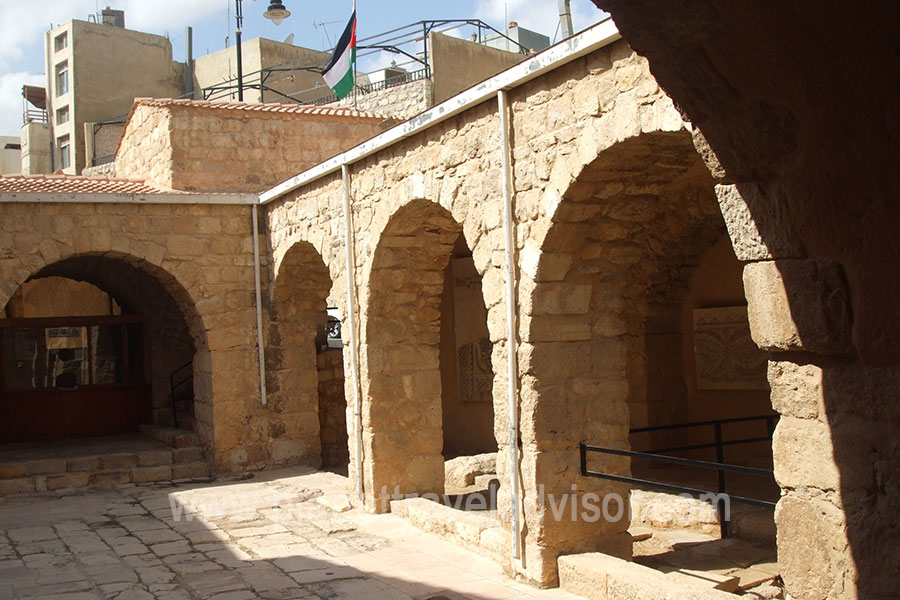
Beneath the church, the Acropolis Museum occupies vaulted underground spaces where visitors can learn about the location's archaeological background. The complex also contains historical displays associated with the church and the surrounding area.
One of the site's distinctive features is its bell tower, which can provide panoramic views across Madaba when visitor access is permitted.
Anyone planning to explore the underground areas or climb the tower should check current access arrangements. Some passages involve steps and confined spaces, while religious services may temporarily restrict entry.
Madaba's artistic heritage is not limited to ancient ruins. Local workshops continue the tradition of creating mosaics using small pieces of natural and colored stone.
Watching a craftsperson assemble a design reveals the patience and precision required to produce even a relatively small decorative piece. It also helps explain the extraordinary labor involved in creating the large mosaic floors found throughout the city.
The Madaba Institute for Mosaic Art and Restoration plays an important role in preserving these skills through specialist education and conservation training.
Visitors can browse workshops and craft shops around the historic center, particularly near the main tourist streets. Some businesses may offer demonstrations or hands-on experiences, although these should be arranged in advance rather than assumed to be available every day.
Purchasing locally made work from a reputable artisan can also provide a more meaningful souvenir while supporting Madaba's continuing craft tradition.
Madaba's attractions have different admission arrangements, so travelers should not assume that one ticket covers every historical site in the city.
According to Jordan's Ministry of Tourism and Antiquities, the published foreign visitor entrance fee for Madaba Archaeological Park and its associated museum is 3 Jordanian dinars (JOD). The ministry also lists admission arrangements covering the city's archaeological sites, including the Church of the Apostles.
The Jordan Pass includes Madaba Archaeological Park and the Church of the Apostles, making these attractions convenient for travelers already using the pass.
| Attraction | Admission Information |
|---|---|
| Madaba Archaeological Park and Museum | Published foreign visitor fee: 3 JOD; Jordan Pass accepted |
| Church of the Apostles | Included in the Jordan Pass; confirm individual ticket arrangements on arrival |
| St. George's Church and Mosaic Map | Separate admission required; not included in the Jordan Pass |
| Mount Nebo | Separate admission required; published foreign visitor fee: 3 JOD |
These prices and admission conditions are based on published official information and may change. Travelers should confirm the applicable ticket arrangements before visiting, particularly for independently administered religious sites.
For current details, consult the Jordanian Ministry of Tourism entrance fees and the official Jordan Pass attractions list.
Madaba is approximately 30 kilometers southwest of Amman, making it one of the more accessible historical destinations near Jordan's capital. Depending on the starting point, traffic, and chosen route, driving generally takes around 40 to 60 minutes.
A private driver or taxi is often the simplest choice for travelers planning a half-day visit. It allows you to travel directly between attractions and continue to Mount Nebo or the Dead Sea without arranging additional local transportation.
Renting a car is another practical option, particularly for visitors exploring Jordan independently. Roads connecting Amman and Madaba are generally straightforward, although traffic and parking around the city center may require patience.
Public buses and minibuses provide a more economical alternative, but schedules, departure points, and service frequency can vary. Travelers relying on public transportation should confirm the return arrangements before leaving Amman.
Madaba is also conveniently positioned for travelers arriving through Queen Alia International Airport. Its location makes it a potential first or final overnight stop, depending on flight schedules.
For visitors interested in combining the city with other historical destinations, organized Jordan tours can simplify transportation between Madaba, Amman, Mount Nebo, Petra, and other attractions.
Most travelers can explore Madaba's main historical attractions in half a day, although a longer visit allows more time for archaeological sites, craft workshops, and the atmosphere of the old town.
The ideal duration depends on whether Madaba is your main destination or a stop during a wider Jordan itinerary.
For a practical walking route, begin at St. George's Church, continue toward Madaba Archaeological Park, and explore the nearby tourist streets. The Church of the Apostles can then be added before returning toward the center.
These durations are planning recommendations rather than fixed schedules. Religious services, attraction opening hours, and your interest in individual mosaics may affect how long the visit takes.
Combining Madaba and Mount Nebo is one of the most practical sightseeing options in central Jordan. The destinations are a short drive apart, yet each offers a different perspective on the region's cultural and religious history.
Mount Nebo is traditionally associated with Moses viewing the Promised Land before his death. Today, it is an important pilgrimage destination and a historical site known for its panoramic views over the Jordan Valley and the Dead Sea.
The Moses Memorial Church also preserves valuable Byzantine mosaic floors, making Mount Nebo a natural continuation of Madaba's mosaic heritage.
A comfortable day trip can begin with the Madaba Mosaic Map and Archaeological Park, followed by a visit to the Church of the Apostles. After lunch, travelers can continue to Mount Nebo to explore the memorial complex and enjoy the surrounding landscape.
Visitors with more time may extend the journey toward the Dead Sea or continue south along the King's Highway. However, combining too many destinations can reduce the time available for meaningful sightseeing.
Mount Nebo is not included in the standard Jordan Pass attraction benefits, so its separate admission should be considered when planning the day's budget.
Spring and autumn are generally the most comfortable seasons for exploring Madaba. Temperatures are usually suitable for walking between churches, archaeological sites, and local shops without the intense afternoon heat that can occur during summer.
Spring brings milder conditions and greener landscapes around the city, while autumn offers pleasant temperatures for sightseeing and nearby excursions.
Summer visits are still enjoyable, particularly because several major attractions are indoors or partially sheltered. However, planning outdoor walking for the morning can make the experience more comfortable.
Winter is cooler and may bring rainfall. Visitors should prepare for changing weather, especially when combining Madaba with the exposed viewpoints at Mount Nebo.
For most sightseeing itineraries, arriving in the morning is a sensible choice. It provides more flexibility for visiting several attractions before closing time and allows additional time for unplanned stops.
Opening hours can differ between archaeological sites and active churches. Religious holidays, services, and seasonal schedules may also affect access. The official Jordan Pass opening-hours page is a useful reference for participating archaeological attractions.
Madaba works well as a day trip from Amman, but staying overnight can be worthwhile for travelers who prefer a slower pace or want to explore the surrounding region.
Spending a night in the city allows visitors to enjoy the historic center without rushing between attractions. It also creates more flexibility for visiting Mount Nebo, arranging a mosaic workshop, or exploring local restaurants.
Madaba can be particularly convenient for travelers beginning or ending their journey at Queen Alia International Airport. However, the suitability of an overnight stay depends on flight timing, accommodation preferences, and onward transportation plans.
For travelers continuing toward Petra, Madaba can also serve as an early stop along a longer route through Jordan. A well-organized itinerary can connect its historical attractions with the King's Highway, Kerak Castle, and southern destinations.
If you prefer to plan these destinations as one connected journey, explore available Jordan tours and compare itineraries according to your interests, travel dates, and preferred pace.
Madaba is generally straightforward to explore, especially around its compact historical center. Nevertheless, a few practical considerations can make your visit more comfortable.
If you plan to visit several attractions in one day, keep your schedule flexible. Spending extra time at an interesting site is often more rewarding than rushing through every location on a checklist.
Madaba offers a rewarding combination of historical discovery, religious heritage, and living artistic traditions. Its ancient mosaics reveal how people represented their world more than 1,400 years ago, while its churches and archaeological sites provide a deeper understanding of Jordan's cultural history.
The best way to experience Madaba is to allow enough time for both its famous Mosaic Map and the lesser-known attractions beyond it. A half-day is suitable for the main highlights, while a longer visit provides opportunities to explore traditional workshops and nearby Mount Nebo.
With thoughtful planning, Madaba can become an engaging part of a broader journey through Jordan rather than simply a short stop between destinations.




A curated list of the most popular travel packages based on different destinations.
Plan your trip with this Amman travel guide covering top sights, food, neighborhoods, transport, day trips, where to stay, and practical visitor tips.
Plan your Amman Roman Theatre visit with current ticket prices, opening hours, Jordan Pass details, history, nearby sights, and practical travel tips.
Explore the best souqs in Amman, from Al-Balad and the Gold Souq to Souq Jara, with shopping tips, souvenirs, timing, and nearby sights.
Explore Siq Petra, its Nabataean water system, ancient carvings, Treasury walk, history, opening hours, tickets, photography tips, and visitor advice.
Explore Amman Citadel with practical tips on history, top sights, tickets, opening hours, Jordan Pass access, timing, transport, and nearby attractions.
Explore the Jordan Archaeological Museum in Amman, including top artifacts, tickets, Jordan Pass, opening hours, Citadel tips, and visitor advice.
Plan your visit to the Baptism Site in Jordan with its biblical history, archaeology, tickets, opening hours, Jordan Pass details, and nearby stops.
Plan your Dead Sea Jordan visit with tips on floating, beaches, resorts, transport, best times, safety, nearby attractions, and how long to stay.
Explore Downtown Amman with tips on the Roman Theatre, souks, local food, walking routes, the Citadel, safety, transport, and the best time to visit.
Plan your visit to Hadrian’s Arch Jerash with its history, architecture, tickets, opening hours, Jordan Pass details, nearby sites, and travel tips.
Plan your first visit to Jerash Jordan with the best ruins to see, walking route, tickets, Jordan Pass details, opening hours, timing, and travel tips.
Explore the best Jordan Valley attractions and things to do, from ancient Pella and the Jordan River to the Dead Sea, with practical tips for planning your visit.
We go beyond just booking trips—we create unforgettable travel experiences that match your dreams!



A beautifully organized journey from start to finish. We booked the "3 Days Gallipoli, Troy, Pergamum & Ephesus Tour Package" package and were impressed by how professionally everything was arranged. The itinerary gave us enough time to enjoy Ephesus, Gallipoli, Troy, and Pergamum without feeling rushed, and all transfers and day tours ran on time. The communication before arrival was clear and helpful, which made planning much easier. What we appreciated most was the balance between guided sightseeing and free time, so the whole trip felt comfortable and enjoyable. If you are looking for a reliable way to explore Turkey, this is a great option. The itinerary was well balanced and never felt rushed.
This trip exceeded all our expectations. We booked the "10 Days in Turkey Tour Itinerary" package and were impressed by how professionally everything was arranged. The itinerary gave us enough time to enjoy the main highlights without feeling rushed, and all transfers and day tours ran on time. The communication before arrival was clear and helpful, which made planning much easier. What we appreciated most was the balance between guided sightseeing and free time, so the whole trip felt comfortable and enjoyable. If you are looking for a reliable way to explore Turkey, this is a great option. We would absolutely recommend it to anyone visiting this destination.
A beautifully organized journey from start to finish. We booked the "8 Days Hoi An Beach Escape and Culture Tour" package and were impressed by how professionally everything was arranged. The itinerary gave us enough time to enjoy Hoi An without feeling rushed, and all transfers and day tours ran on time. The communication before arrival was clear and helpful, which made planning much easier. What we appreciated most was the balance between guided sightseeing and free time, so the whole trip felt comfortable and enjoyable. If you are looking for a reliable way to explore Vietnam, this is a great option. The itinerary was well balanced and never felt rushed.
This trip exceeded all our expectations. We booked the "7 Days Phnom Penh, Siem Reap & Koh Rong Sanloem Tour" package and were impressed by how professionally everything was arranged. The itinerary gave us enough time to enjoy Siem Reap, Phnom Penh, and Koh Rong Sanloem without feeling rushed, and all transfers and day tours ran on time. The communication before arrival was clear and helpful, which made planning much easier. What we appreciated most was the balance between guided sightseeing and free time, so the whole trip felt comfortable and enjoyable. If you are looking for a reliable way to explore Cambodia, this is a great option. We would absolutely recommend it to anyone visiting this destination.
One of the smoothest tours we have ever booked. We booked the "8 Days Nha Trang Beach Escape" package and were impressed by how professionally everything was arranged. The itinerary gave us enough time to enjoy Nha Trang without feeling rushed, and all transfers and day tours ran on time. The communication before arrival was clear and helpful, which made planning much easier. What we appreciated most was the balance between guided sightseeing and free time, so the whole trip felt comfortable and enjoyable. If you are looking for a reliable way to explore Vietnam, this is a great option. It was the perfect mix of sightseeing, comfort, and great logistics.











Comments (02)
Mr. Bowmik Haldar,
05 June, 2024Outstanding News & Insight! Thank you so much for sharing like this article
Jacoline Juie,
05 June, 2023However, here are some well-regarded car dealerships known for their customer service, inventory, and overall reputation. It's always a good idea to research and read reviews specific...
Leave Your Comment: