 Visit Turkey
 Visit Vietnam
 Visit Cambodia
 Visit Dubai
 Visit Jordan


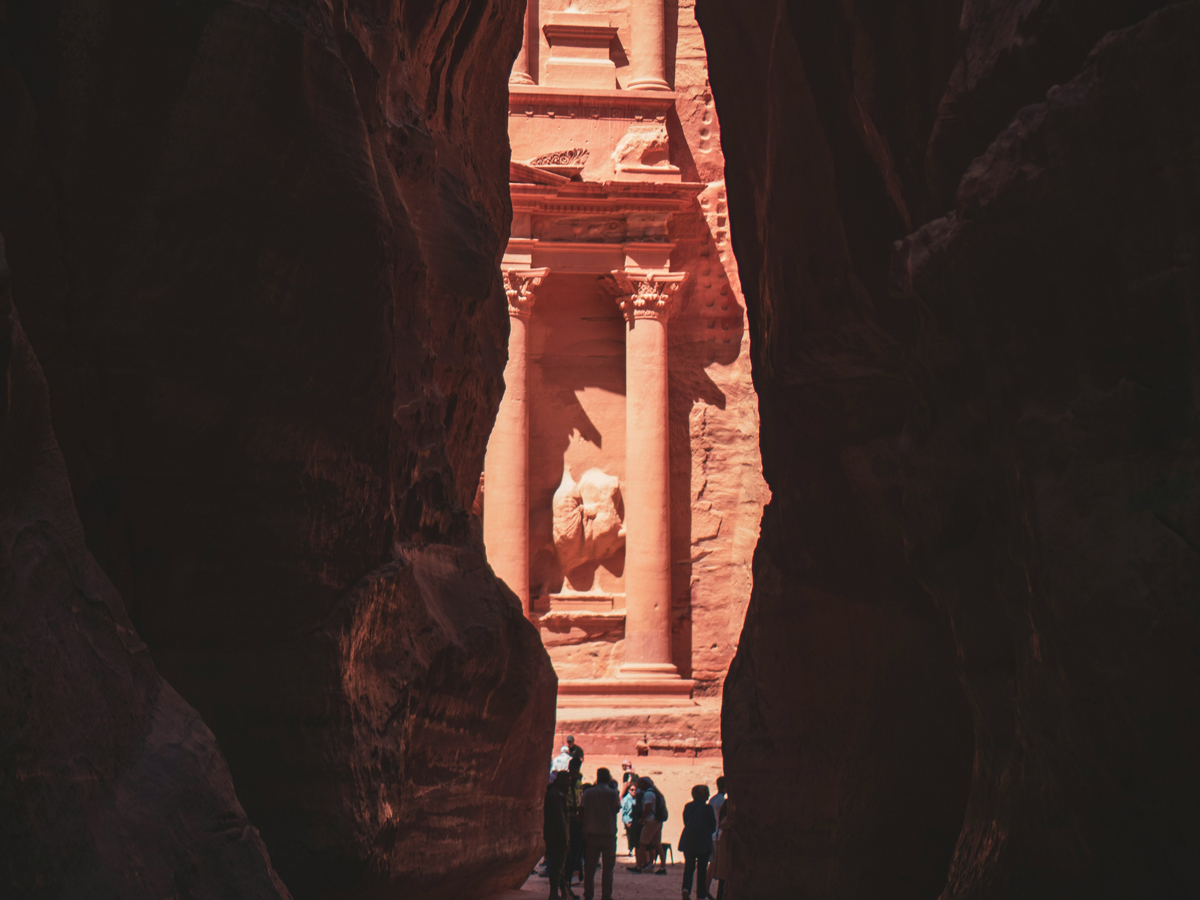
Siq Petra Guide for First-Time Visitors
Explore Siq Petra, its Nabataean water system, ancient carvings, Treasury walk, history, opening hours, tickets, photography tips, and visitor advice.



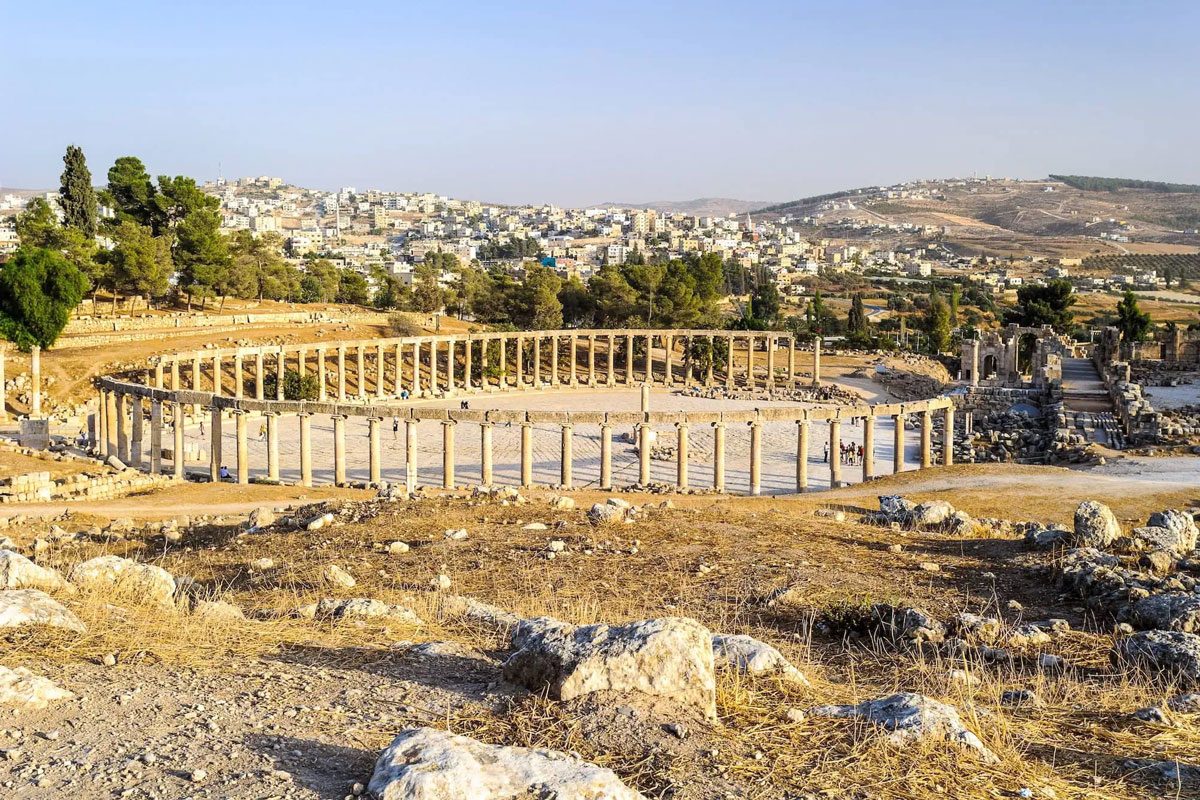
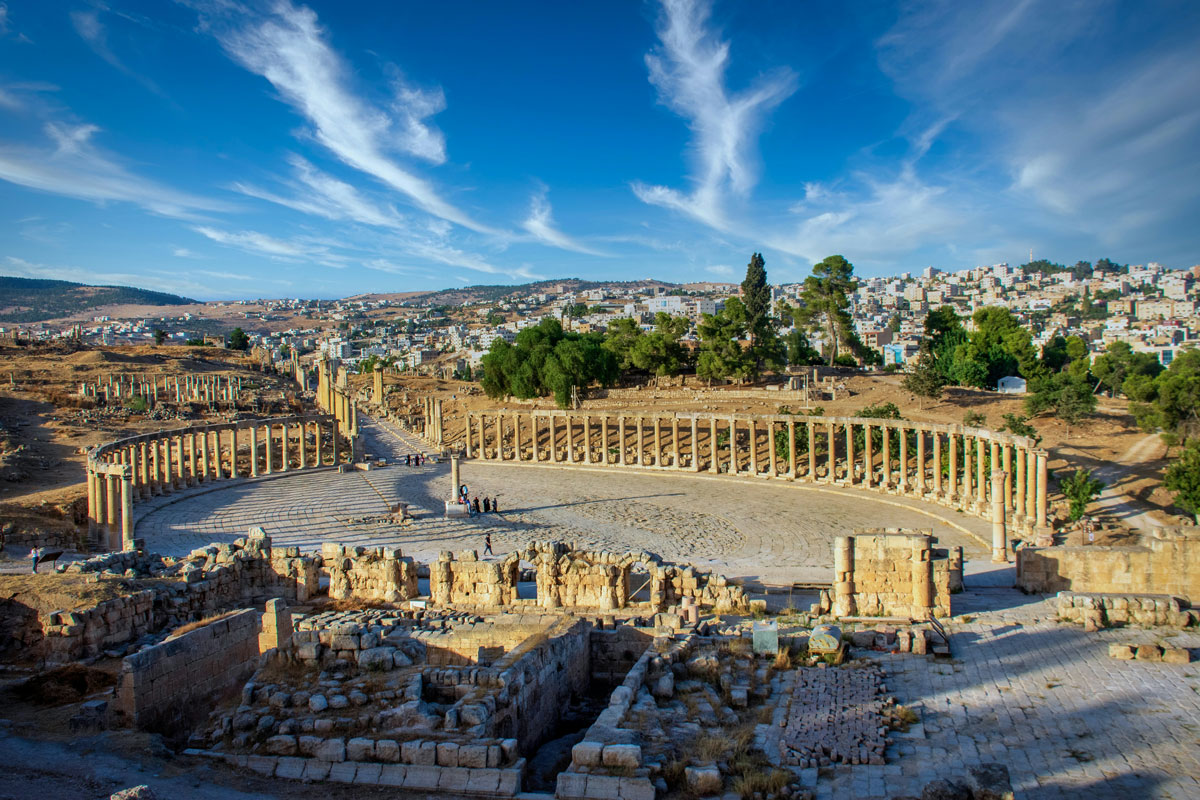
The Oval Plaza in Jerash is one of the most distinctive surviving public spaces from the Roman world. Measuring approximately 90 by 80 meters and surrounded by a sweeping colonnade of Ionic columns, it stands near the southern entrance to the ancient city of Gerasa, in present-day Jordan.
What makes the plaza remarkable is not simply its size or preservation, but the reason behind its unusual shape. Rather than following the rectangular plan commonly associated with Roman public squares, it connects two important parts of the ancient city that were built on different alignments.
Understanding that architectural decision makes visiting the Oval Plaza much more interesting. Its history, surviving features, and position among the ruins reveal how Roman planners adapted a growing city while creating one of Jerash's most recognizable landmarks.
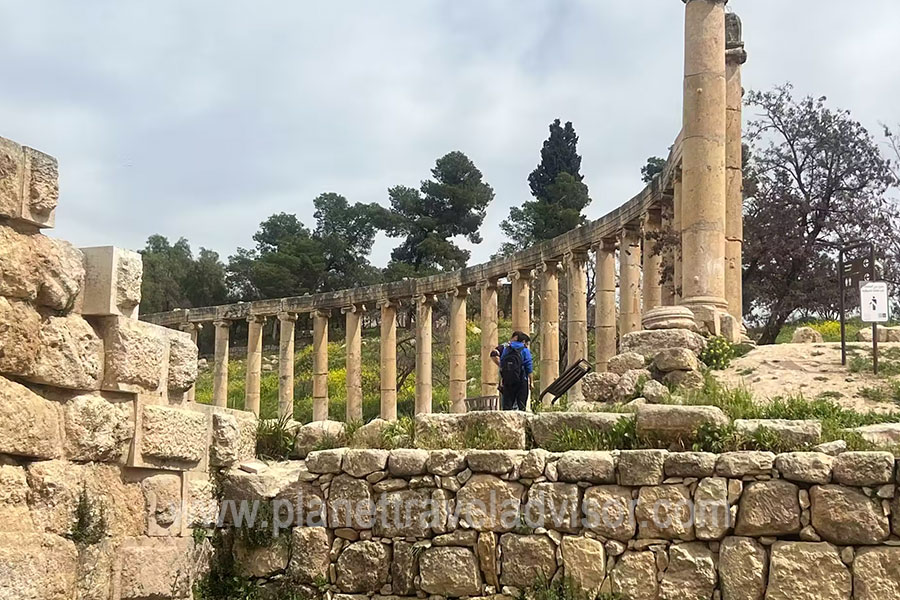
The Oval Plaza owes its unusual shape to a practical challenge in Roman urban planning. The ancient Sanctuary of Zeus occupied an elevated position to the south, while the Cardo Maximus, Gerasa's principal colonnaded street, extended northward along a different axis.
Instead of forcing these two areas into a straight alignment, the city's planners created a broad, oval-shaped space that could connect them naturally.
The result was an architectural transition between the sanctuary and the main street. Visitors approaching from the south entered a wide, curved plaza before continuing along the long colonnaded avenue.
This design also created an impressive visual setting for the sanctuary. The columns guided the eye around the open space, while the surrounding monuments gave the entrance to the city a sense of scale and order.
The monument is frequently called the Oval Forum of Jerash, although its purpose was more specific than that of a conventional rectangular Roman forum. Its design helped resolve the alignment of two major urban features while creating space for public movement and gathering.
The history of the Oval Plaza is closely connected to the development of ancient Gerasa, an important city within the Roman province of Arabia and traditionally associated with the Decapolis.
Gerasa expanded significantly under Roman rule, acquiring monumental temples, theaters, public squares, and streets lined with columns. The Oval Plaza formed an important part of this changing urban landscape.
According to Jordan's official tourism information, the origins of the plaza can be traced to the first century AD. However, different parts of the monument belong to different construction periods.
The plaza and its surrounding Ionic colonnade were probably developed in the early second century AD, during the reign of Emperor Trajan, who ruled from AD 98 to 117. The extensive stone paving visible today was added considerably later, no earlier than the fourth century AD.
These different dates illustrate how Roman Gerasa continued to adapt its public spaces over several centuries rather than completing them in a single building campaign.
Historical descriptions also identify two small monuments that once stood near the center. One may have supported a group of statues, possibly depicting priestesses, while another was a four-column structure known as a tetrakionion, perhaps associated with a statue of Emperor Hadrian. Their exact original arrangements and interpretations remain uncertain.
As Jerash changed during late antiquity and subsequent periods, the plaza and its surroundings experienced further alterations. Archaeological excavations and restoration projects in modern times have helped make its original oval layout recognizable again.
Today, the surviving monument provides valuable evidence of the city's architectural development and the importance of public spaces in Roman urban life.
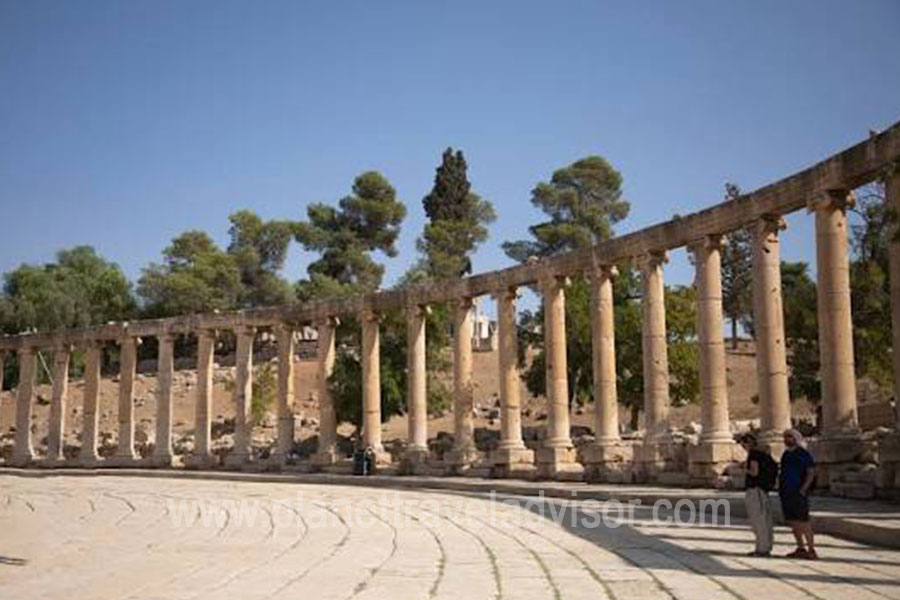
The architecture of the Oval Plaza is defined by its broad paved surface, curved colonnade, and carefully planned relationship with the surrounding monuments.
Measuring approximately 90 meters long and 80 meters wide, the plaza is large enough to accommodate substantial public gatherings. Its proportions become particularly noticeable when visitors walk across the center and observe how the columns curve around the open space.
The colonnade is commonly described as comprising 56 Ionic columns. These columns are recognizable by their distinctive capitals, which feature spiral ornaments known as volutes.
Unlike the Corinthian columns found along much of the Cardo Maximus, the Ionic design gives the plaza a somewhat simpler architectural character.
The stone paving is another defining feature. Large, carefully cut slabs follow the shape of the plaza, contributing to the visual continuity of the curved space.
One interesting aspect of the monument is the relationship between its ancient elements and modern restoration. Although much of the surviving stonework is ancient, some fallen columns have been re-erected during archaeological conservation. Visitors should therefore not assume that every column has remained standing continuously since Roman times.
Near the center of the plaza, a column now serves a ceremonial purpose connected with the Jerash Festival. Its present appearance should not be confused with the precise arrangement of the ancient monuments that once occupied this space.
The most impressive feature, however, remains the overall composition. The continuous curve of the colonnade leads toward the straight line of the Cardo Maximus, demonstrating how Roman architecture combined practical planning with monumental visual design.
The relationship between the Oval Plaza and the Temple of Zeus is essential to understanding the site's original layout.
The Sanctuary of Zeus occupied elevated ground southwest of the plaza. It was an important religious area in ancient Gerasa, with a history that extended beyond the construction of the surviving Roman temple.
The temple complex developed on different levels, with the monumental sanctuary occupying the hillside above the open public space.
Because the sanctuary and the Cardo Maximus followed different alignments, the Oval Plaza served as an architectural connection between them. Its curved design allowed the street and sacred precinct to meet without requiring either to follow the other's orientation.
The elevated temple area also offers a useful perspective on the plaza. From suitable viewpoints, visitors can appreciate the complete oval arrangement, the surrounding colonnade, and the beginning of the main street.
This is particularly helpful because the overall geometry can be difficult to recognize while standing inside the plaza itself.
Visitors interested in Roman architecture should consider viewing both monuments together rather than treating them as unrelated attractions. Their physical relationship explains much of what makes the Oval Plaza unusual.
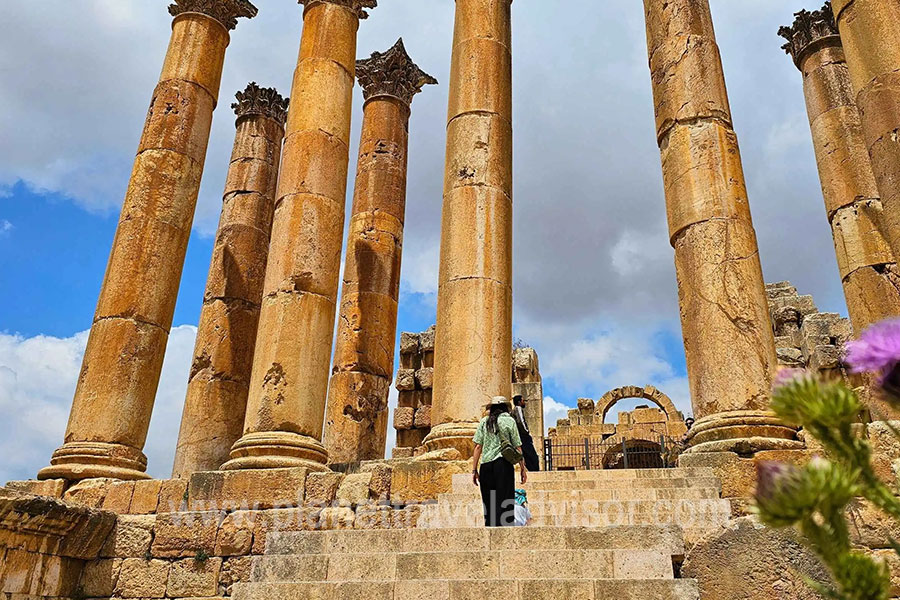
The Oval Plaza is located inside the Jerash archaeological site in northern Jordan, approximately 45 kilometers north of Amman.
It stands near the southern end of ancient Gerasa, between the South Gate area and the beginning of the Cardo Maximus.
Visitors entering through the main archaeological-site entrance generally follow a route past several important monuments before reaching the plaza.
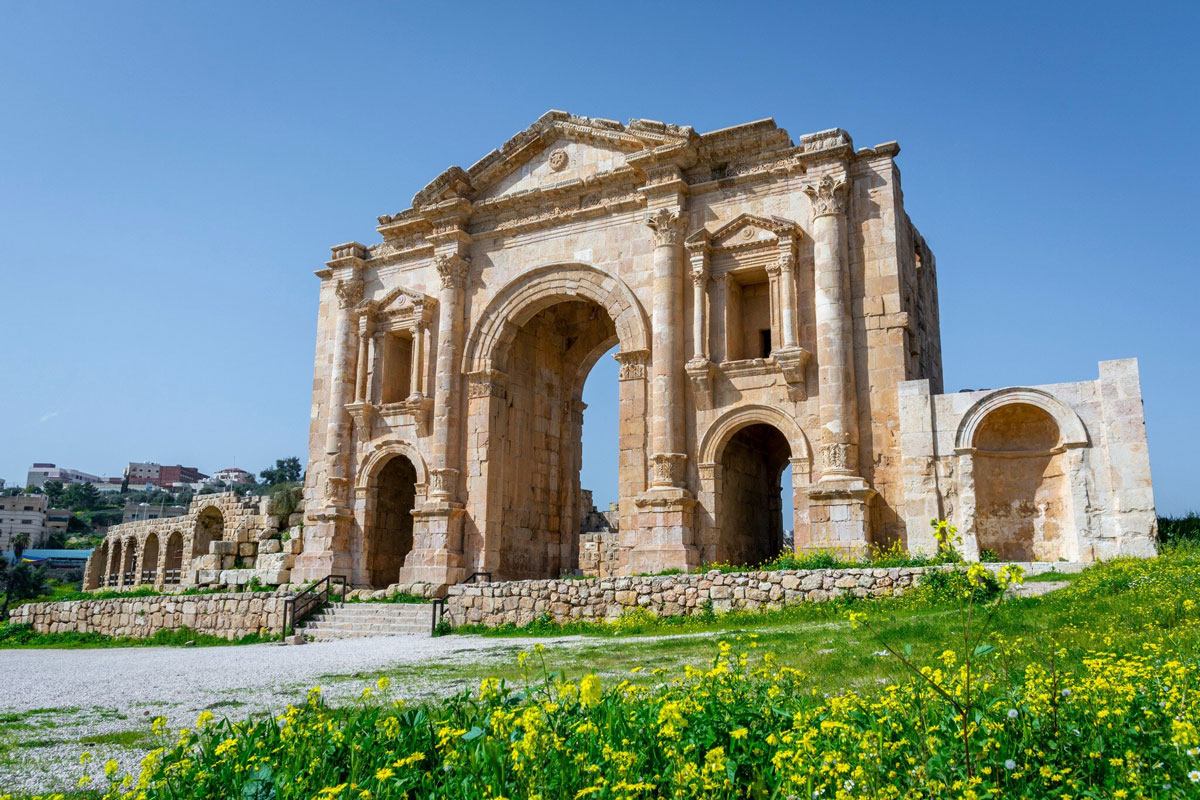
The typical approach passes Hadrian's Arch and the remains of the ancient Hippodrome before continuing through the South Gate.
After entering the historical city, the Oval Plaza opens ahead as one of the first major monumental spaces.
The Cardo Maximus begins at the northern end of the plaza and continues through the ancient city. The Temple of Zeus and South Theatre occupy higher ground nearby.
The plaza is therefore a convenient orientation point for exploring Jerash. From here, visitors can continue along the main Roman street or explore the monuments on the surrounding slopes.
If you are visiting independently, the Jerash Visitor Center provides maps and information about the archaeological site's main attractions and walking routes.
Visiting the Oval Plaza is generally straightforward, although the archaeological environment requires some preparation.
Most travelers can appreciate the main features in approximately 15–30 minutes. Allow more time if you enjoy photography, historical interpretation, or exploring the neighboring Temple of Zeus.
The plaza is primarily an outdoor monument, with extensive areas exposed to direct sunlight. During warmer months, an early visit is often more comfortable than walking across the open stone surface during the hottest part of the day.
Practical considerations include:
Footwear: Wear supportive walking shoes suitable for uneven ancient paving and stone pathways.
Sun protection: Bring water, sunscreen, and a hat, particularly during summer.
Walking conditions: Expect irregular surfaces and some changes in elevation around nearby monuments.
Accessibility: Wheelchair users and travelers with limited mobility may encounter difficulties on the historic paving and routes leading to elevated areas.
Site preservation: Avoid climbing on fragile archaeological remains or entering restricted sections.
One useful approach is to walk around part of the colonnade before crossing the center. This helps reveal how the changing perspective affects the appearance of the oval shape.
If time permits, continue toward the Temple of Zeus for an elevated view before exploring the Cardo Maximus.
For the wider archaeological site, allowing at least two to three hours is a reasonable planning estimate, particularly if you want to see the theaters, temples, and principal streets without rushing.
Travelers who prefer organized transportation and guided sightseeing can also explore Jordan travel packages that combine Jerash with other important destinations. A Jerash and Amman day tour from Amman is another option for exploring both cities.
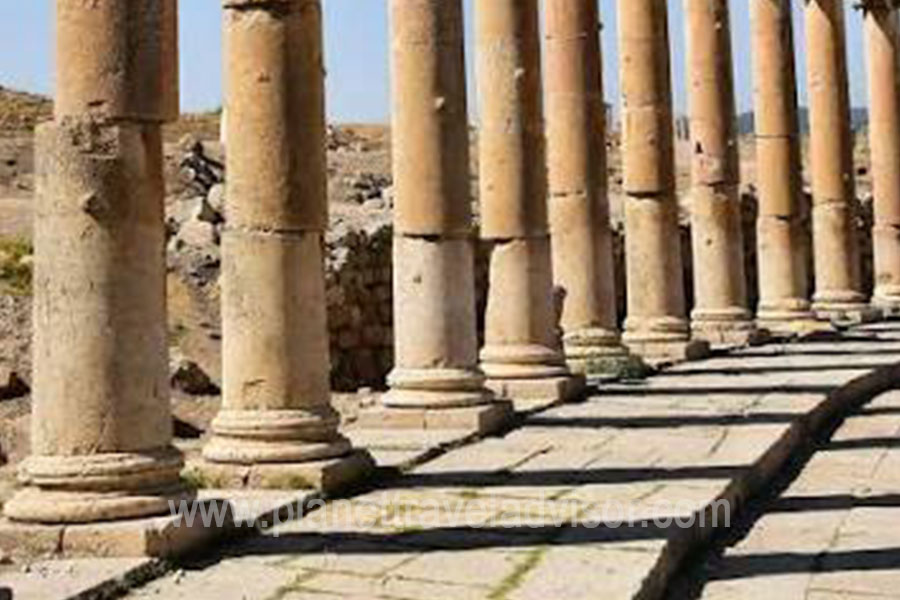
The Oval Plaza is part of the wider Jerash archaeological site, so visitors do not need to purchase a separate ticket specifically for the monument.
According to Jordan's official tourism ticketing service, the standard admission price for foreign visitors is 10 Jordanian dinars (JOD). The archaeological-site admission also includes access to the Jerash Archaeological Museum.
Children under 12 are listed as eligible for free admission on the official ticketing website.
Entrance to Jerash is also included with the Jordan Pass, making it worth considering for travelers planning to visit several participating attractions during their stay.
Published opening hours for the archaeological site vary according to the season:
| Period | Published opening hours |
|---|---|
| Winter (November–April) | 8:00 AM–4:00 PM |
| Summer | 8:00 AM–6:30 PM |
| April and May transitional schedule | 8:00 AM–5:30 PM |
The official schedule includes April in overlapping seasonal categories, and Ramadan hours may differ. Confirm the applicable closing time before traveling, especially when planning an afternoon visit.
Guided tours and transportation are separate arrangements and may involve additional costs.
The Oval Plaza is one of the most recognizable photography locations in Jerash, but its large size makes choosing the right viewpoint important.
Photographs taken from inside the plaza emphasize the height of the columns and the broad stone surface. However, they do not always communicate the monument's distinctive shape.
For a wider perspective, consider viewing the plaza from accessible elevated areas near the Temple of Zeus. Looking down toward the colonnade makes the oval arrangement easier to recognize and reveals its relationship with the Cardo Maximus.
Another useful composition is from the northern side of the plaza, where the straight line of the colonnaded street contrasts with the curved arrangement behind it.
Morning light can provide comfortable conditions for exploring and photographing the open space, while lower-angle sunlight later in the day may create stronger shadows between the columns. Actual lighting depends on the season, weather, and direction of your photograph.
If you want to emphasize the size of the monument, a wide composition with a few visitors in the distance can help establish scale.
Take photographs from permitted paths and viewpoints, and avoid moving or climbing on archaeological fragments to obtain a better angle.
The Oval Plaza in Jerash is more than a beautiful collection of Roman columns. Its unusual shape, layered construction history, and connection to the Sanctuary of Zeus reveal how ancient Gerasa developed into a sophisticated Roman city.
Taking time to examine the colonnade, understand the plaza's architectural purpose, and appreciate the views from nearby elevated areas can make a visit considerably more rewarding.
For travelers exploring Jordan beyond Jerash, thoughtfully planned Jordan tours can help connect the country's Roman heritage with its other important historical destinations.


A curated list of the most popular travel packages based on different destinations.
Explore Siq Petra, its Nabataean water system, ancient carvings, Treasury walk, history, opening hours, tickets, photography tips, and visitor advice.
Plan your trip with this Amman travel guide covering top sights, food, neighborhoods, transport, day trips, where to stay, and practical visitor tips.
Explore Amman Citadel with practical tips on history, top sights, tickets, opening hours, Jordan Pass access, timing, transport, and nearby attractions.
Plan your Amman Roman Theatre visit with current ticket prices, opening hours, Jordan Pass details, history, nearby sights, and practical travel tips.
Explore the best souqs in Amman, from Al-Balad and the Gold Souq to Souq Jara, with shopping tips, souvenirs, timing, and nearby sights.
Explore the Jordan Archaeological Museum in Amman, including top artifacts, tickets, Jordan Pass, opening hours, Citadel tips, and visitor advice.
Plan your visit to the Baptism Site in Jordan with its biblical history, archaeology, tickets, opening hours, Jordan Pass details, and nearby stops.
Plan your Dead Sea Jordan visit with tips on floating, beaches, resorts, transport, best times, safety, nearby attractions, and how long to stay.
Explore Downtown Amman with tips on the Roman Theatre, souks, local food, walking routes, the Citadel, safety, transport, and the best time to visit.
Plan your visit to Hadrian’s Arch Jerash with its history, architecture, tickets, opening hours, Jordan Pass details, nearby sites, and travel tips.
Plan your first visit to Jerash Jordan with the best ruins to see, walking route, tickets, Jordan Pass details, opening hours, timing, and travel tips.
Explore the Jordan River's biblical history, where Jesus was baptized, how to visit from Amman, and the best nearby places to include on your Jordan trip.
We go beyond just booking trips—we create unforgettable travel experiences that match your dreams!


A beautifully organized journey from start to finish. We booked the "5 Days Trip through Istanbul, Gallipoli, and Troy" package and were impressed by how professionally everything was arranged. The itinerary gave us enough time to enjoy Istanbul, Gallipoli, and Troy without feeling rushed, and all transfers and day tours ran on time. The communication before arrival was clear and helpful, which made planning much easier. What we appreciated most was the balance between guided sightseeing and free time, so the whole trip felt comfortable and enjoyable. If you are looking for a reliable way to explore Turkey, this is a great option. The itinerary was well balanced and never felt rushed.
This trip exceeded all our expectations. We booked the "Discover Vietnam on a 21 Day Journey" package and were impressed by how professionally everything was arranged. The itinerary gave us enough time to enjoy Vietnam without feeling rushed, and all transfers and day tours ran on time. The communication before arrival was clear and helpful, which made planning much easier. What we appreciated most was the balance between guided sightseeing and free time, so the whole trip felt comfortable and enjoyable. If you are looking for a reliable way to explore Vietnam, this is a great option. We would absolutely recommend it to anyone visiting this destination.
This trip exceeded all our expectations. We booked the "Discover Turkey in 6 Days from Istanbul to Ephesus" package and were impressed by how professionally everything was arranged. The itinerary gave us enough time to enjoy Istanbul and Ephesus without feeling rushed, and all transfers and day tours ran on time. The communication before arrival was clear and helpful, which made planning much easier. What we appreciated most was the balance between guided sightseeing and free time, so the whole trip felt comfortable and enjoyable. If you are looking for a reliable way to explore Turkey, this is a great option. We would absolutely recommend it to anyone visiting this destination.
A beautifully organized journey from start to finish. We booked the "14 Days Exploring the Panorama of Vietnam" package and were impressed by how professionally everything was arranged. The itinerary gave us enough time to enjoy Vietnam without feeling rushed, and all transfers and day tours ran on time. The communication before arrival was clear and helpful, which made planning much easier. What we appreciated most was the balance between guided sightseeing and free time, so the whole trip felt comfortable and enjoyable. If you are looking for a reliable way to explore Vietnam, this is a great option. The itinerary was well balanced and never felt rushed.
Everything about this package felt thoughtfully planned. We booked the "Best Day Tour Madaba, Nebo, Baptism Site & Dead Sea" package and were impressed by how professionally everything was arranged. The itinerary gave us enough time to enjoy Madaba, Mount Nebo, and the Dead Sea without feeling rushed, and all transfers and day tours ran on time. The communication before arrival was clear and helpful, which made planning much easier. What we appreciated most was the balance between guided sightseeing and free time, so the whole trip felt comfortable and enjoyable. If you are looking for a reliable way to explore Jordan, this is a great option. The guides, transfers, and pacing all worked together perfectly.









Comments (02)
Mr. Bowmik Haldar,
05 June, 2024Outstanding News & Insight! Thank you so much for sharing like this article
Jacoline Juie,
05 June, 2023However, here are some well-regarded car dealerships known for their customer service, inventory, and overall reputation. It's always a good idea to research and read reviews specific...
Leave Your Comment: