 Visit Turkey
 Visit Vietnam
 Visit Cambodia
 Visit Dubai
 Visit Jordan


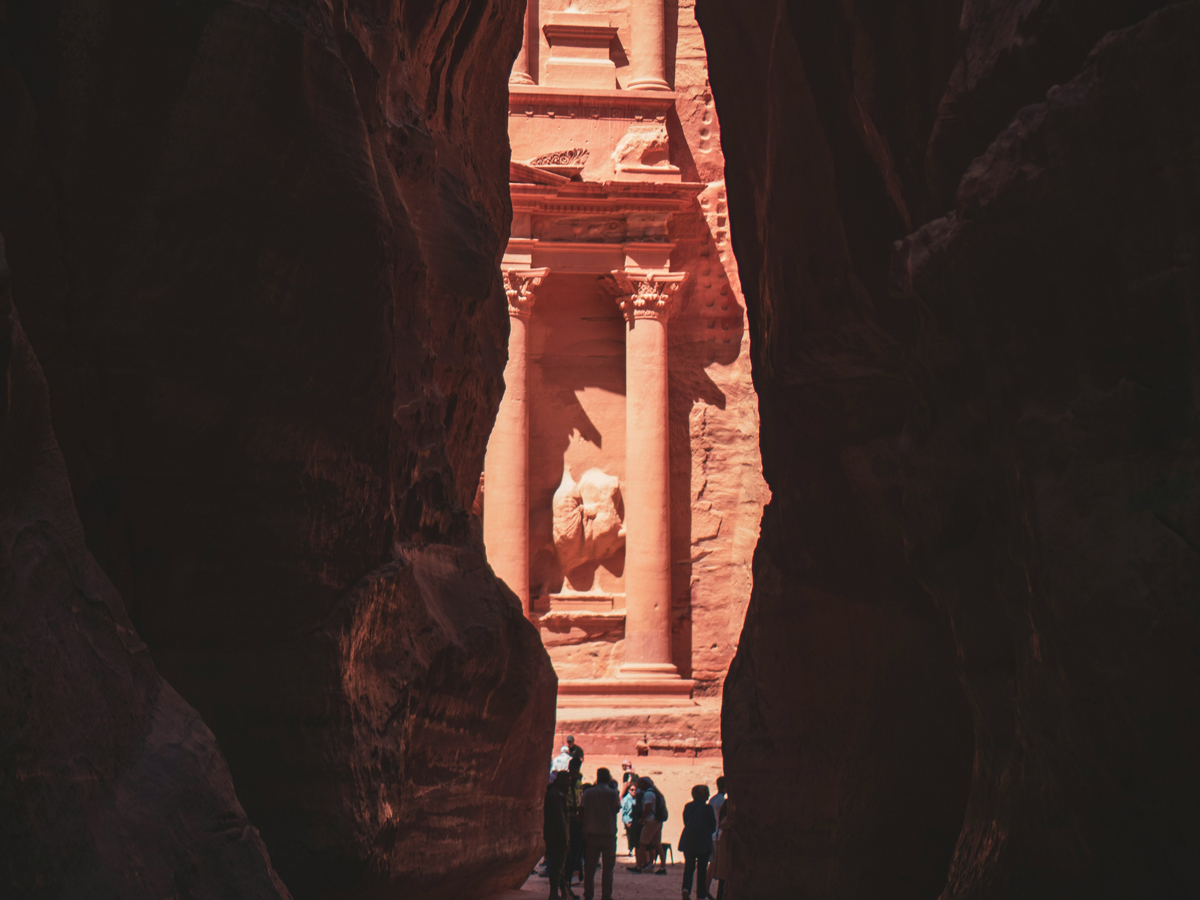
Siq Petra Guide for First-Time Visitors
Explore Siq Petra, its Nabataean water system, ancient carvings, Treasury walk, history, opening hours, tickets, photography tips, and visitor advice.



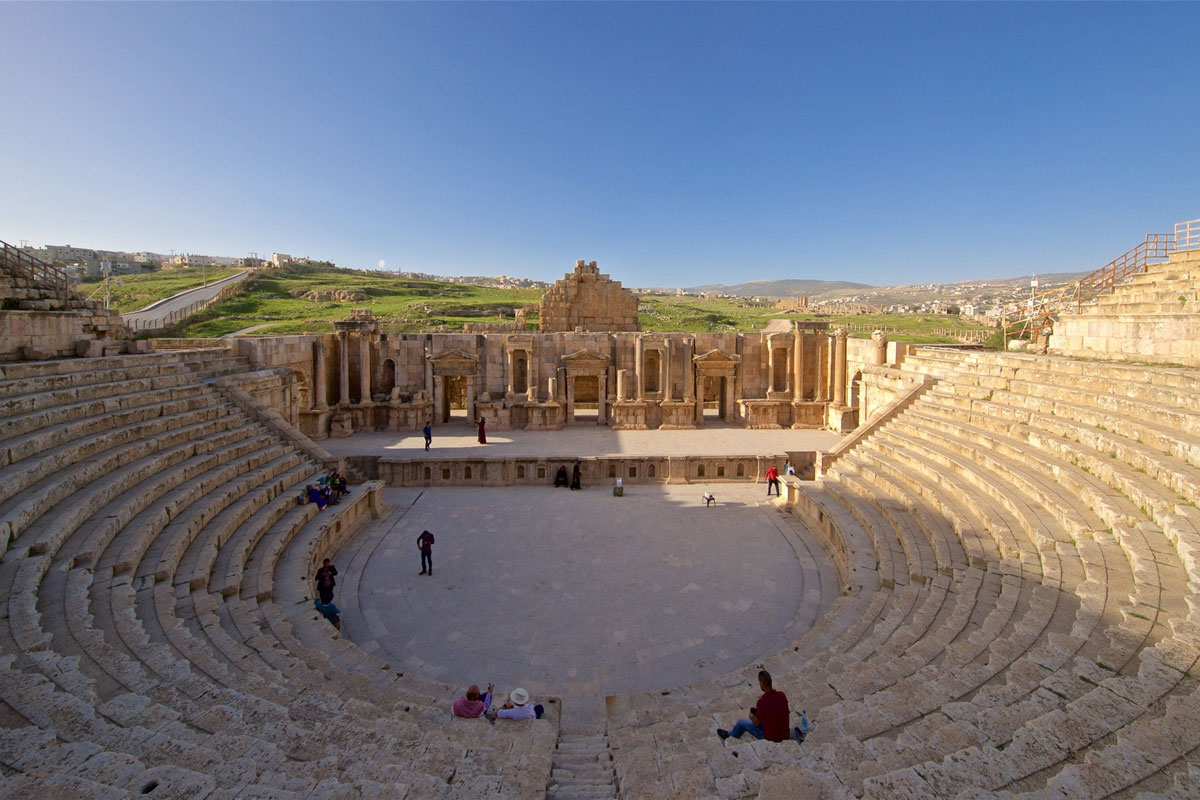
The South Theatre in Jerash is one of the most impressive surviving monuments of ancient Gerasa, the Roman city that once flourished in northern Jordan. Built nearly 2,000 years ago, this enormous stone theatre could accommodate more than 3,000 spectators, yet its remarkable acoustics allowed a speaker's ordinary voice to reach the audience without amplification.
Today, visitors can walk among its semicircular seating rows, examine the remains of its decorated Roman stage, and experience the acoustic design that made it suitable for public performances. Located near the Temple of Zeus and the famous Oval Plaza, the theatre is an essential stop when exploring Jerash Archaeological City.
This guide explains the South Theatre's history, architectural features, acoustics, entrance fees, opening hours, and what to expect when visiting.
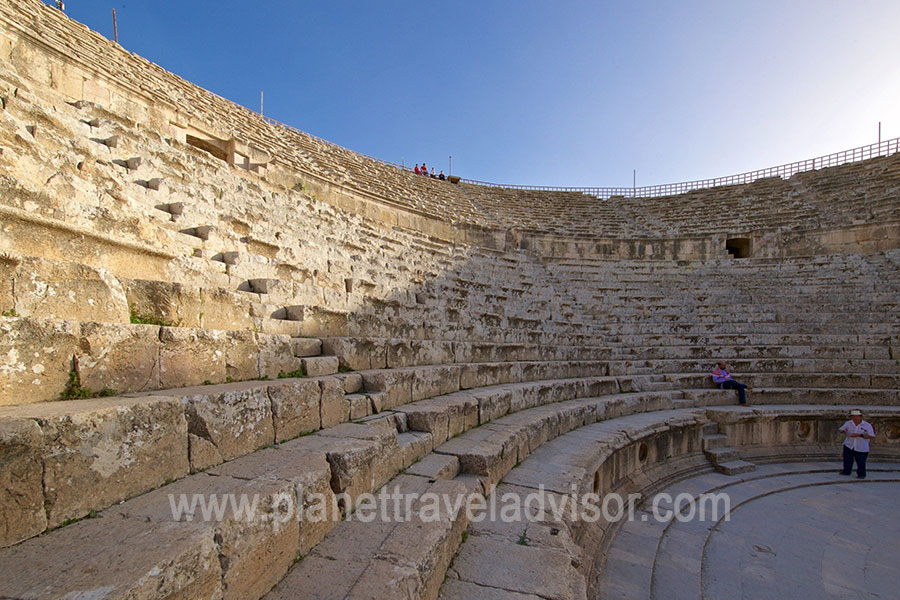
The South Theatre of Jerash was constructed between AD 90 and 92 during the reign of Roman Emperor Domitian. At that time, Jerash was known as Gerasa, an important city of the Decapolis, a group of cities in the eastern Roman world known for their Greek and Roman cultural influences.
As Gerasa developed into a prosperous urban centre, public monuments became an important expression of civic identity. The South Theatre was among the earliest major entertainment buildings constructed in the city, reflecting the importance of theatrical performances, music, and public celebrations in Roman society.
The theatre originally accommodated more than 3,000 spectators, making it the largest of the three ancient theatres associated with Jerash. Its scale allowed large audiences to gather for cultural events and public entertainment.
Inscriptions discovered at the monument reveal an interesting detail about its construction. Rather than being financed entirely by the imperial government, the theatre received contributions from local benefactors, including a former Roman legionary. These donations demonstrate how individuals participated in developing the public buildings of Gerasa.
Over the centuries, the theatre experienced periods of damage, deterioration, and alteration. Archaeological conservation and restoration efforts during the twentieth century helped preserve the surviving seating and reconstruct parts of the stage façade.
The first level of the originally two-storey stage backdrop has been reconstructed, allowing visitors to understand more clearly how the theatre would have appeared during Roman times.
The South Theatre has also retained something of its original function. It continues to serve as a venue for selected cultural and musical events, particularly during the Jerash Festival of Culture and Arts.
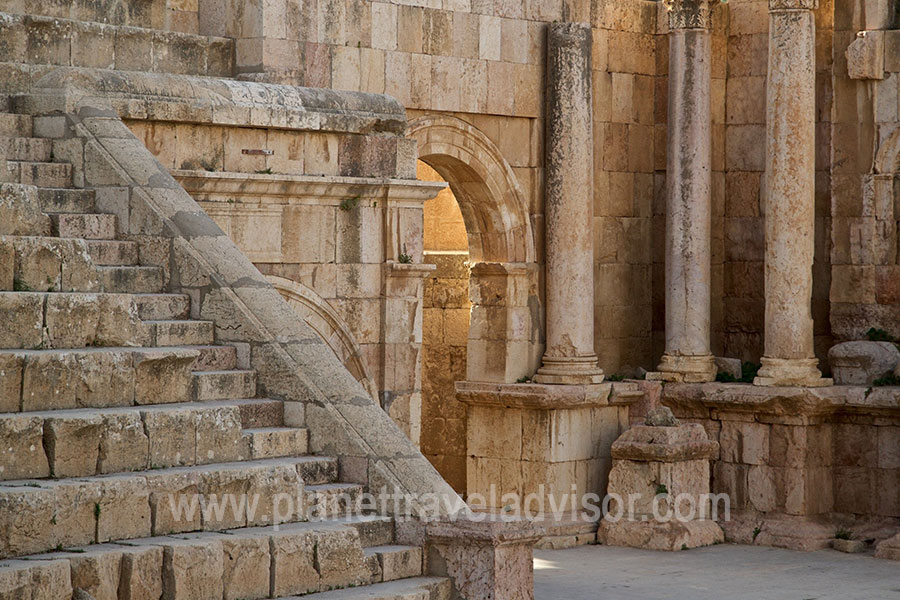
The architecture of the South Theatre illustrates how Roman engineers combined practical construction with carefully planned audience spaces.
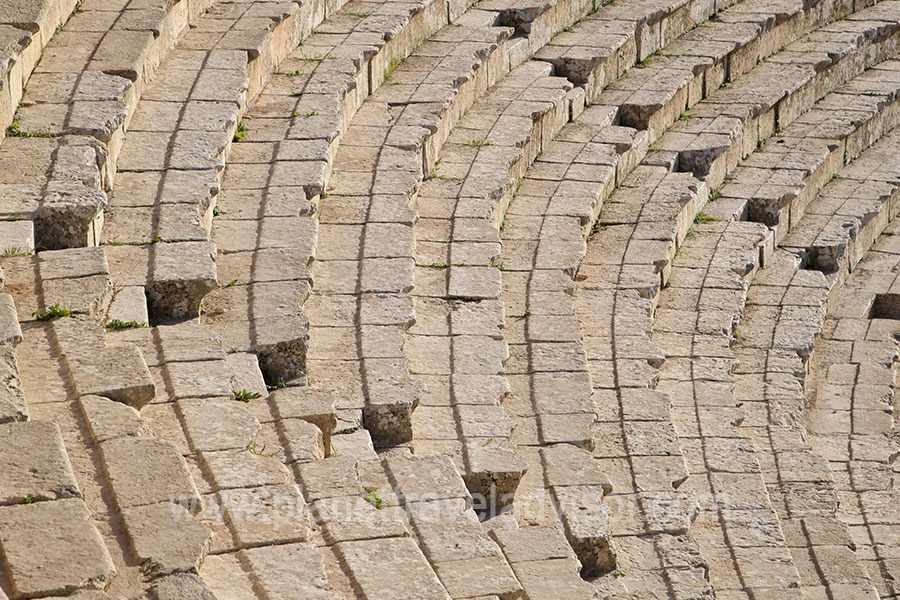
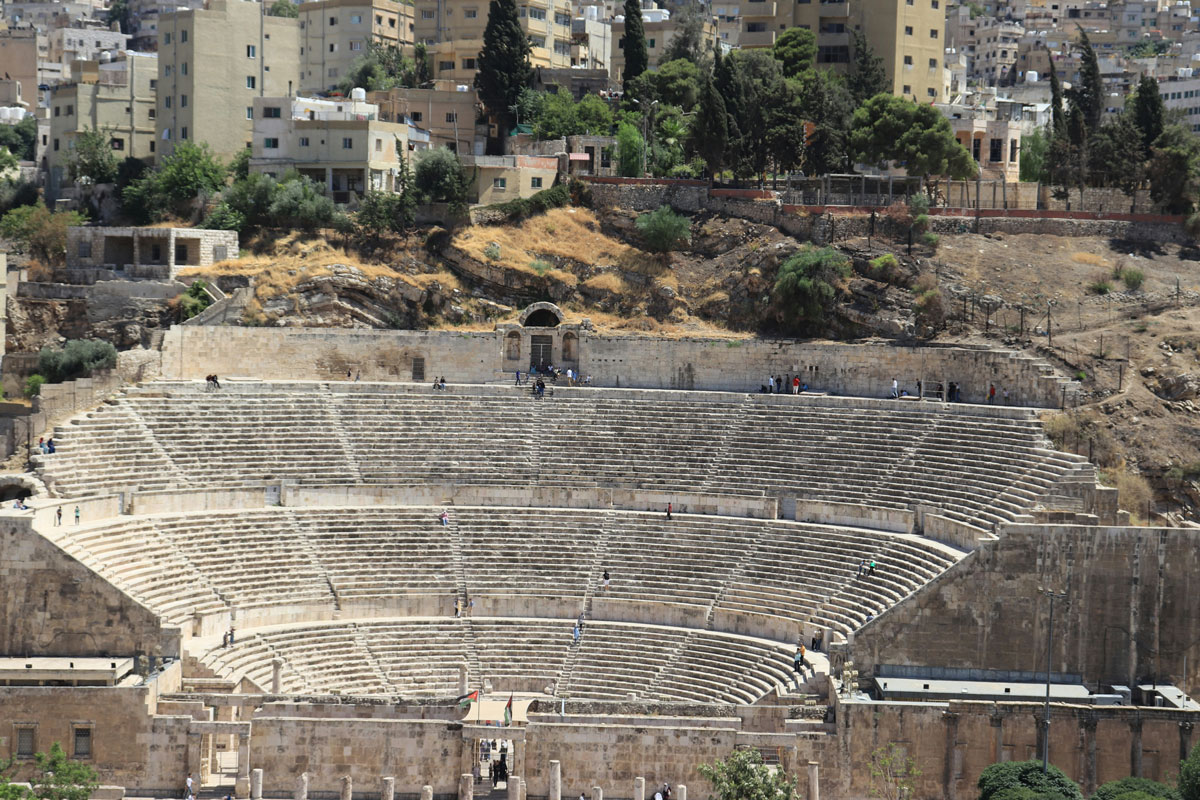
The most striking feature is the cavea, the semicircular seating area that rises in tiers above the orchestra. Built against a natural hillside, the seating provided thousands of spectators with views toward the performance area while making use of the surrounding terrain for structural support.
Unlike a Roman amphitheatre, which typically has an enclosed oval or circular arena, the South Theatre follows the semicircular design associated with Roman theatrical performances.
At the base of the seating lies the orchestra, a broad paved space separating the audience from the stage. In Roman theatres, this area could accommodate distinguished spectators and participants in performances or public ceremonies.
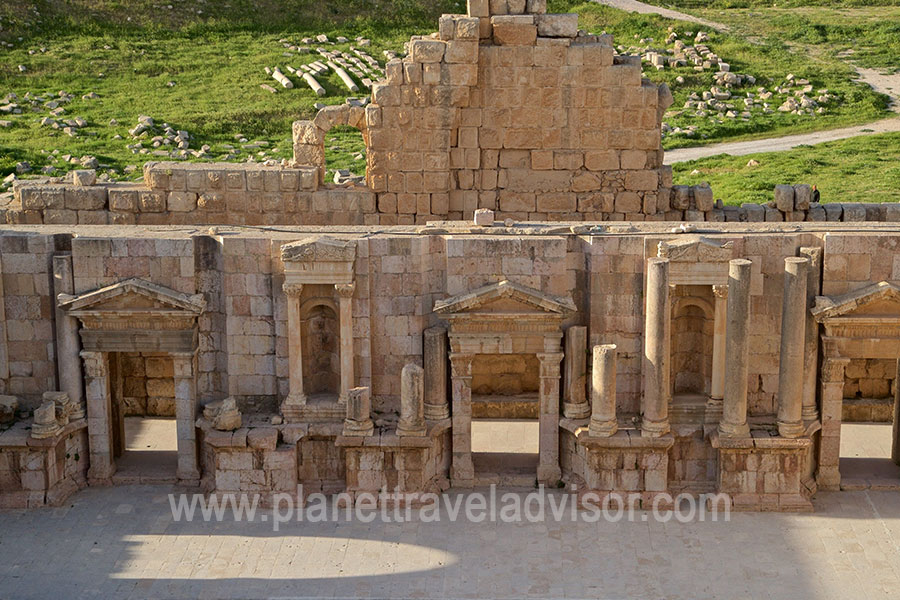
Behind the orchestra stood the raised stage and its monumental architectural backdrop, known as the scaenae frons. This structure originally consisted of at least two levels decorated with Corinthian columns, niches, and ornamental stonework.
Although much of the original upper structure has disappeared, the restored lower façade preserves the monument's impressive visual character. Its surviving columns, entrances, and decorative details help visitors imagine the elaborate setting that once framed Roman performances.
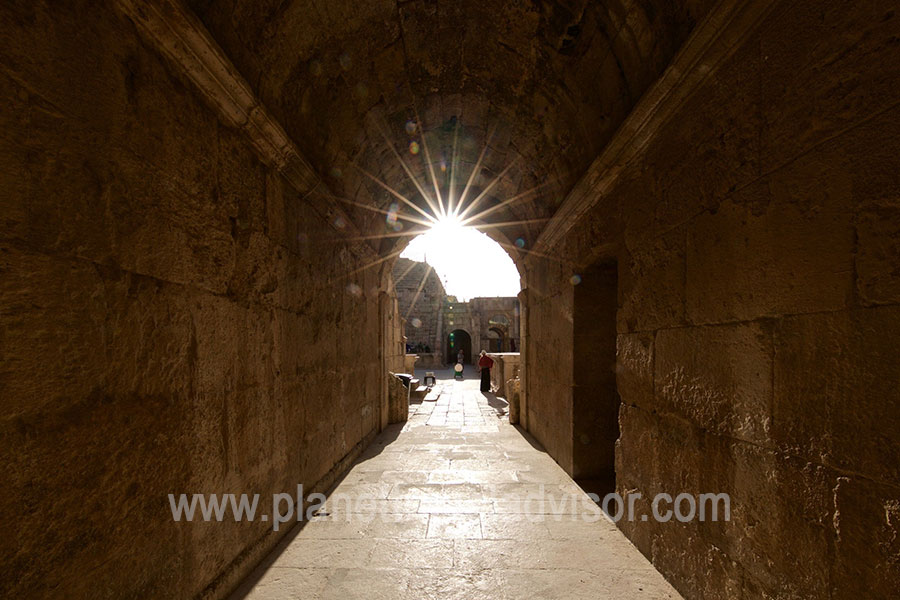
The theatre also contains carefully arranged entrances and internal passages. Two vaulted passages lead into the orchestra, while four passages at the rear provided access to the upper seating rows. These routes helped spectators move through the building without relying entirely on the main performance area.
One particularly interesting detail is the presence of Greek letters carved into some of the stone seats. According to the Jordan Tourism Board, these inscriptions designated reserved places, suggesting that seating arrangements were organised according to established allocations.
Visitors should look closely at the surviving stone benches, stage entrances, and decorative features rather than viewing the theatre only from a distance. Together, these elements reveal how Roman architecture supported both large public gatherings and carefully organised performances.
One of the most fascinating features of the Jerash South Theatre is its natural acoustics.
The theatre was designed so that a speaker standing near the centre of the orchestra could be heard throughout the auditorium without relying on modern amplification. The Jordan Tourism Board specifically highlights this acoustic quality as one of the monument's defining characteristics.
The design brings several architectural features together. The semicircular arrangement of the seating places the audience around the performance area, while the rising stone tiers provide listeners with an unobstructed connection to the stage.
The theatre's scale, geometry, and surrounding stone surfaces also influence how sound travels through the space. Its design demonstrates the attention Roman builders gave to communication between performers and audiences.
For visitors, the acoustic experience is one of the most interesting parts of exploring the monument.
If access to the orchestra is permitted, try standing near its central area and speaking in a normal voice while a companion listens from the seating. This simple experiment can help demonstrate how effectively the ancient theatre carries sound.
The exact effect will depend on where you stand, background noise, and the number of people present. Visitors should not expect every word to sound equally clear from every position.
The theatre is also associated with musical performances. Musicians, including traditional bagpipe players, have been known to perform here, although performances should not be assumed to take place at a fixed time every day.
During the annual Jerash Festival, the theatre can again become a performance venue, connecting its ancient purpose with Jordan's modern cultural life.
Even without a performance, spending a few quiet minutes in the seating area provides an opportunity to appreciate how Roman architecture created an effective setting for live entertainment.
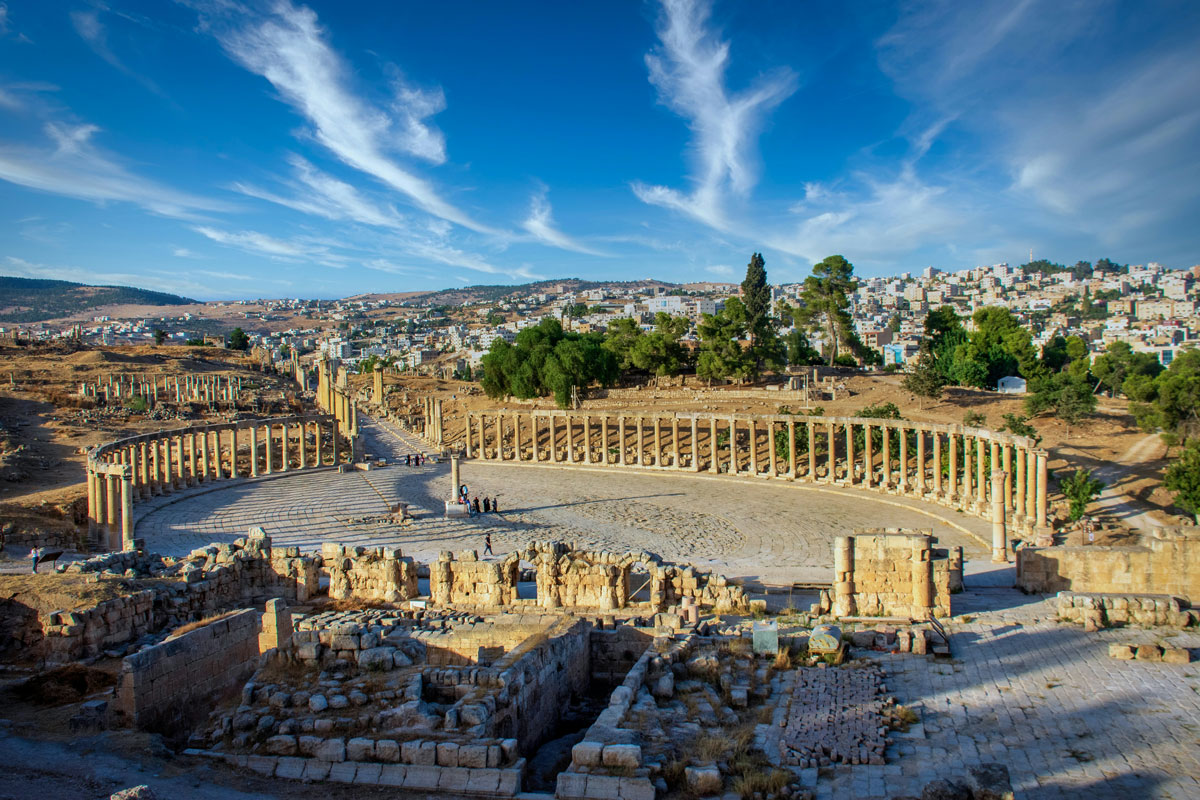
The South Theatre stands within Jerash Archaeological City, approximately 45 kilometres north of Amman. It is situated in the southern part of the ruins, close to the Temple of Zeus and the Oval Plaza.
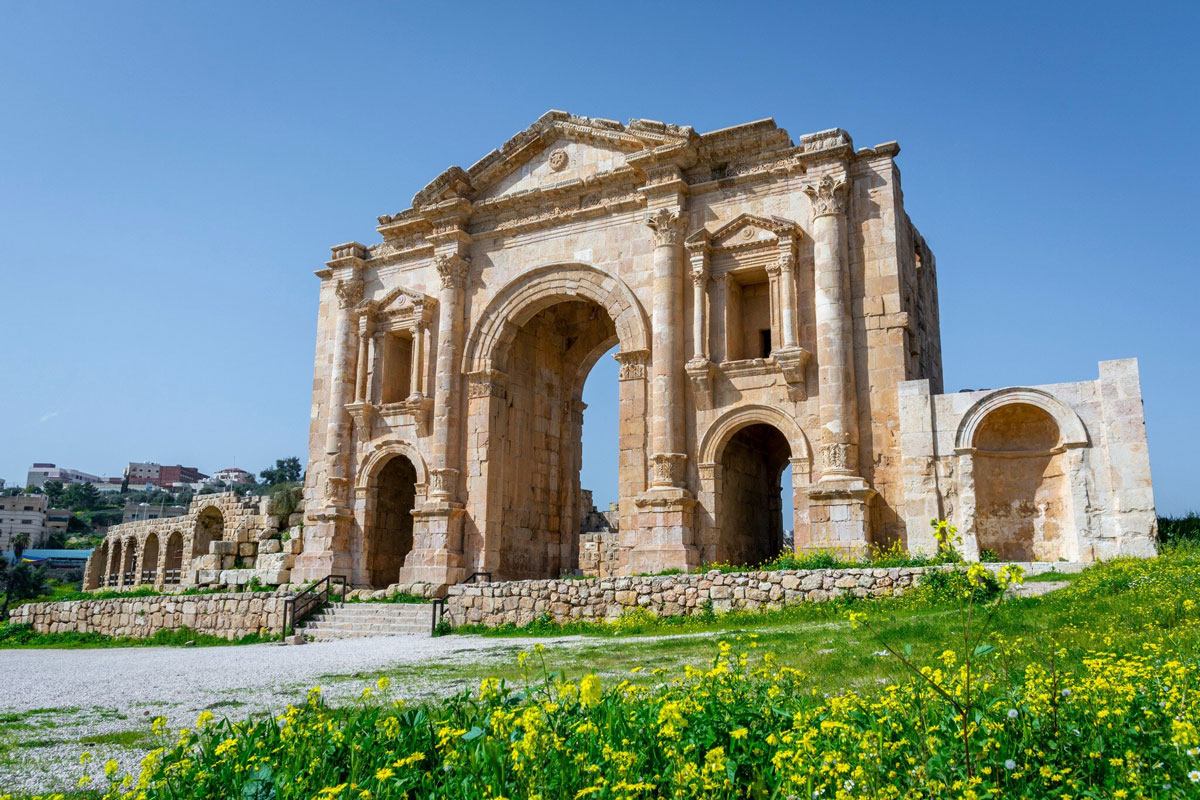
Most visitors enter the archaeological site through the main visitor entrance near Hadrian's Arch. From there, a walking route leads past major monuments toward the Oval Plaza, with the South Theatre accessible on the higher ground beside the Temple of Zeus.
The theatre's elevated position makes it a rewarding place to stop while exploring the southern section of ancient Gerasa.
Allow approximately 30–45 minutes for the theatre itself if you want to examine the stage, explore the seating, take photographs, and appreciate the acoustics without rushing.
A complete visit to Jerash Archaeological City generally deserves considerably longer, with two to three hours providing a reasonable starting point for many visitors. History enthusiasts and photographers may prefer additional time.
The orchestra: Examine the paved semicircular area and experience the theatre's acoustic qualities where access is permitted.
The stage façade: Look at the surviving and reconstructed Corinthian architectural features.
The stone seating: Explore the curved rows and search for surviving Greek seating inscriptions.
The upper viewpoints: Higher seating positions provide wide views across the theatre and parts of the surrounding archaeological landscape.
The vaulted entrances: Observe how Roman builders organised access between different sections of the building.
Photography is particularly rewarding from the upper rows, where the sweeping curves of the seating and the stage can be captured together. Morning light and later-afternoon light can produce attractive photographs, although the exact shadows vary by season.
Visitors should be prepared for uneven surfaces, exposed stone, and steep steps. Wear supportive footwear with good grip and take care when moving between seating levels.
The theatre is not fully accessible for visitors with limited mobility. Reaching the seating involves stone steps, and access to higher levels may be difficult for wheelchair users or anyone who struggles with stairs. Travelers requiring step-free access should contact the site before visiting to confirm current arrangements.
The South Theatre also fits naturally into a wider tour of Jerash. After exploring it, visitors can continue to the Temple of Zeus, Oval Plaza, Cardo Maximus, and other surviving monuments.
Travelers planning to combine Jerash with other historical attractions can explore available Jordan holiday packages to arrange a broader itinerary that includes some of the country's most significant archaeological destinations.
The South Theatre does not require a separate standard admission ticket. Access is included with the entrance ticket for Jerash Archaeological City, which also covers the site's other main archaeological monuments.
According to Jordan's official archaeological ticketing service, the published entrance fees as of October 2026 are:
| Visitor Category | Entrance Fee |
|---|---|
| Non-Jordanian visitors | 10 JOD |
| Jordanian visitors | 0.50 JOD |
| Children under 12 | Free |
Visitors holding a valid Jordan Pass can also enter Jerash Archaeological City under the pass's included-attractions programme.
The Jordan Pass may be useful for international travelers visiting several major attractions, including Petra and Wadi Rum. However, eligibility and visa-fee benefits have separate conditions, so travelers should review the official requirements before purchasing.
The official Jordanian archaeological ticketing website publishes seasonal hours for Jerash:
| Season | Published Opening Hours |
|---|---|
| Winter | 8:00 AM – 4:00 PM |
| Summer | 8:00 AM – 6:30 PM |
| April and May transitional schedule | 8:00 AM – 5:30 PM |
Hours may change during Ramadan, public holidays, special events, or archaeological maintenance. The official schedule contains overlapping seasonal descriptions for April, so visitors traveling during transitional months should confirm the applicable hours before arrival.
For a comfortable visit, spring and autumn are generally good times to explore Jerash, when the weather is often more suitable for walking among exposed archaeological ruins.
Early morning is particularly appealing during warmer months. Temperatures are usually more comfortable, and visitors can explore the theatre before the strongest midday sun.
Carry drinking water, wear a hat during sunny weather, and allow enough time to walk between the archaeological site's widely spaced monuments.
Visitors interested in attending an organised performance should also remember that festival events may have separate schedules and ticketing arrangements from ordinary daytime archaeological admission.
The South Theatre in Jerash remains one of the clearest examples of Roman theatrical architecture in Jordan. Its semicircular seating, monumental stage, surviving inscriptions, and remarkable acoustics reveal how carefully ancient builders designed spaces for public entertainment.
More than an isolated historical monument, the theatre forms part of the wider archaeological landscape of Gerasa, where temples, colonnaded streets, and public squares illustrate the city's importance during Roman rule.
Visitors who take time to explore the theatre's architectural details and understand its historical purpose will gain a richer appreciation of Jerash.
For travelers planning a longer journey, combining Jerash with Petra, Amman, and other cultural destinations through Jordan tours can provide a practical way to experience more of the country's archaeological heritage.





A curated list of the most popular travel packages based on different destinations.
Explore Siq Petra, its Nabataean water system, ancient carvings, Treasury walk, history, opening hours, tickets, photography tips, and visitor advice.
Plan your trip with this Amman travel guide covering top sights, food, neighborhoods, transport, day trips, where to stay, and practical visitor tips.
Explore Amman Citadel with practical tips on history, top sights, tickets, opening hours, Jordan Pass access, timing, transport, and nearby attractions.
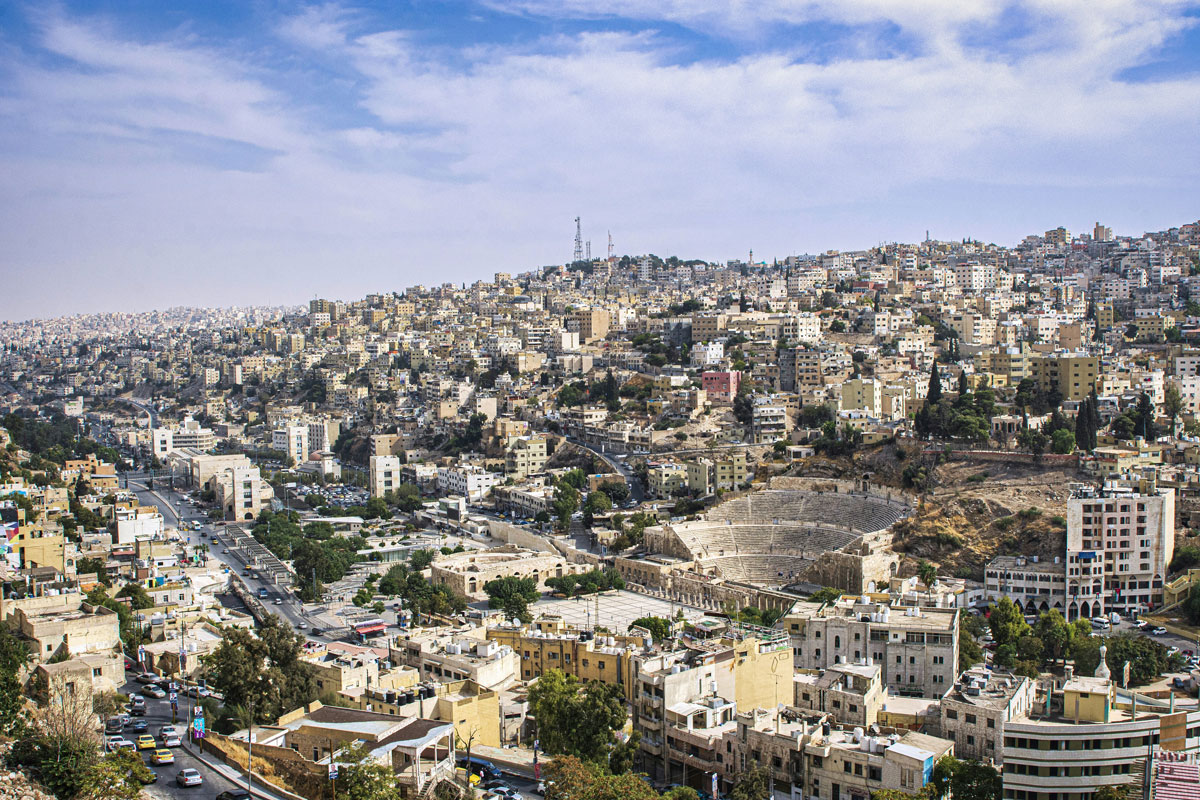
Plan your Amman Roman Theatre visit with current ticket prices, opening hours, Jordan Pass details, history, nearby sights, and practical travel tips.
Explore the best souqs in Amman, from Al-Balad and the Gold Souq to Souq Jara, with shopping tips, souvenirs, timing, and nearby sights.
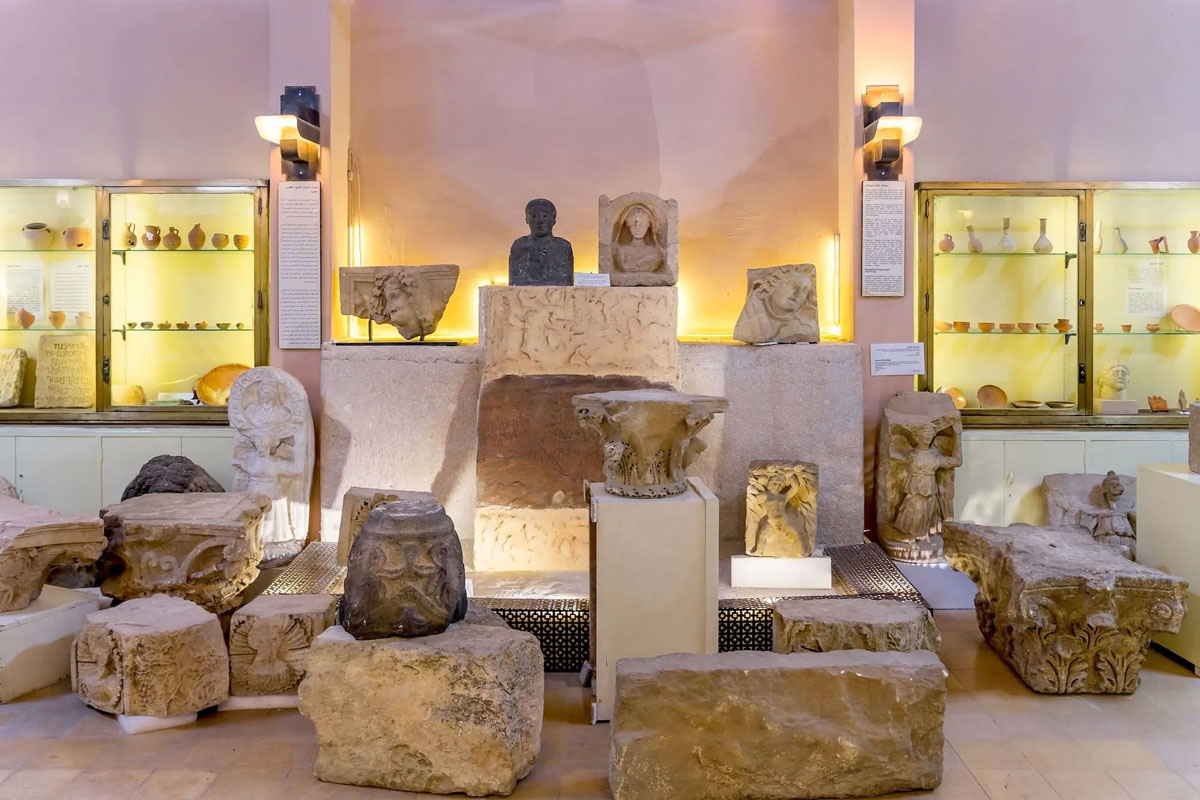
Explore the Jordan Archaeological Museum in Amman, including top artifacts, tickets, Jordan Pass, opening hours, Citadel tips, and visitor advice.
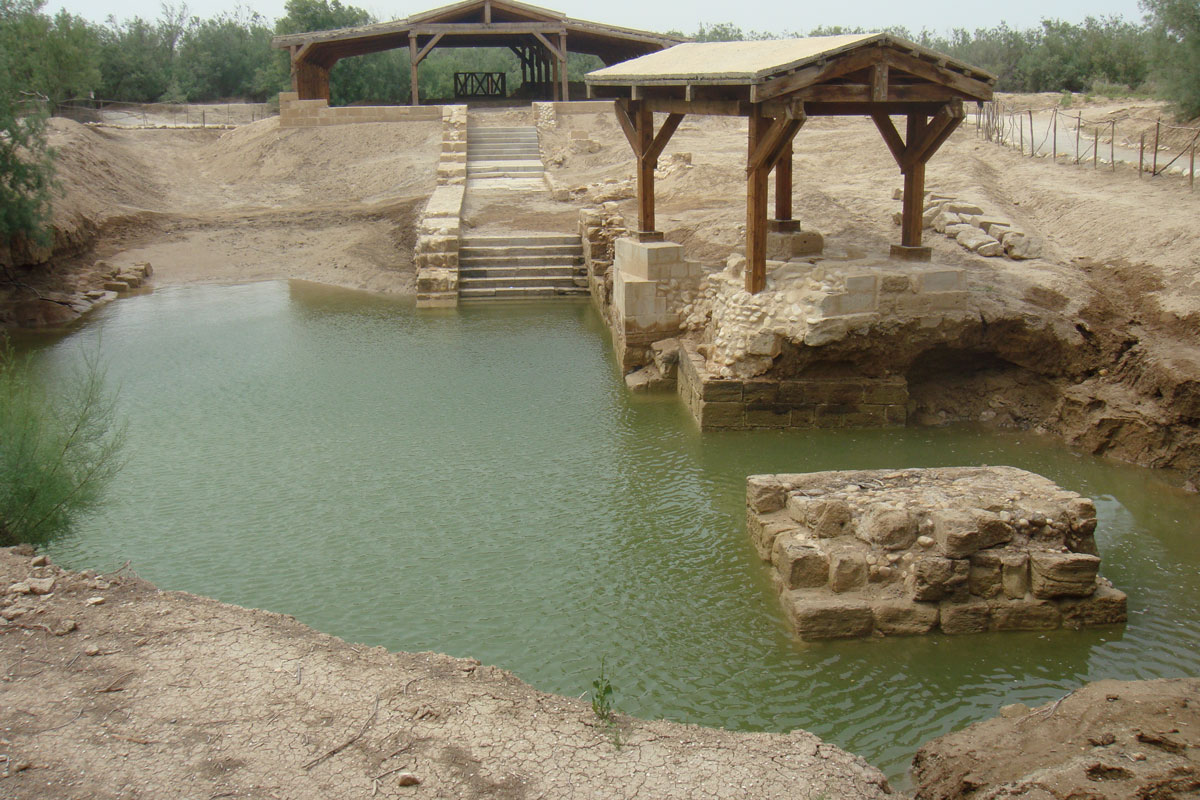
Plan your visit to the Baptism Site in Jordan with its biblical history, archaeology, tickets, opening hours, Jordan Pass details, and nearby stops.
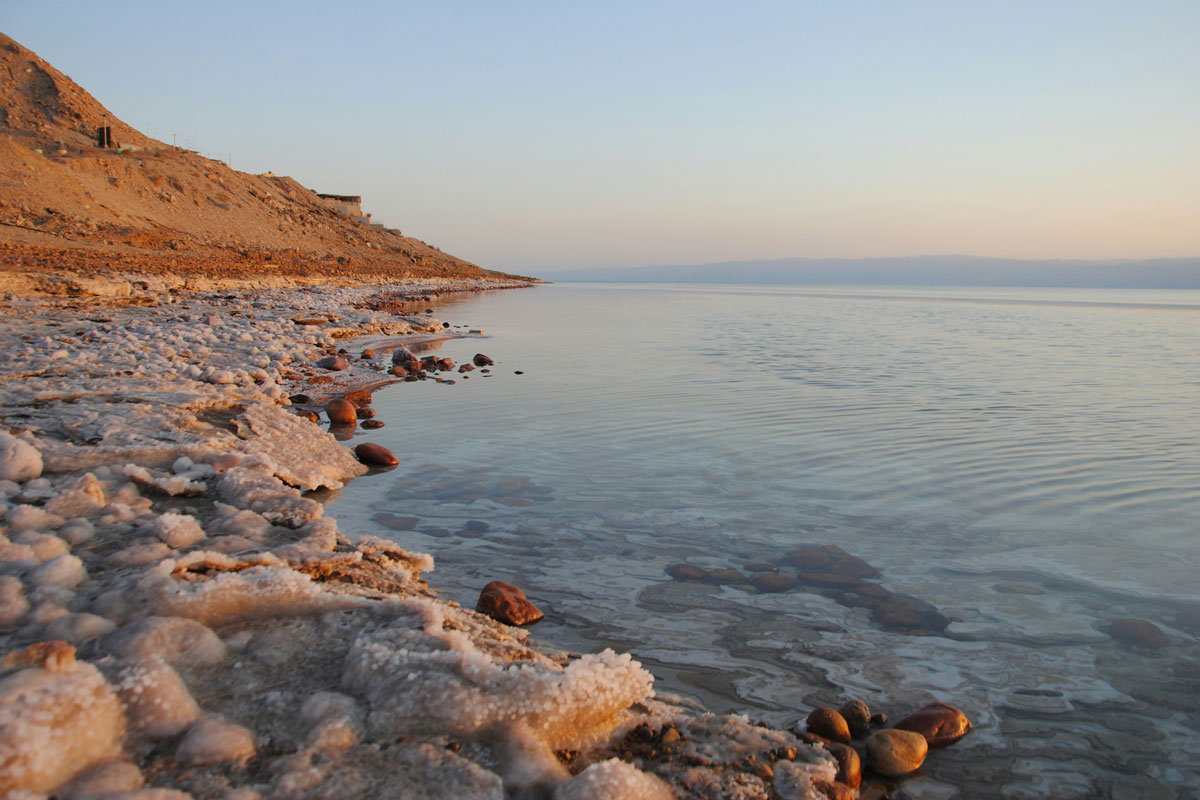
Plan your Dead Sea Jordan visit with tips on floating, beaches, resorts, transport, best times, safety, nearby attractions, and how long to stay.
Explore Downtown Amman with tips on the Roman Theatre, souks, local food, walking routes, the Citadel, safety, transport, and the best time to visit.
Plan your visit to Hadrian’s Arch Jerash with its history, architecture, tickets, opening hours, Jordan Pass details, nearby sites, and travel tips.
Plan your first visit to Jerash Jordan with the best ruins to see, walking route, tickets, Jordan Pass details, opening hours, timing, and travel tips.
Explore the Jordan River's biblical history, where Jesus was baptized, how to visit from Amman, and the best nearby places to include on your Jordan trip.
We go beyond just booking trips—we create unforgettable travel experiences that match your dreams!



A beautifully organized journey from start to finish. We booked the "14 Days Exploring the Panorama of Vietnam" package and were impressed by how professionally everything was arranged. The itinerary gave us enough time to enjoy Vietnam without feeling rushed, and all transfers and day tours ran on time. The communication before arrival was clear and helpful, which made planning much easier. What we appreciated most was the balance between guided sightseeing and free time, so the whole trip felt comfortable and enjoyable. If you are looking for a reliable way to explore Vietnam, this is a great option. The itinerary was well balanced and never felt rushed.
Everything about this package felt thoughtfully planned. We booked the "Best Day Tour Madaba, Nebo, Baptism Site & Dead Sea" package and were impressed by how professionally everything was arranged. The itinerary gave us enough time to enjoy Madaba, Mount Nebo, and the Dead Sea without feeling rushed, and all transfers and day tours ran on time. The communication before arrival was clear and helpful, which made planning much easier. What we appreciated most was the balance between guided sightseeing and free time, so the whole trip felt comfortable and enjoyable. If you are looking for a reliable way to explore Jordan, this is a great option. The guides, transfers, and pacing all worked together perfectly.
A beautifully organized journey from start to finish. We booked the "Explore Turkey in 9 Days from Ephesus to Cappadocia" package and were impressed by how professionally everything was arranged. The itinerary gave us enough time to enjoy Cappadocia and Ephesus without feeling rushed, and all transfers and day tours ran on time. The communication before arrival was clear and helpful, which made planning much easier. What we appreciated most was the balance between guided sightseeing and free time, so the whole trip felt comfortable and enjoyable. If you are looking for a reliable way to explore Turkey, this is a great option. The itinerary was well balanced and never felt rushed.
A beautifully organized journey from start to finish. We booked the "5 Days Trip through Istanbul, Gallipoli, and Troy" package and were impressed by how professionally everything was arranged. The itinerary gave us enough time to enjoy Istanbul, Gallipoli, and Troy without feeling rushed, and all transfers and day tours ran on time. The communication before arrival was clear and helpful, which made planning much easier. What we appreciated most was the balance between guided sightseeing and free time, so the whole trip felt comfortable and enjoyable. If you are looking for a reliable way to explore Turkey, this is a great option. The itinerary was well balanced and never felt rushed.
We loved how easy and enjoyable this entire experience was. We booked the "14 Days Hanoi Hue Hoi An Mekong Saigon Tour" package and were impressed by how professionally everything was arranged. The itinerary gave us enough time to enjoy Hanoi, Saigon, Hoi An, the Mekong, and Hue without feeling rushed, and all transfers and day tours ran on time. The communication before arrival was clear and helpful, which made planning much easier. What we appreciated most was the balance between guided sightseeing and free time, so the whole trip felt comfortable and enjoyable. If you are looking for a reliable way to explore Vietnam, this is a great option. We came home with amazing memories and would book again.











Comments (02)
Mr. Bowmik Haldar,
05 June, 2024Outstanding News & Insight! Thank you so much for sharing like this article
Jacoline Juie,
05 June, 2023However, here are some well-regarded car dealerships known for their customer service, inventory, and overall reputation. It's always a good idea to research and read reviews specific...
Leave Your Comment: