 Visit Turkey
 Visit Vietnam
 Visit Cambodia
 Visit Dubai
 Visit Jordan


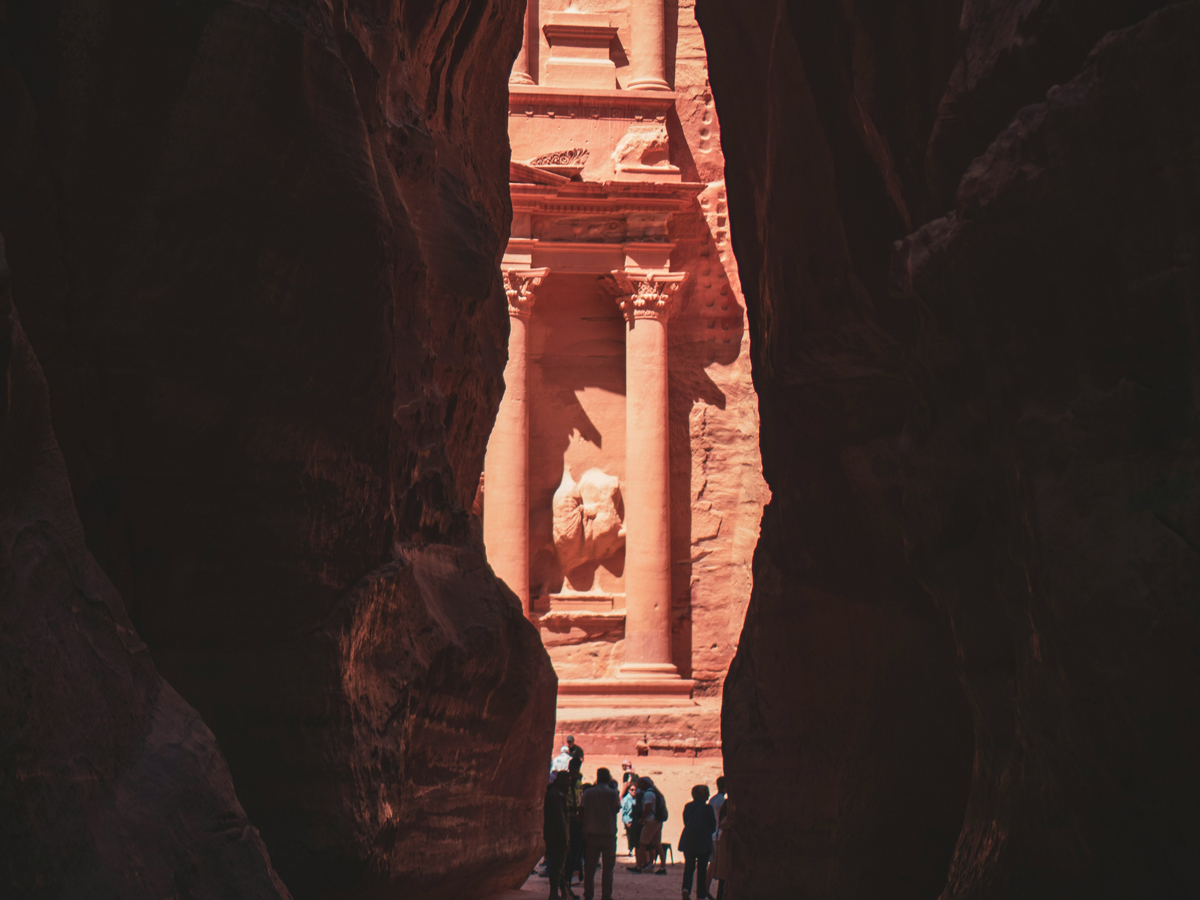
Siq Petra Guide for First-Time Visitors
Explore Siq Petra, its Nabataean water system, ancient carvings, Treasury walk, history, opening hours, tickets, photography tips, and visitor advice.



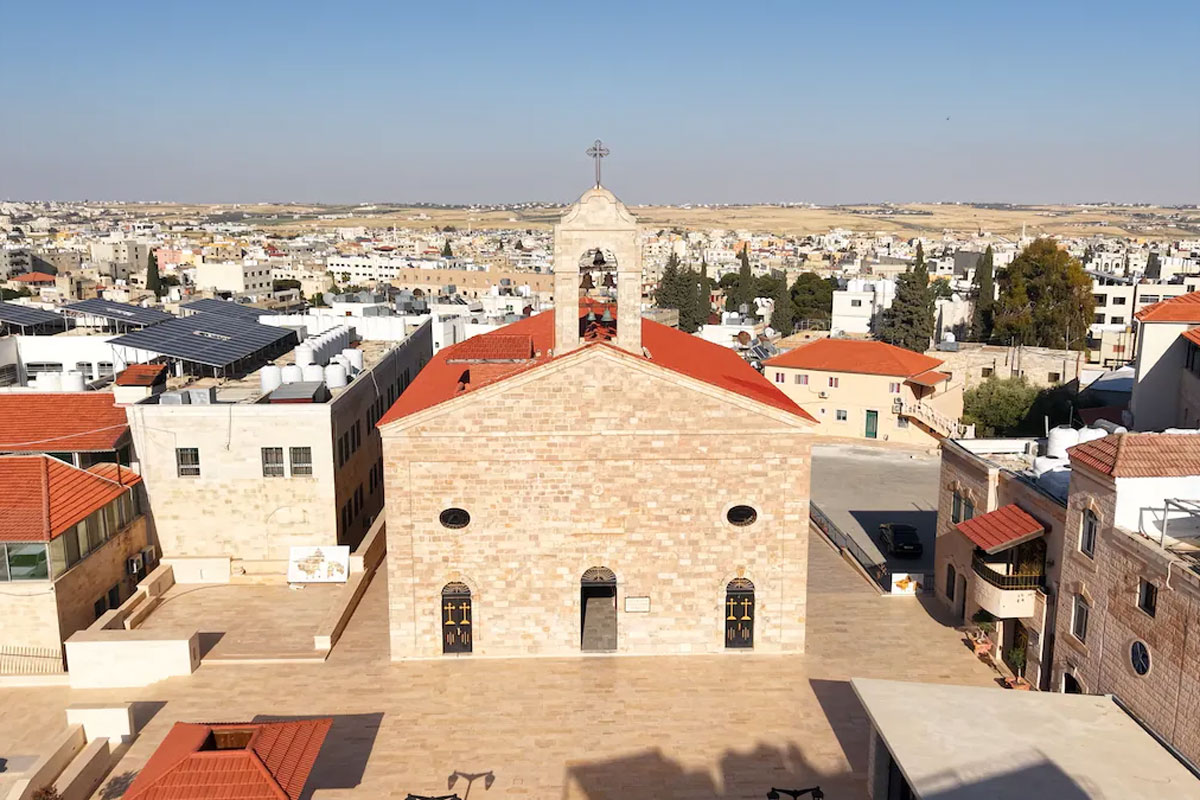
In the heart of Madaba, Jordan, St. George's Church holds something far older than the building itself. Beneath its arches lies a remarkable sixth-century mosaic depicting Jerusalem and the Holy Land, created more than 1,400 years ago.
Known as the Church of the Map, this Greek Orthodox landmark attracts travelers interested in Byzantine history, Christian heritage, and ancient art. Its famous Madaba Mosaic Map reveals how people understood the geography of the region centuries before modern maps existed.
Visiting St. George's Church is one of the most rewarding ways to discover Madaba's history. This guide explains the church's origins, the details hidden within its mosaic, and everything worth knowing before planning a visit.
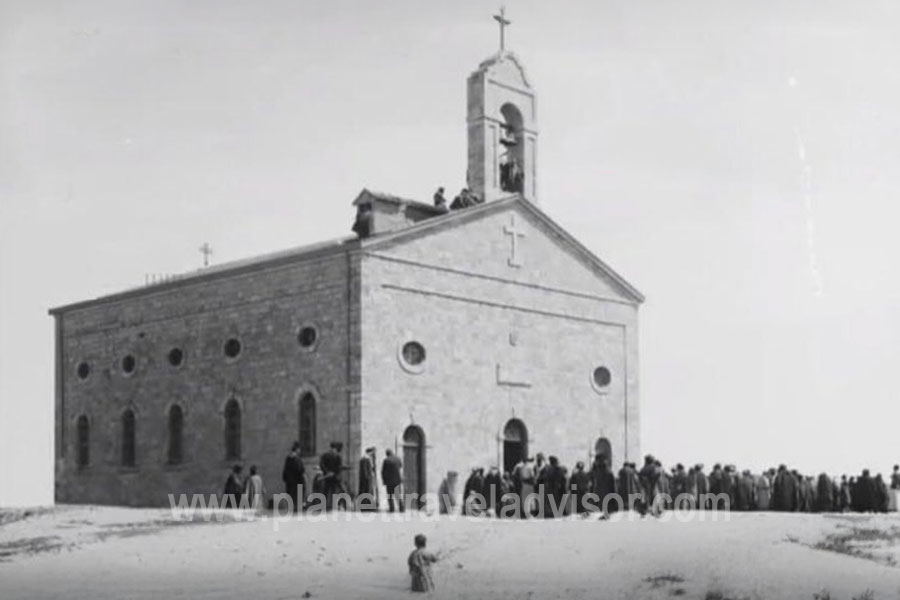
The history of St. George's Church begins long before the building visitors see today. During the Byzantine period, Madaba developed into an important Christian settlement known for its churches, religious artwork, and elaborate mosaics.
An earlier Byzantine church stood on the site during the sixth century AD. Its floor featured an extraordinary mosaic map illustrating the Holy Land, a work that eventually became one of the most important surviving examples of early Christian cartography.
The original church did not survive intact through the centuries. Much of its architecture disappeared, although significant sections of the mosaic floor remained beneath the site.
When the local Greek Orthodox community began preparing to build a new church during the nineteenth century, workers uncovered the ancient mosaic. The discovery brought renewed attention to Madaba's Byzantine heritage.
The present St. George's Church was constructed in 1896, incorporating the surviving mosaic into its floor. Rather than removing the artwork and transferring it to a museum, the church preserved it at its historical location.
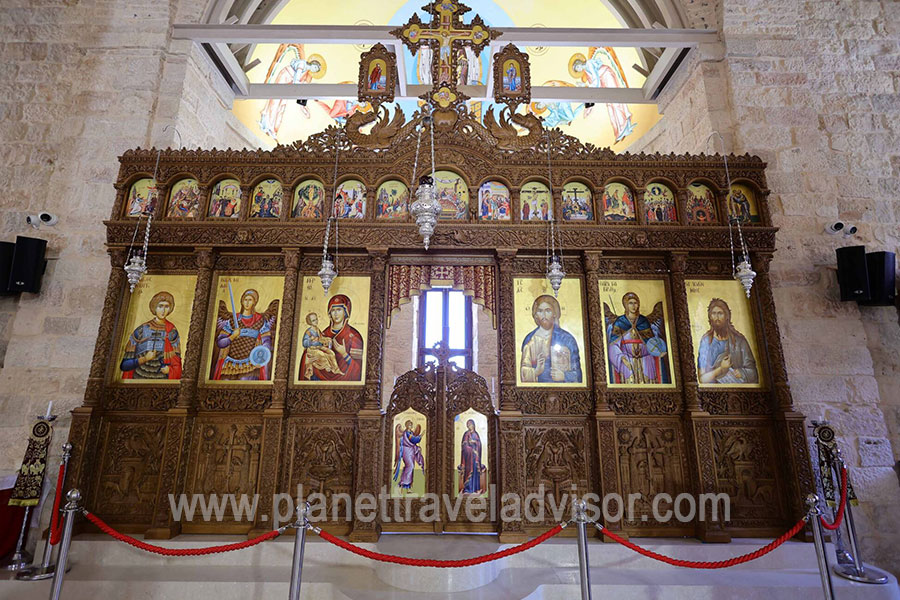
Today, visitors enter a functioning Greek Orthodox church decorated with religious icons, painted walls, chandeliers, and traditional architectural features. The modern religious setting surrounds a floor created centuries before the current building.
St. George's Church remains a place of worship as well as a historical attraction. This continuing religious function is an important part of its identity and explains why visitors may occasionally encounter restrictions during services.
The Madaba Mosaic Map is the church's most important historical feature. Created during the second half of the sixth century AD, it is widely recognized as the oldest surviving mosaic map of the Holy Land.
Unlike modern geographical maps, which are primarily designed for navigation, the Madaba Map combines geographical information with religious significance.
Its creators arranged thousands of small colored pieces of stone, known as tesserae, to represent cities, rivers, roads, churches, and natural landscapes. Greek inscriptions identify numerous locations across the eastern Mediterranean.
The map originally covered a much larger section of the Byzantine church floor. Although extensive portions have disappeared, the surviving fragments still contain remarkable geographical detail.
One of the first things worth understanding is the map's orientation. It is arranged toward the east rather than following the north-at-the-top convention used on most modern maps.
This means visitors should not expect familiar locations to appear in the same positions as they would on a contemporary map.
Jerusalem is the most significant feature of the surviving artwork. The city appears with its surrounding walls, gates, streets, and religious buildings.
Among its most recognizable details is the main colonnaded street, commonly identified with the Cardo, which runs through the ancient city. The representation also includes the Church of the Holy Sepulchre, an important Christian pilgrimage site.
For historians, these features provide valuable evidence of Jerusalem's appearance during the Byzantine period.
Beyond Jerusalem, the mosaic depicts other significant locations associated with biblical history and early Christian pilgrimage.
The Jordan River appears as a winding waterway flowing toward the Dead Sea. Fish, boats, and other details help distinguish the natural features of the region.
The Dead Sea is especially interesting because its representation reflects how Byzantine artists understood the landscape around it.
Other identifiable locations include Bethlehem, Jericho, and areas extending toward the Nile Delta in Egypt. Greek place names help researchers connect the artwork with historical settlements and pilgrimage routes.
The map was not necessarily intended to reproduce every geographical distance or direction precisely. Its selection and arrangement of places reflected the religious and cultural priorities of its time.
Begin with Jerusalem. Its distinctive buildings and streets make it one of the easiest places to understand once you know what to look for.
Next, identify the Jordan River and Dead Sea. These larger natural features provide useful reference points for understanding the map's geographical arrangement.
Finally, look closely at the small Greek inscriptions and remaining city illustrations. They reveal how much information the mosaic artists could communicate using individual pieces of colored stone.
Visitors should also notice the missing portions. These gaps are part of the artwork's long history and demonstrate how much of the original mosaic has been lost.
The surviving map is valuable not simply because of its age, but because it preserves a rare visual record of the eastern Mediterranean during the early Byzantine period.
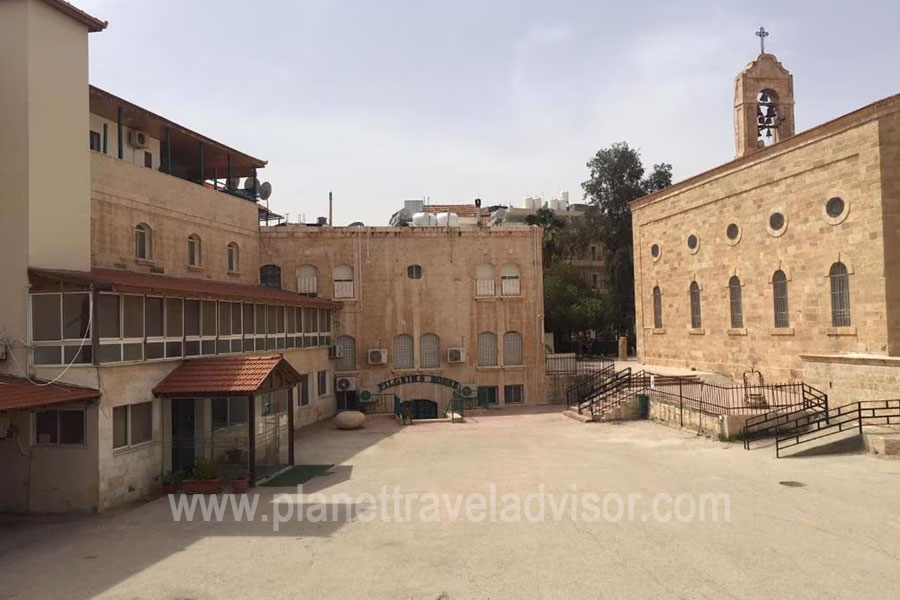
Planning a visit to St. George's Church is generally straightforward, although opening times and access arrangements deserve attention because the building remains an active place of worship.
Travel guides commonly describe visiting hours beginning around 8:00 AM, with afternoon or early-evening closing times. However, these hours should be treated as approximate rather than a guaranteed daily schedule.
Religious services, special celebrations, and maintenance work may affect tourist access.
The church also provides a visitor-request service through its website.
Entrance fees: Published visitor guides commonly quote approximately 1 Jordanian dinar (JOD) per person. This is a reference price rather than a newly confirmed official 2026 tariff, so travelers should verify the amount before visiting.
Carrying a small amount of Jordanian cash is sensible in case admission is collected locally.
Travelers using the Jordan Pass should also check admission requirements. The official Jordan Pass Biblical Trail identifies the Church of the Map as an attraction requiring a separate ticket, although its general attraction listing is not entirely consistent.
As a result, do not assume that your Jordan Pass covers admission without confirming the current policy.
For most visitors, approximately 30–45 minutes is a reasonable amount of time to explore the church and examine the mosaic.
A shorter visit may be sufficient if you simply want to see the map and identify its main landmarks. Travelers with a particular interest in Byzantine art or biblical history may prefer to allow around an hour.
Taking your time is worthwhile. The mosaic's intricate details are easier to understand when viewed gradually rather than with a quick glance.
Dress respectfully: Choose clothing appropriate for an active religious building, preferably covering shoulders and knees.
Ask about photography: Visitor photography is generally reported as permitted, but check current rules and avoid flash if requested.
Respect worshippers: Remain quiet during services and avoid photographing people without permission.
Protect the mosaic: Follow designated viewing areas and never step onto the historic artwork.
Plan for accessibility: Ask the church about step-free access and viewing arrangements if you have limited mobility.
Consider visiting earlier: An early daytime visit may provide a more flexible schedule for exploring other Madaba attractions afterward.
The church is relatively compact, so visitors do not need to prepare for an extensive walking tour inside. However, the surrounding streets and pedestrian surfaces may require comfortable footwear.
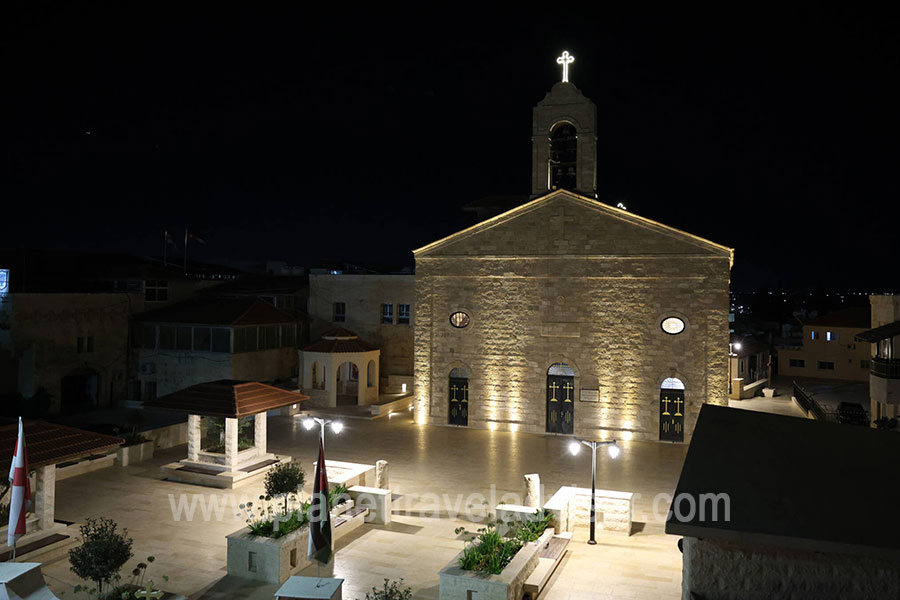
St. George's Church is located in the historic center of Madaba, southwest of Jordan's capital, Amman.
The church's official address places it near Peace Square on King Talal Street, within the city's central sightseeing area.
Madaba is approximately 30–35 kilometers from Amman, making it a practical destination for a day trip.
Driving is one of the easiest ways to reach Madaba. Depending on your starting point and traffic conditions, the journey commonly takes around 40–60 minutes.
Visitors traveling independently can hire a taxi or arrange a private transfer. If using a taxi, agree on the fare and return arrangements before departure.
A private vehicle is especially convenient when combining the church with attractions outside Madaba's center.
Public transport is another possibility. Greater Amman Municipality launched Bus Rapid Transit Route 105 between Amman and Madaba in 2025, providing a scheduled connection between the two cities.
Travelers should confirm current departure points, operating times, and the most convenient stop for central Madaba before traveling. Public transportation may require an additional short taxi journey or walk to the church.
Once you reach Madaba's historic center, St. George's Church is conveniently positioned for exploring other local attractions on foot.
The Madaba Archaeological Park is particularly interesting for visitors who want to see additional ancient mosaics and archaeological remains.
The Church of the Apostles is another notable example of the city's Byzantine artistic heritage.
Allow time to explore local streets, traditional shops, and workshops associated with Madaba's continuing mosaic-making traditions.
Mount Nebo is one of the most natural additions to a visit to Madaba.
According to biblical tradition, Moses viewed the Promised Land from this mountain. Today, visitors can explore the religious site, admire surviving mosaics, and look across the surrounding landscape.
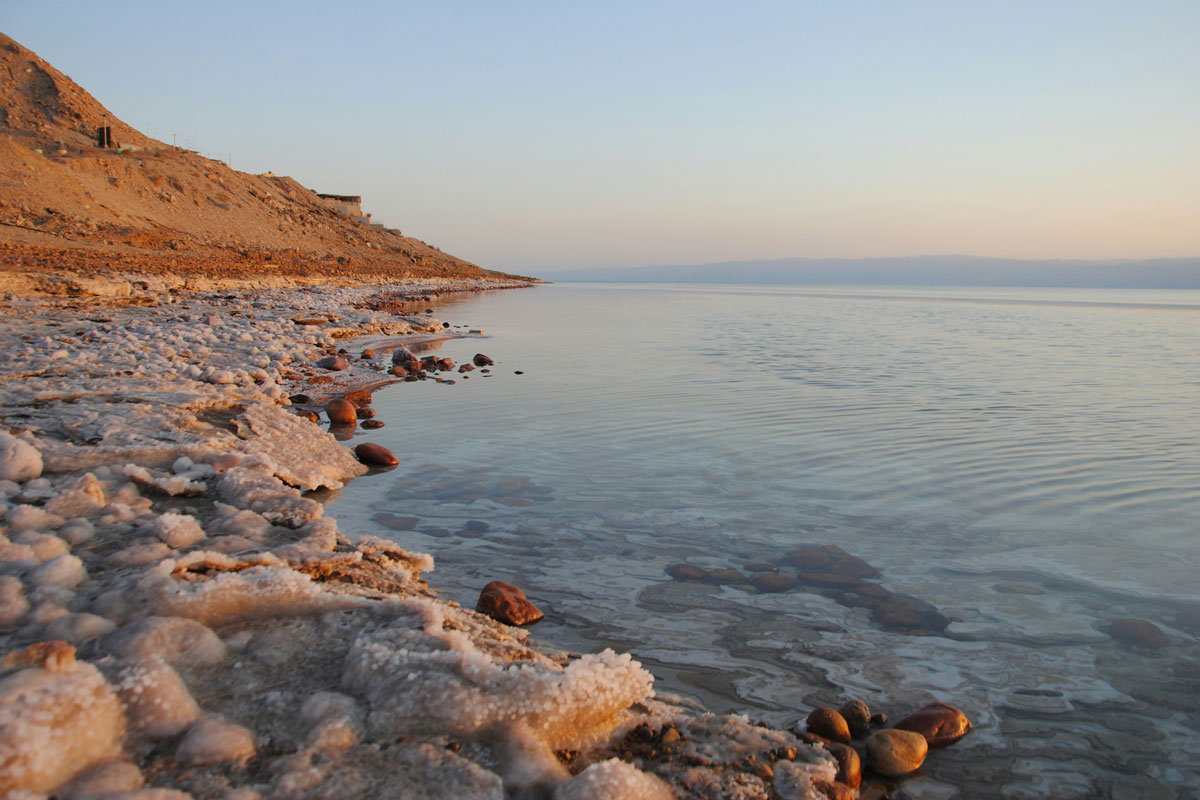
The nearby Dead Sea provides another possible stop for travelers who want to combine history with a contrasting natural experience.
These destinations can be included in a day trip from Amman, although the schedule should leave enough time to appreciate each location.
Travelers who prefer an organized excursion can consider a Madaba, Mount Nebo, and Dead Sea day tour, allowing them to combine several sites without arranging separate transfers.
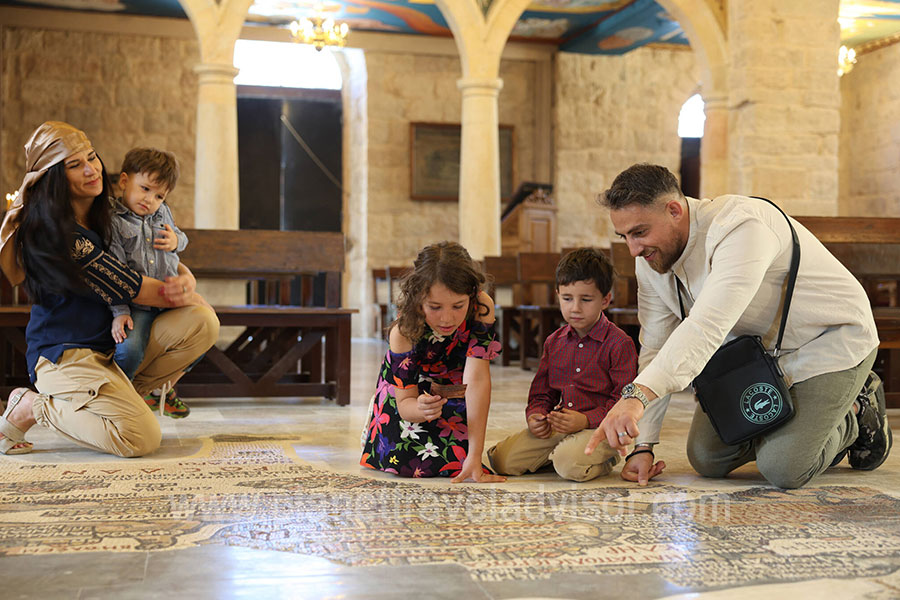
St. George's Church is one of Madaba's most significant historical attractions, bringing together a functioning Greek Orthodox church and a remarkable sixth-century mosaic map of the Holy Land.
The map's surviving depiction of Jerusalem, rivers, cities, and biblical locations offers a valuable perspective on the region's Byzantine past. Spending time identifying these details makes a visit considerably more meaningful.
For the best experience, verify the church's current visiting arrangements, allow at least half an hour to examine the mosaic, and consider exploring nearby Madaba attractions.
If you want to connect this historic church with Jordan's wider cultural and religious heritage, explore our Jordan tours and find an itinerary that brings the country's remarkable sites together.



A curated list of the most popular travel packages based on different destinations.
Explore Siq Petra, its Nabataean water system, ancient carvings, Treasury walk, history, opening hours, tickets, photography tips, and visitor advice.
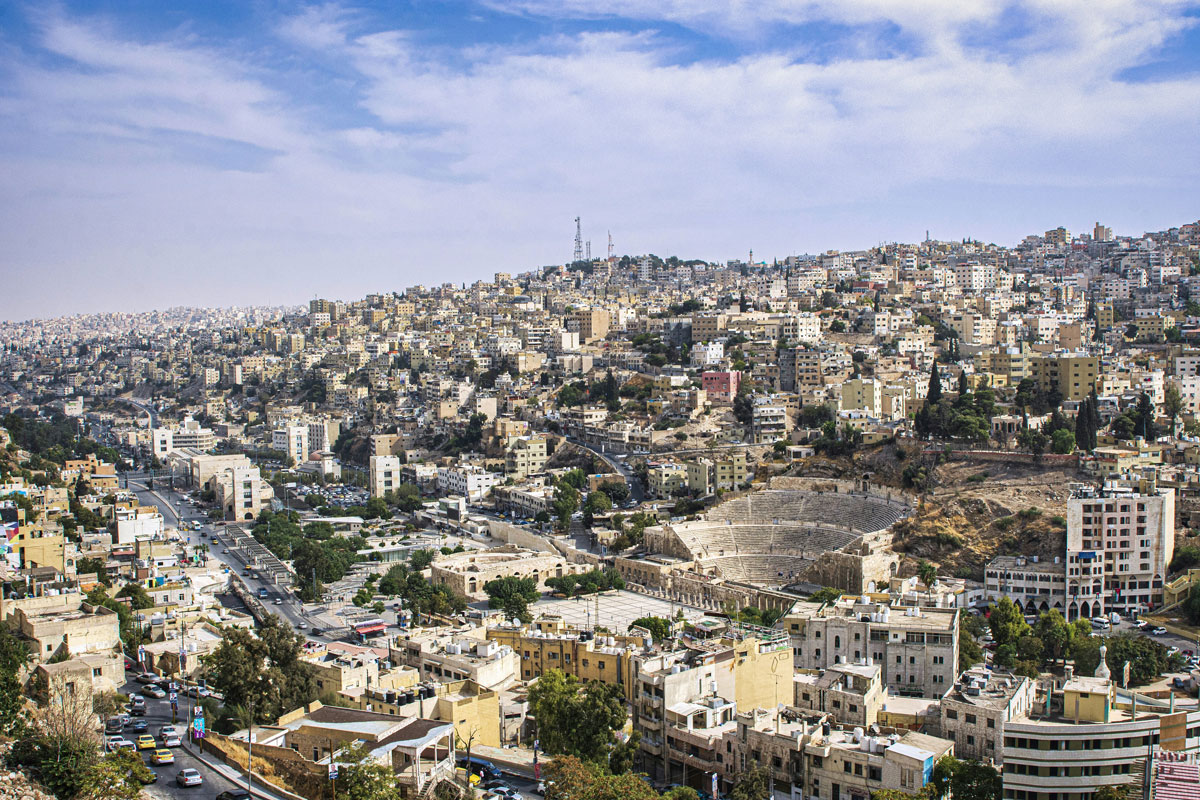
Plan your trip with this Amman travel guide covering top sights, food, neighborhoods, transport, day trips, where to stay, and practical visitor tips.
Explore Amman Citadel with practical tips on history, top sights, tickets, opening hours, Jordan Pass access, timing, transport, and nearby attractions.
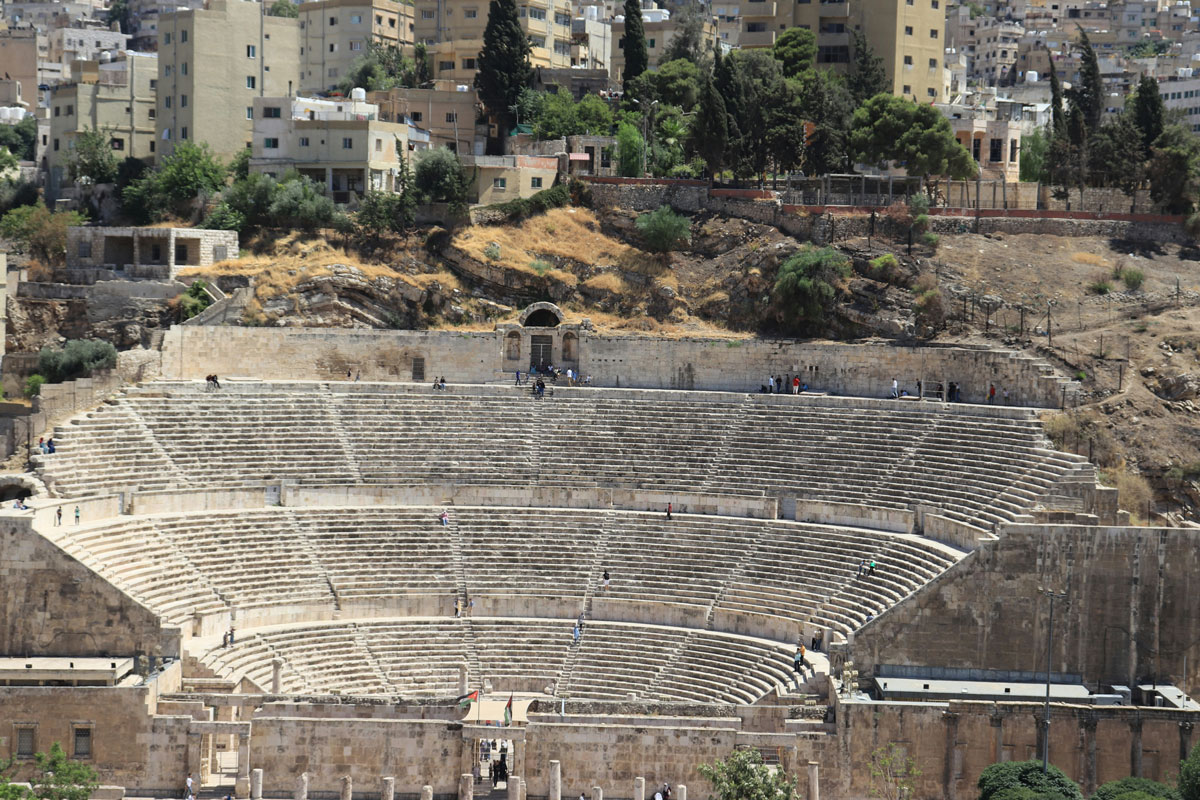
Plan your Amman Roman Theatre visit with current ticket prices, opening hours, Jordan Pass details, history, nearby sights, and practical travel tips.
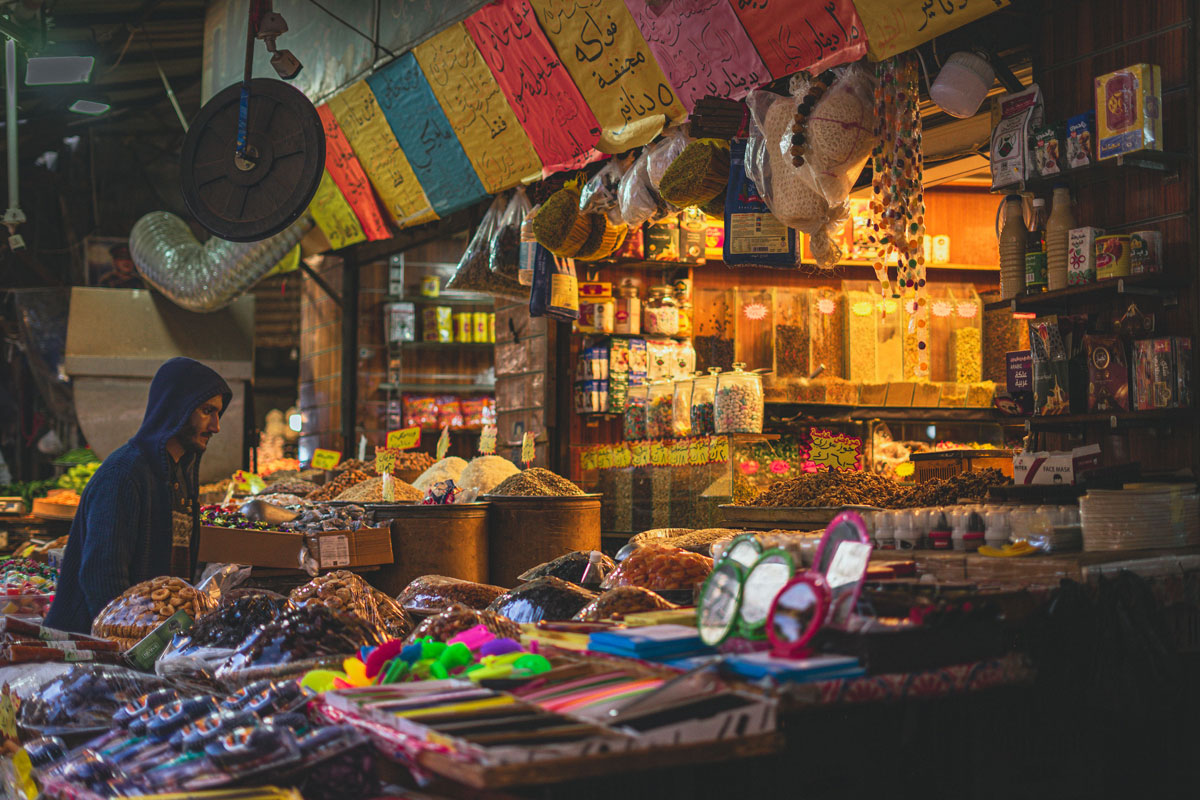
Explore the best souqs in Amman, from Al-Balad and the Gold Souq to Souq Jara, with shopping tips, souvenirs, timing, and nearby sights.
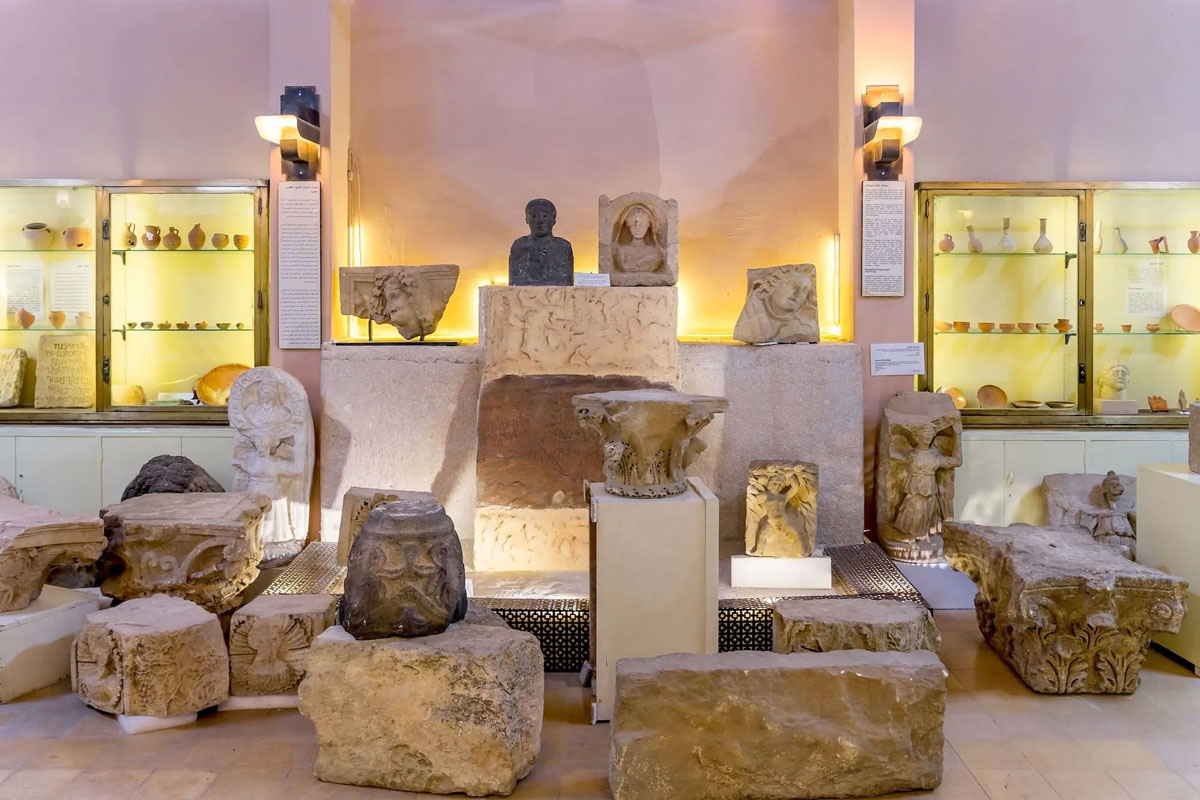
Explore the Jordan Archaeological Museum in Amman, including top artifacts, tickets, Jordan Pass, opening hours, Citadel tips, and visitor advice.
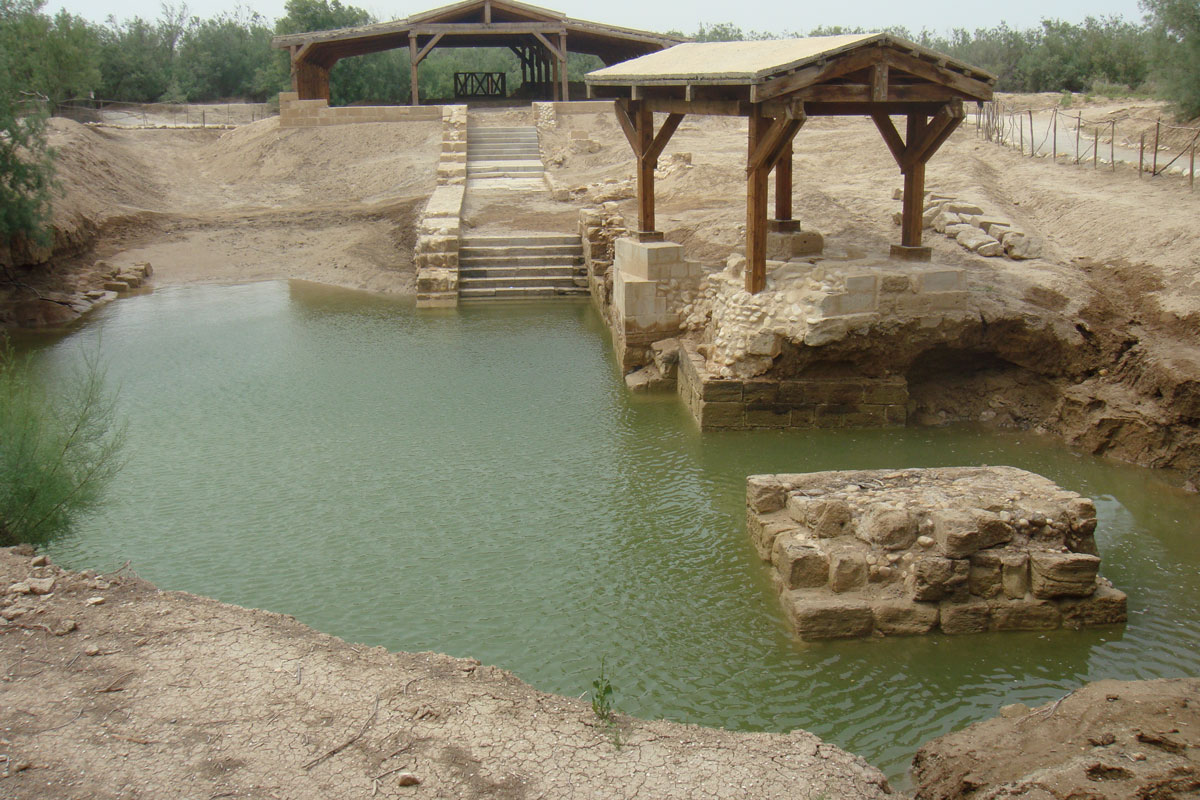
Plan your visit to the Baptism Site in Jordan with its biblical history, archaeology, tickets, opening hours, Jordan Pass details, and nearby stops.
Plan your Dead Sea Jordan visit with tips on floating, beaches, resorts, transport, best times, safety, nearby attractions, and how long to stay.
Explore Downtown Amman with tips on the Roman Theatre, souks, local food, walking routes, the Citadel, safety, transport, and the best time to visit.
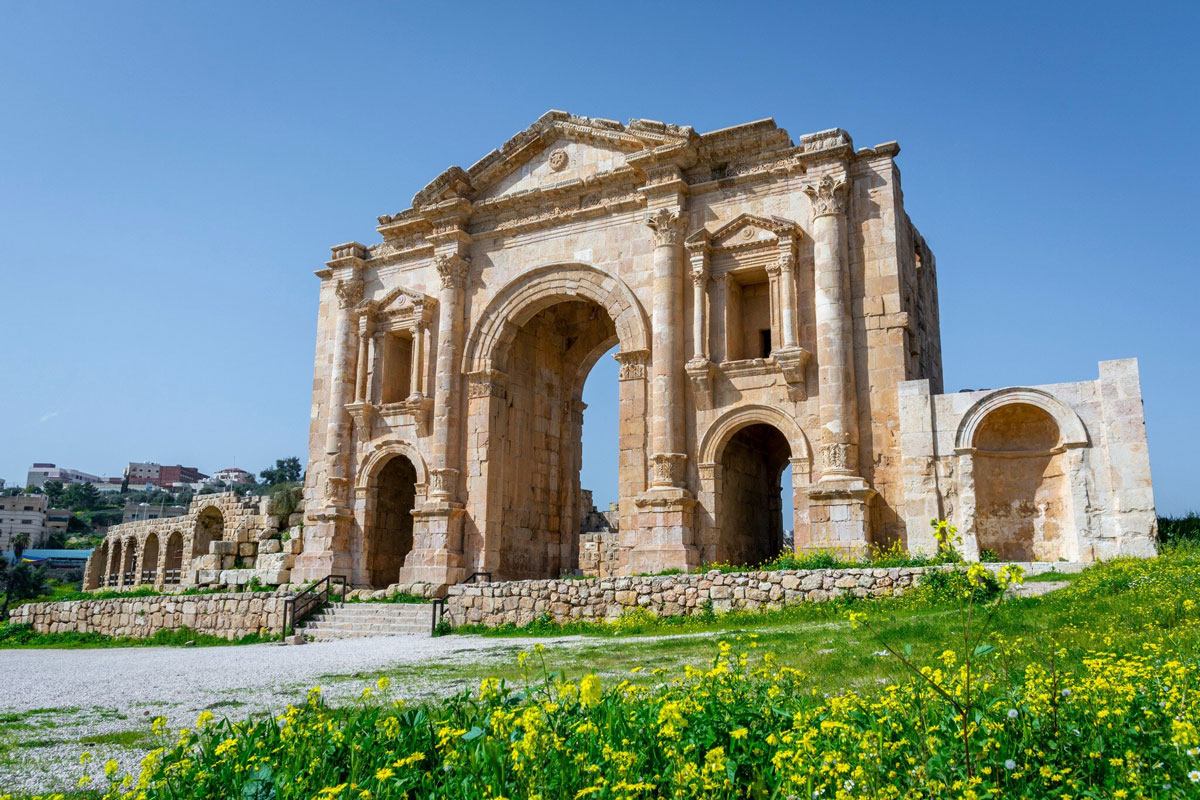
Plan your visit to Hadrian’s Arch Jerash with its history, architecture, tickets, opening hours, Jordan Pass details, nearby sites, and travel tips.
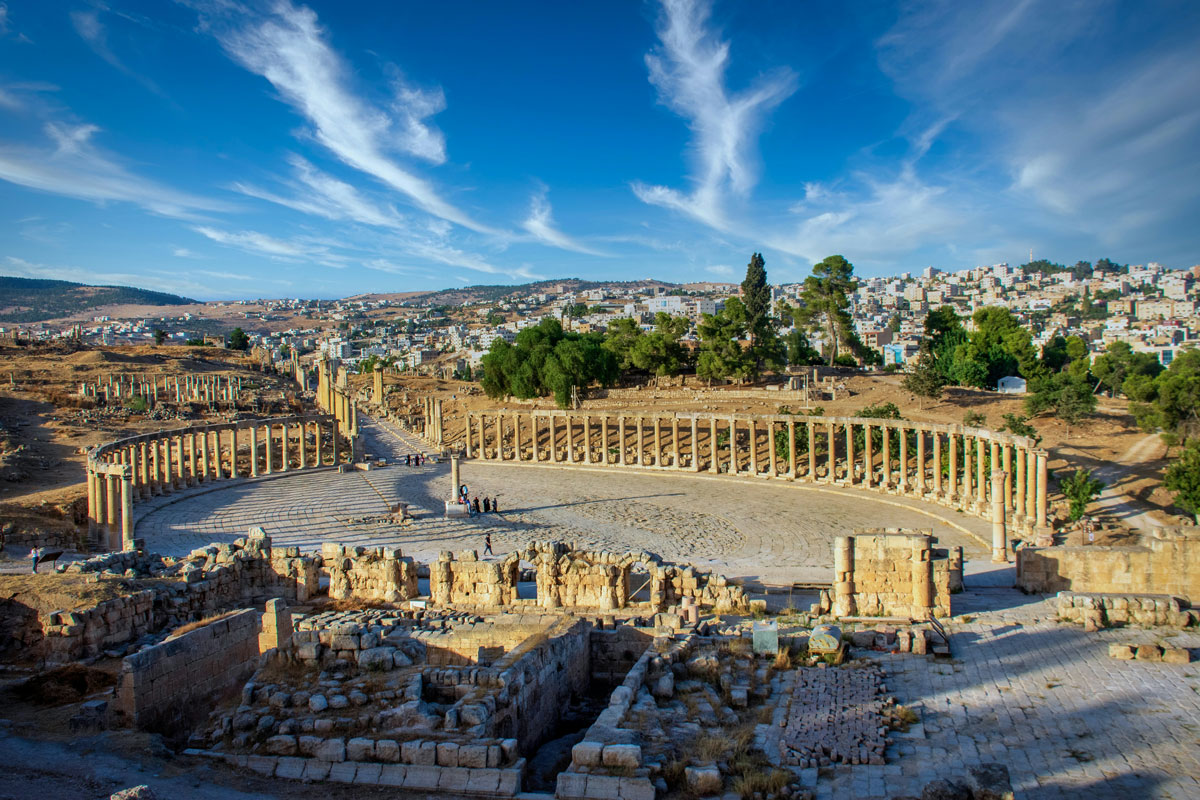
Plan your first visit to Jerash Jordan with the best ruins to see, walking route, tickets, Jordan Pass details, opening hours, timing, and travel tips.
Explore the Jordan River's biblical history, where Jesus was baptized, how to visit from Amman, and the best nearby places to include on your Jordan trip.
We go beyond just booking trips—we create unforgettable travel experiences that match your dreams!



Everything about this package felt thoughtfully planned. We booked the "10 Days Best of Turkey Travel Itinerary" package and were impressed by how professionally everything was arranged. The itinerary gave us enough time to enjoy the main highlights without feeling rushed, and all transfers and day tours ran on time. The communication before arrival was clear and helpful, which made planning much easier. What we appreciated most was the balance between guided sightseeing and free time, so the whole trip felt comfortable and enjoyable. If you are looking for a reliable way to explore Turkey, this is a great option. The guides, transfers, and pacing all worked together perfectly.
A beautifully organized journey from start to finish. We booked the "9 Day Vietnam Itinerary with Top Highlights" package and were impressed by how professionally everything was arranged. The itinerary gave us enough time to enjoy Vietnam without feeling rushed, and all transfers and day tours ran on time. The communication before arrival was clear and helpful, which made planning much easier. What we appreciated most was the balance between guided sightseeing and free time, so the whole trip felt comfortable and enjoyable. If you are looking for a reliable way to explore Vietnam, this is a great option. The itinerary was well balanced and never felt rushed.
This trip exceeded all our expectations. We booked the "Discover Turkey in 6 Days from Istanbul to Ephesus" package and were impressed by how professionally everything was arranged. The itinerary gave us enough time to enjoy Istanbul and Ephesus without feeling rushed, and all transfers and day tours ran on time. The communication before arrival was clear and helpful, which made planning much easier. What we appreciated most was the balance between guided sightseeing and free time, so the whole trip felt comfortable and enjoyable. If you are looking for a reliable way to explore Turkey, this is a great option. We would absolutely recommend it to anyone visiting this destination.
This trip exceeded all our expectations. We booked the "8 Days Real Taste of Vietnam Tour" package and were impressed by how professionally everything was arranged. The itinerary gave us enough time to enjoy Vietnam without feeling rushed, and all transfers and day tours ran on time. The communication before arrival was clear and helpful, which made planning much easier. What we appreciated most was the balance between guided sightseeing and free time, so the whole trip felt comfortable and enjoyable. If you are looking for a reliable way to explore Vietnam, this is a great option. We would absolutely recommend it to anyone visiting this destination.
We loved how easy and enjoyable this entire experience was. We booked the "15 Days Egypt & Jordan Tour Package" package and were impressed by how professionally everything was arranged. The itinerary gave us enough time to enjoy Egypt and Jordan without feeling rushed, and all transfers and day tours ran on time. The communication before arrival was clear and helpful, which made planning much easier. What we appreciated most was the balance between guided sightseeing and free time, so the whole trip felt comfortable and enjoyable. If you are looking for a reliable way to explore Jordan, this is a great option. We came home with amazing memories and would book again.











Comments (02)
Mr. Bowmik Haldar,
05 June, 2024Outstanding News & Insight! Thank you so much for sharing like this article
Jacoline Juie,
05 June, 2023However, here are some well-regarded car dealerships known for their customer service, inventory, and overall reputation. It's always a good idea to research and read reviews specific...
Leave Your Comment: