 Visit Turkey
 Visit Vietnam
 Visit Cambodia
 Visit Dubai
 Visit Jordan


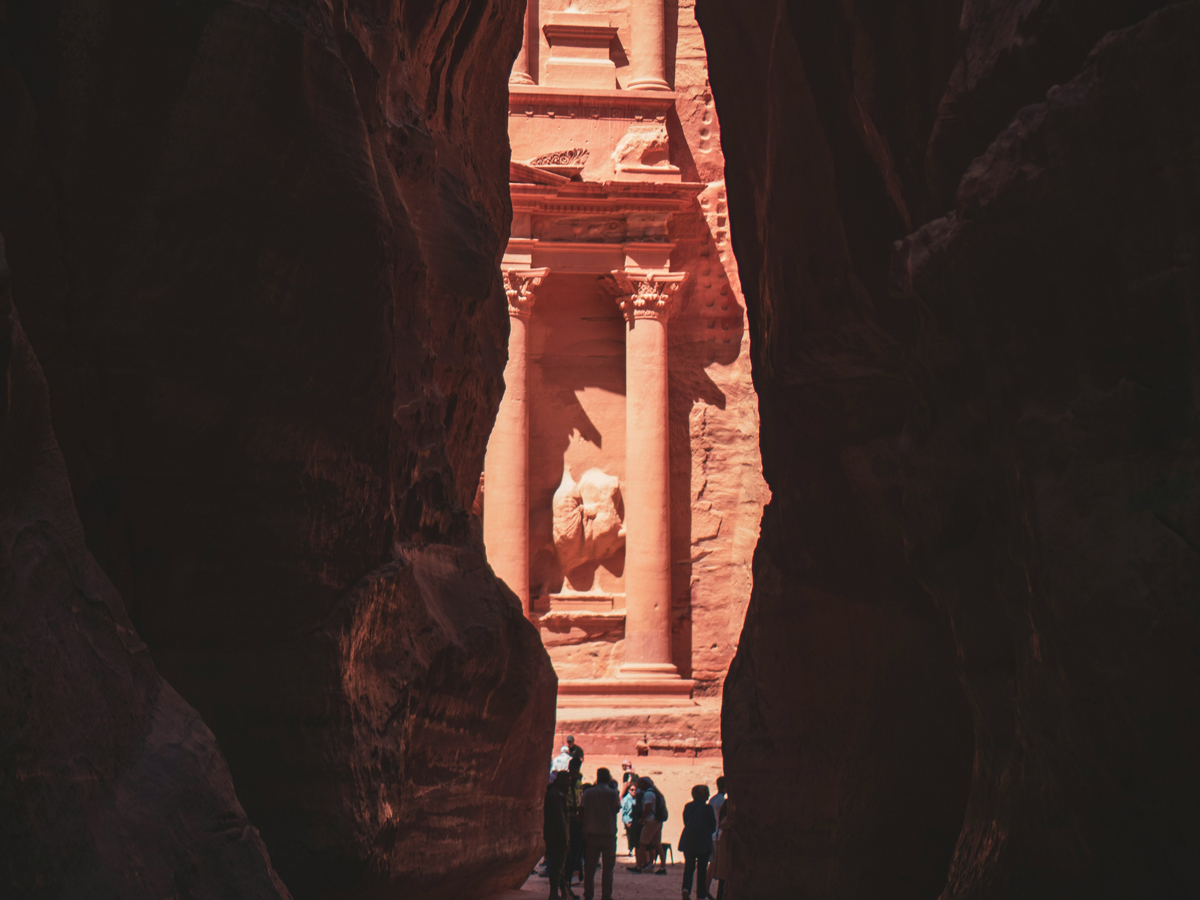
Siq Petra Guide for First-Time Visitors
Explore Siq Petra, its Nabataean water system, ancient carvings, Treasury walk, history, opening hours, tickets, photography tips, and visitor advice.



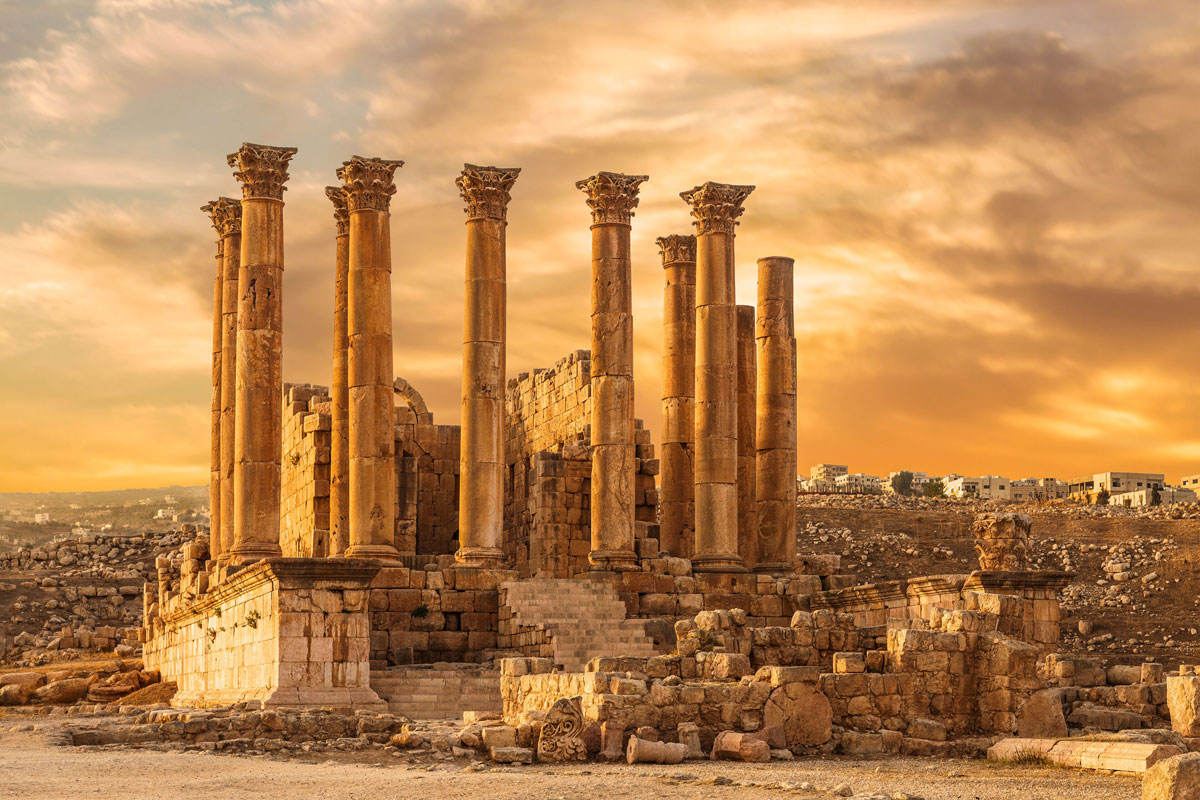
Eleven towering Corinthian columns still stand above the ruins of ancient Gerasa, marking the location of one of Jordan's most remarkable Roman temples. The Temple of Artemis in Jerash was once the religious centerpiece of an enormous sanctuary dedicated to the city's patron goddess.
Built during the Roman period, the temple reflects both the prosperity of ancient Jerash and the architectural ambitions of its inhabitants. Although construction was never fully completed, the surviving columns, monumental staircase, and remains of the sacred chambers reveal the scale of the original project.
Today, the Temple of Artemis is one of the main attractions within Jerash Archaeological Site. Its history, unusual architectural features, and fascinating archaeological discoveries make it an important stop for travelers interested in Jordan's Roman heritage.
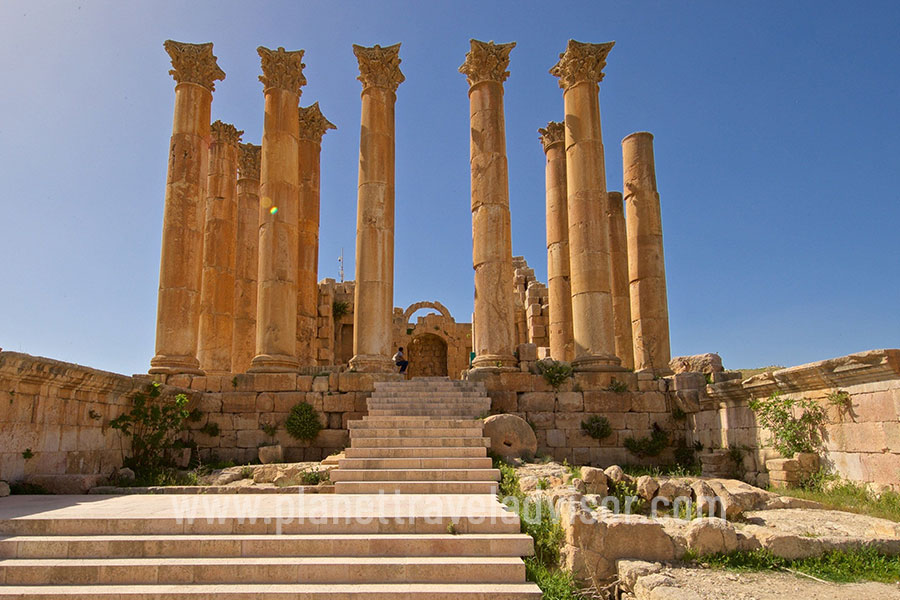
The Temple of Artemis is a Roman religious monument located within the ancient city of Gerasa, now known as Jerash, in northern Jordan. It was dedicated to Artemis, the patron goddess of the city, and formed the central building of a much larger religious sanctuary.
Artemis was a Greek goddess associated with hunting, wild animals, and the natural world. Her Roman counterpart was Diana. In Gerasa, her worship was closely connected with the city's religious identity.
The temple occupies a raised terrace on the western side of the archaeological site, overlooking the ancient streets and surrounding ruins.
Its most recognizable features are the tall Corinthian columns, which once formed part of a much larger colonnade surrounding the central temple building.
The sanctuary itself was more extensive than the temple. It included monumental entrances, broad staircases, terraces, courtyards, and structures associated with religious activity.
Visitors can still recognize this arrangement in the surviving archaeological remains. The elevated location and carefully planned approach demonstrate the importance of the sanctuary within the ancient city.
Unlike the Temple of Artemis at Ephesus in Turkey, which was one of the Seven Wonders of the Ancient World, the temple in Jerash is a separate Roman-era monument with its own history and architectural significance.
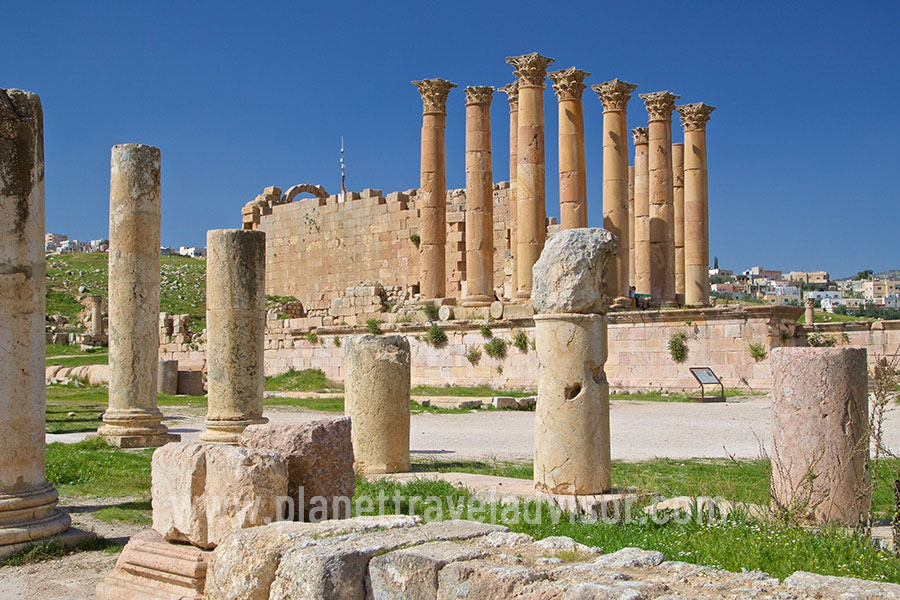
The history of the Temple of Artemis is closely connected to the development of Gerasa during the Roman period.
Gerasa was one of the cities associated with the Decapolis, a group of cities in the eastern Mediterranean region known for their Greek and Roman cultural influences. Under Roman rule, the city developed impressive public buildings, colonnaded streets, theatres, temples, and other monumental structures.
Artemis held a particularly important place in the religious life of Gerasa. As the city's patron goddess, she represented a connection between civic identity and religious worship.
Construction of the Temple of Artemis began during the second century AD, when Gerasa was experiencing significant architectural development.
The sanctuary was carefully integrated into the city's urban plan. Its processional approach connected the principal colonnaded street with a sequence of terraces and staircases leading toward the temple.
This arrangement created a dramatic transition from the busy streets of Gerasa to one of its most important sacred spaces.
Despite the ambitious design, the temple was never entirely finished. Archaeological evidence indicates that only 12 of the 32 columns originally planned around the structure were erected.
The exact reason construction stopped is not firmly established. Changes in financial resources, building priorities, or political conditions are possible explanations, but none should be presented as a confirmed historical cause.
The temple's importance did not disappear immediately with the decline of traditional Roman religious practices.
During the Byzantine period, the complex underwent substantial changes. Some parts of the sanctuary were adapted to new purposes, and the temple itself may have been used as a Christian religious building.
Further changes occurred during the Umayyad period, when parts of the sanctuary were used for pottery production and other activities.
These later occupations demonstrate how the same monumental space could serve different purposes as the city developed.
Archaeological investigations have played an important role in understanding these transformations.
Early excavations took place during the twentieth century, while the Italian Archaeological Mission began studying the sanctuary in 1977. Its work has included architectural documentation, excavation, conservation, and the investigation of structures dating to different historical periods.
Today, the surviving remains reveal not only the history of Roman religious architecture but also the changing life of Gerasa over many centuries.
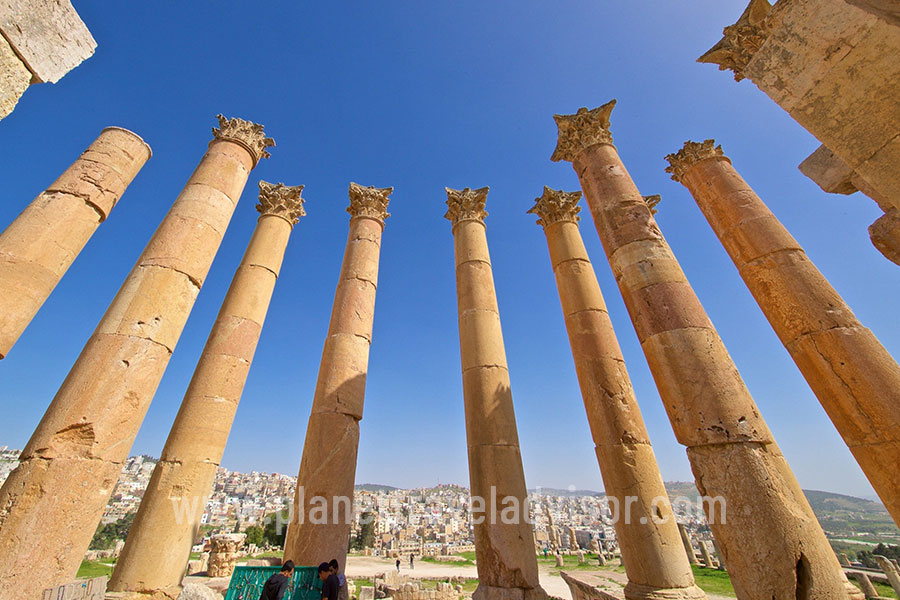
The most striking feature of the Temple of Artemis is its collection of surviving Corinthian columns.
Eleven columns remain standing, reaching approximately 13 meters in height. Their scale and decorative capitals make them among the most recognizable architectural features of ancient Jerash.
The columns belong to the Corinthian order, one of the three principal classical architectural styles.
Corinthian capitals are particularly recognizable because of their elaborate decoration, often featuring carved acanthus leaves and ornamental details.
At the Temple of Artemis, these designs demonstrate the craftsmanship of Roman-period stoneworkers.
The original temple was designed as a peripteral temple, meaning that columns were intended to surround the central building. Its front elevation had six principal columns, a design described architecturally as hexastyle.
However, the planned surrounding colonnade was never fully completed.
The temple stood on a high stone podium, giving it a commanding position above the sanctuary's upper terrace.
A monumental staircase formed an important part of the approach. Visitors ascending toward the temple would have encountered an increasingly impressive view of the columns and the sacred building.
Behind the columns stood the cella, the main interior chamber of the temple.
At the rear of this space was the adytum, an inner sacred area associated with the worship of Artemis. The Jordan Tourism Board explains that access to this restricted space was reserved for the priest.
The inner shrine contained a niche intended for the deity and two side chambers.
One side chamber had stairs descending toward the underground vaults, while another provided access toward the roof.
The presence of these staircases indicates that the temple had a more complicated internal arrangement than its surviving exterior might initially suggest.
The building also rests above an extensive system of underground vaults. Their exact original purpose remains uncertain, although they formed an important part of the temple's construction.
One of the temple's most frequently discussed features is the apparent movement of its standing columns.
Visitors and guides have described slight swaying, particularly during windy conditions.
The columns were assembled from large stone drums rather than carved as single pieces. Small movements between structural elements are physically possible, but claims that the entire system was deliberately engineered to resist earthquakes should be treated cautiously.
The survival of these columns is remarkable, especially given the earthquakes and structural changes that affected ancient Jerash.
However, visitors should not attempt to demonstrate column movement by inserting objects into stone joints or touching fragile architectural features.
The most rewarding way to appreciate the architecture is to examine the size of the columns, the carving of their capitals, and their relationship to the remaining temple walls.
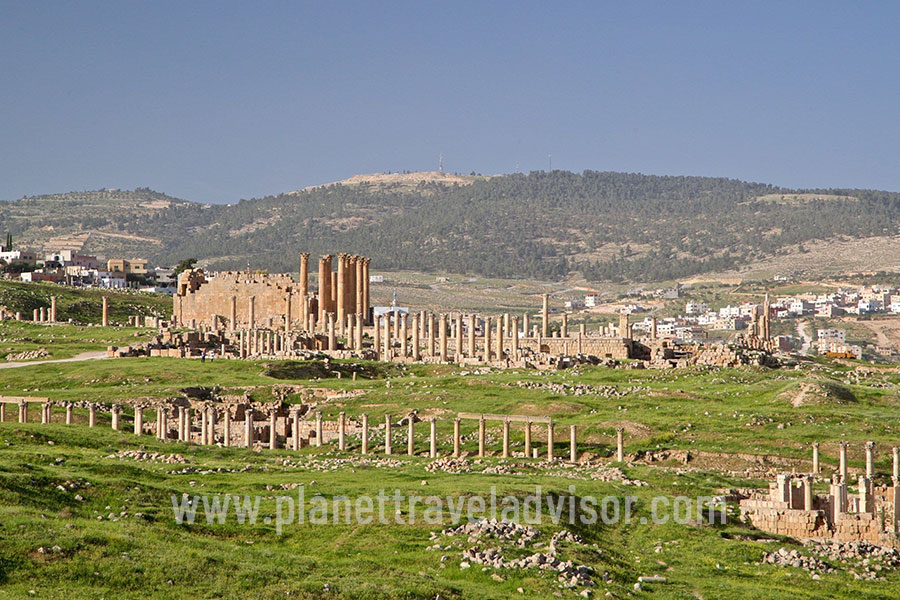
Beyond its famous columns, the Temple of Artemis contains several historical and archaeological details that make it particularly interesting.
Although 32 columns were originally planned, only 12 were erected. Eleven remain standing today. The unfinished construction provides archaeologists with valuable evidence about the original architectural design.
The Temple of Artemis was only one element of a much bigger religious complex. The sanctuary included terraces, monumental gateways, staircases, courtyards, and spaces connected to the ancient city's main street.
Beneath the structure is an extensive system of vaulted chambers. Although archaeologists have investigated these spaces, their exact original purpose has not been conclusively established.
The adytum at the rear of the temple was an especially sacred area associated with the goddess. According to the Jordan Tourism Board, access was reserved for the Roman priest.
One of the side chambers contained a staircase leading toward the roof. This has led to the suggestion that an altar or another religious feature may once have occupied the upper part of the building, although the interpretation remains uncertain.
Parts of the sanctuary became associated with Byzantine and Umayyad activities, including pottery production. These later uses provide evidence of how the ancient complex changed over time.
The Italian Archaeological Mission documented the temple using photogrammetry, a technique that develops accurate measurements and three-dimensional models from photographs.
A survey in 1979 was followed by later digital recording campaigns. More recent documentation has helped researchers assess deterioration and plan conservation work.
Although both monuments were dedicated to Artemis, they are not the same structure. The Temple of Artemis in Jerash belongs to the ancient city of Gerasa in Jordan, while the sanctuary at Ephesus was located in present-day Turkey.
These facts help explain why the temple is important beyond its appearance. It preserves evidence of Roman architecture, religious traditions, incomplete construction, and the changing history of Jerash.
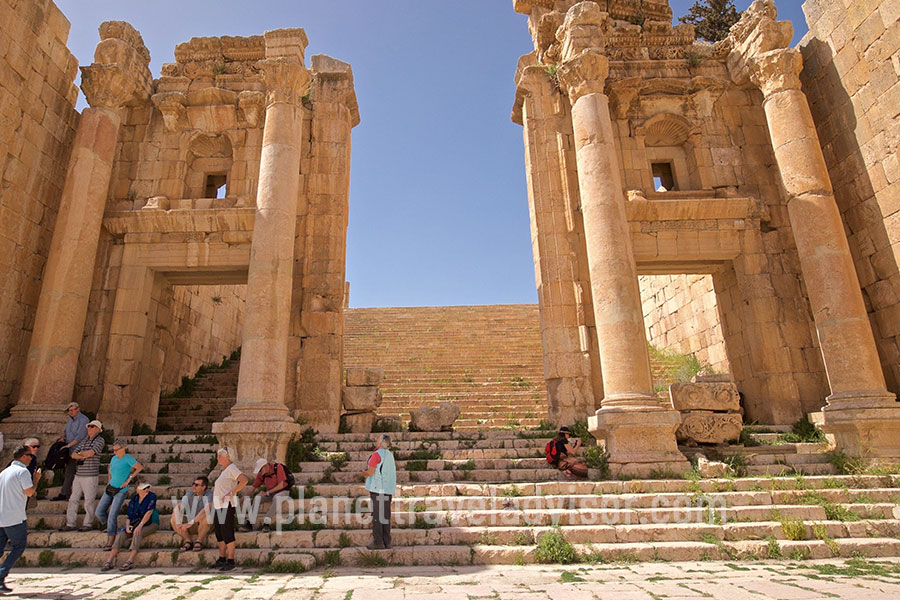
The Temple of Artemis is located inside Jerash Archaeological Site, approximately 45 kilometers north of Amman.
Most travelers visit Jerash as a day trip from Jordan's capital, although the archaeological city can also be included in a longer cultural itinerary.
Getting to the Temple of Artemis
The main entrance to Jerash Archaeological Site provides access to the city's principal monuments.
Visitors typically begin near Hadrian's Arch and continue through the archaeological park toward the Oval Plaza and Cardo Maximus.
The Temple of Artemis lies on the western side of the Cardo, reached through the remains of the sanctuary's monumental approach.
The Nymphaeum is a useful landmark when locating the sanctuary.
Because the temple stands on an elevated terrace, reaching its upper level involves walking on uneven surfaces and using steps. Travelers with limited mobility should confirm current access arrangements before visiting.
Entrance Fees and Tickets
The Temple of Artemis is included in admission to Jerash Archaeological Site.
According to Jordan's official archaeological ticketing service, the standard entrance fee for non-Jordanian visitors is 10 Jordanian dinars.
Jerash is also included among the attractions covered by the Jordan Pass, subject to the pass's conditions.
There is no separate standard admission ticket required specifically for the Temple of Artemis.
Opening Hours
Visiting hours vary according to the season.
The Jordan Pass seasonal schedule lists winter opening hours for Jerash Archaeological Site as 8:00 AM to 4:00 PM, with longer hours during other periods.
Because published schedules can change, visitors should confirm current opening times before traveling.
Best Time to Visit
Spring and autumn generally provide comfortable weather for exploring Jerash's outdoor archaeological monuments.
March through May and September through November are particularly suitable for longer walks, although temperatures vary throughout the season.
Summer visits can be hot, especially in open areas with limited shade.
During warmer months, an earlier visit is often preferable, allowing travelers to explore the temple before the strongest afternoon heat.
Photography conditions also change throughout the day. Morning light can reveal architectural details, while later sunlight may emphasize the texture of the stone columns.
How Long Should You Spend at the Temple?
Allow approximately 20–35 minutes to examine the temple itself, photograph the columns, and appreciate its architectural features.
This is a suggested sightseeing duration, not an official requirement.
For the wider Jerash Archaeological Site, approximately two to three hours is a practical starting point for a general visit. Travelers interested in archaeology, architecture, or photography may prefer additional time.
Other Attractions Nearby
Several important Roman monuments can be explored during the same visit.
The Cardo Maximus is the city's famous colonnaded street, while the Nymphaeum preserves the remains of an elaborate public fountain.
The North Theatre offers another example of Roman civic architecture, and the Temple of Zeus provides an interesting comparison with the sanctuary of Artemis.
Travelers interested in combining Jerash with destinations such as Amman, Ajloun, Petra, and Wadi Rum can explore organized Jordan tour packages to arrange a wider cultural itinerary.
Practical Tips for Visiting
Wear comfortable walking shoes with reliable grip, as the site includes ancient paving, stone steps, and uneven ground.
Carry drinking water, particularly during warm weather, and allow enough time to rest between monuments.
A hat and sunscreen can also make a significant difference during exposed sections of the walking route.
Most importantly, respect archaeological barriers and conservation signs. Avoid climbing fragile structures or touching the carved details of the columns.
The Temple of Artemis in Jerash represents an important chapter in Jordan's Roman history. Although its original construction was never completed, the surviving columns, elevated sanctuary, and sacred chambers preserve evidence of an ambitious architectural project.
Understanding the temple's religious importance, architectural design, and later transformations adds valuable context to a visit.
For travelers exploring the Roman ruins of Jerash, it is worth taking time to examine the details rather than viewing the columns only from a distance.
Those planning to combine Jerash with other cultural destinations can use Jordan tours to build a broader itinerary connecting the country's archaeological sites and historic landscapes.




A curated list of the most popular travel packages based on different destinations.
Explore Siq Petra, its Nabataean water system, ancient carvings, Treasury walk, history, opening hours, tickets, photography tips, and visitor advice.
Plan your trip with this Amman travel guide covering top sights, food, neighborhoods, transport, day trips, where to stay, and practical visitor tips.
Explore Amman Citadel with practical tips on history, top sights, tickets, opening hours, Jordan Pass access, timing, transport, and nearby attractions.
Plan your Amman Roman Theatre visit with current ticket prices, opening hours, Jordan Pass details, history, nearby sights, and practical travel tips.
Explore the best souqs in Amman, from Al-Balad and the Gold Souq to Souq Jara, with shopping tips, souvenirs, timing, and nearby sights.
Explore the Jordan Archaeological Museum in Amman, including top artifacts, tickets, Jordan Pass, opening hours, Citadel tips, and visitor advice.
Plan your visit to the Baptism Site in Jordan with its biblical history, archaeology, tickets, opening hours, Jordan Pass details, and nearby stops.
Plan your Dead Sea Jordan visit with tips on floating, beaches, resorts, transport, best times, safety, nearby attractions, and how long to stay.
Explore Downtown Amman with tips on the Roman Theatre, souks, local food, walking routes, the Citadel, safety, transport, and the best time to visit.
Plan your visit to Hadrian’s Arch Jerash with its history, architecture, tickets, opening hours, Jordan Pass details, nearby sites, and travel tips.
Plan your first visit to Jerash Jordan with the best ruins to see, walking route, tickets, Jordan Pass details, opening hours, timing, and travel tips.
Explore the Jordan River's biblical history, where Jesus was baptized, how to visit from Amman, and the best nearby places to include on your Jordan trip.
We go beyond just booking trips—we create unforgettable travel experiences that match your dreams!



Everything about this package felt thoughtfully planned. We booked the "15 Days Cambodia Grand Tour" package and were impressed by how professionally everything was arranged. The itinerary gave us enough time to enjoy Cambodia without feeling rushed, and all transfers and day tours ran on time. The communication before arrival was clear and helpful, which made planning much easier. What we appreciated most was the balance between guided sightseeing and free time, so the whole trip felt comfortable and enjoyable. If you are looking for a reliable way to explore Cambodia, this is a great option. The guides, transfers, and pacing all worked together perfectly.
Everything about this package felt thoughtfully planned. We booked the "9 Days Vietnam Beach Getaway" package and were impressed by how professionally everything was arranged. The itinerary gave us enough time to enjoy Vietnam without feeling rushed, and all transfers and day tours ran on time. The communication before arrival was clear and helpful, which made planning much easier. What we appreciated most was the balance between guided sightseeing and free time, so the whole trip felt comfortable and enjoyable. If you are looking for a reliable way to explore Vietnam, this is a great option. The guides, transfers, and pacing all worked together perfectly.
We loved how easy and enjoyable this entire experience was. We booked the "15 Days Egypt & Jordan Tour Package" package and were impressed by how professionally everything was arranged. The itinerary gave us enough time to enjoy Egypt and Jordan without feeling rushed, and all transfers and day tours ran on time. The communication before arrival was clear and helpful, which made planning much easier. What we appreciated most was the balance between guided sightseeing and free time, so the whole trip felt comfortable and enjoyable. If you are looking for a reliable way to explore Jordan, this is a great option. We came home with amazing memories and would book again.
A beautifully organized journey from start to finish. We booked the "Explore Turkey in 9 Days from Ephesus to Cappadocia" package and were impressed by how professionally everything was arranged. The itinerary gave us enough time to enjoy Cappadocia and Ephesus without feeling rushed, and all transfers and day tours ran on time. The communication before arrival was clear and helpful, which made planning much easier. What we appreciated most was the balance between guided sightseeing and free time, so the whole trip felt comfortable and enjoyable. If you are looking for a reliable way to explore Turkey, this is a great option. The itinerary was well balanced and never felt rushed.
This trip exceeded all our expectations. We booked the "10 Days in Turkey Tour Itinerary" package and were impressed by how professionally everything was arranged. The itinerary gave us enough time to enjoy the main highlights without feeling rushed, and all transfers and day tours ran on time. The communication before arrival was clear and helpful, which made planning much easier. What we appreciated most was the balance between guided sightseeing and free time, so the whole trip felt comfortable and enjoyable. If you are looking for a reliable way to explore Turkey, this is a great option. We would absolutely recommend it to anyone visiting this destination.











Comments (02)
Mr. Bowmik Haldar,
05 June, 2024Outstanding News & Insight! Thank you so much for sharing like this article
Jacoline Juie,
05 June, 2023However, here are some well-regarded car dealerships known for their customer service, inventory, and overall reputation. It's always a good idea to research and read reviews specific...
Leave Your Comment: