 Visit Turkey
 Visit Vietnam
 Visit Cambodia
 Visit Dubai
 Visit Jordan


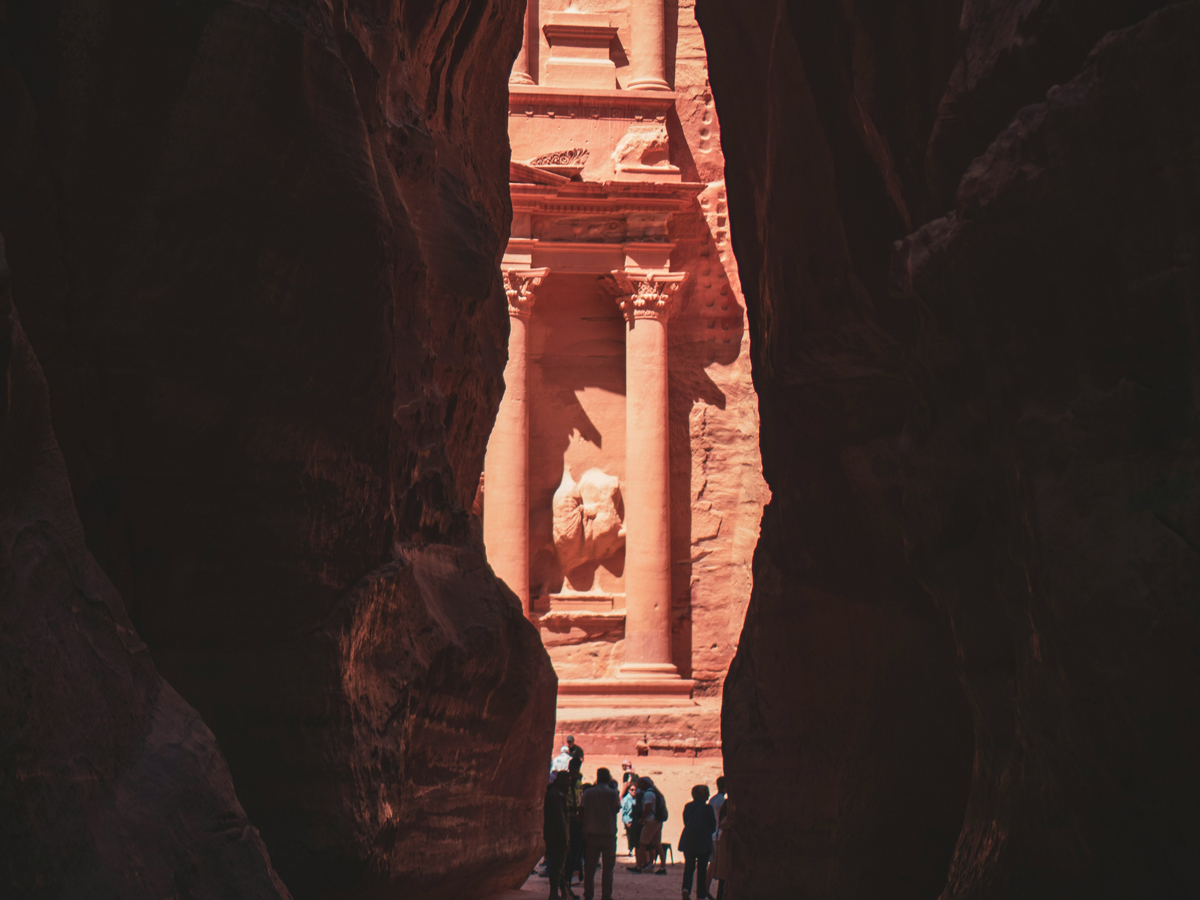
Siq Petra Guide for First-Time Visitors
Explore Siq Petra, its Nabataean water system, ancient carvings, Treasury walk, history, opening hours, tickets, photography tips, and visitor advice.



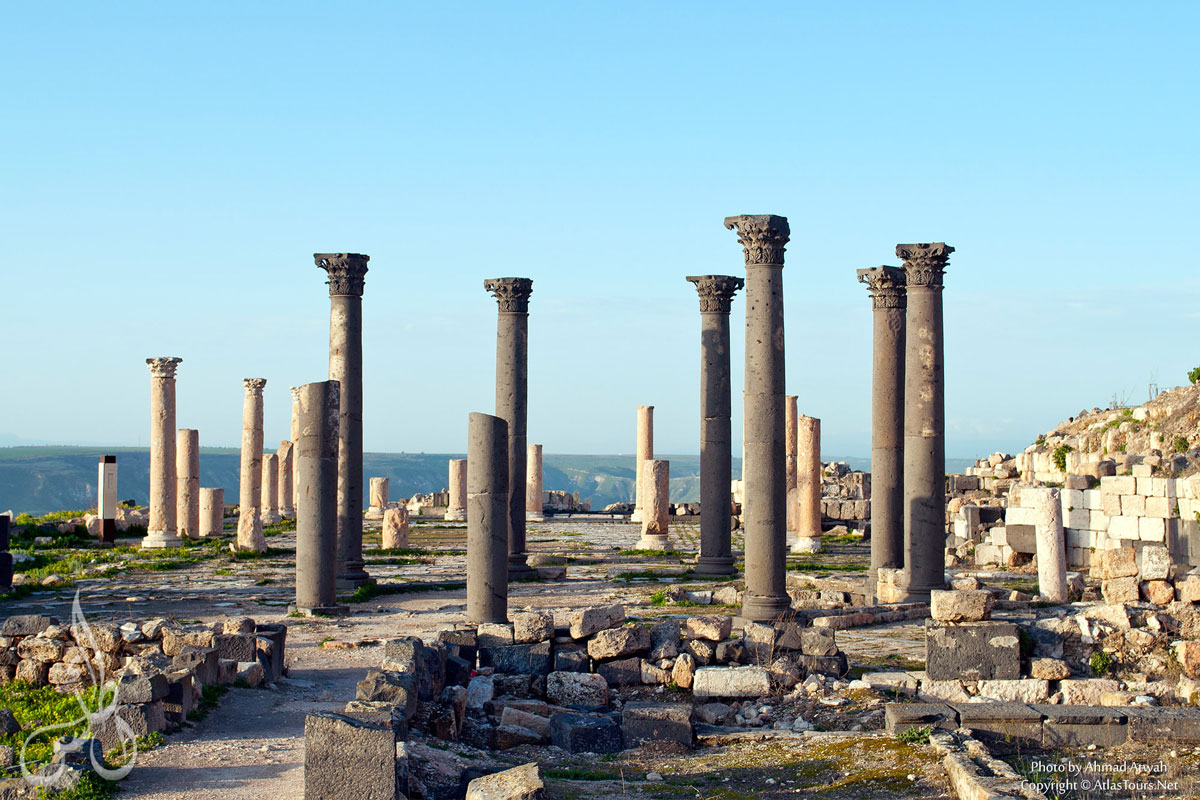
Umm Qais is one of northern Jordan's most remarkable archaeological destinations, where the remains of the ancient city of Gadara overlook the Sea of Galilee and the Yarmouk Valley. Its black basalt Roman theater, colonnaded streets, Byzantine churches, and historic Ottoman houses reveal centuries of history within a single hilltop setting.
Once an important cultural center of the Decapolis, Umm Qais attracted philosophers, poets, and scholars during the Greek and Roman periods. Today, visitors can explore its ancient ruins, discover archaeological treasures, enjoy panoramic landscapes, and experience the traditions of the surrounding community.
This Umm Qais travel guide covers the history of ancient Gadara, its most significant attractions, the Roman theater and archaeological museum, and practical information about transportation, opening hours, entrance fees, and the best time to visit.
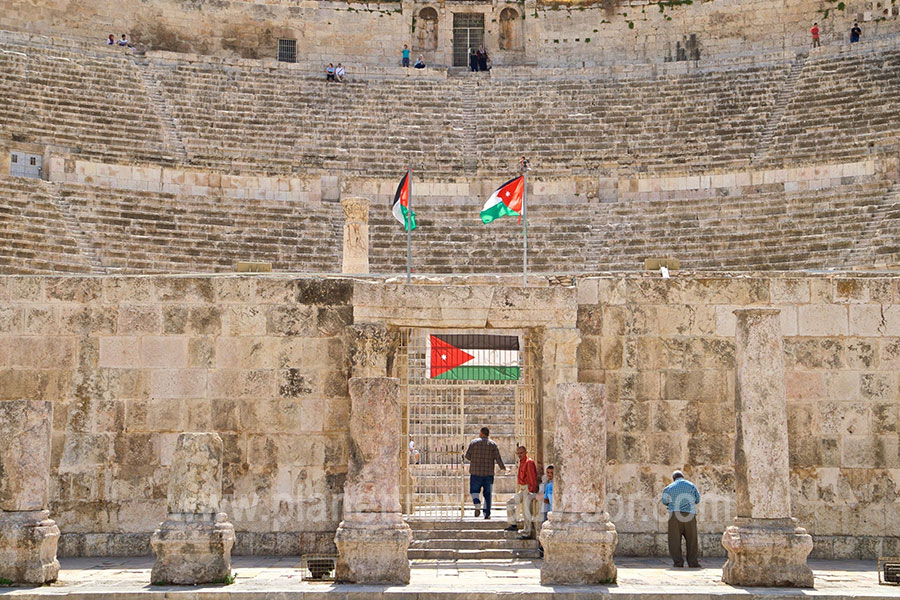
Umm Qais is located in northwestern Jordan, in Irbid Governorate, close to the country's borders with Syria and Israel. The archaeological site occupies an elevated position overlooking the northern Jordan Valley, approximately two hours or more by car from Amman, depending on traffic and the route.
Its location is one of the main reasons travelers visit. From the surrounding terraces, visitors can admire views toward the Sea of Galilee, also known as Lake Tiberias, the Yarmouk Valley, the Golan Heights, and Mount Hermon when visibility is clear.
The modern town of Umm Qais stands near the ruins of Gadara, an ancient city that developed into an important center of trade and culture. A historic Ottoman village also occupies part of the archaeological area, creating a landscape where different periods of Jordanian history exist side by side.
Unlike Petra's monumental sandstone cliffs or the extensive Roman streets of Jerash, Umm Qais is particularly notable for its dark volcanic stone architecture and panoramic setting.
Its position in northern Jordan also makes it a useful addition to itineraries that include Jerash, Ajloun, and Irbid. Travelers interested in archaeology, photography, and regional culture can experience several different aspects of Jordan within a relatively compact area.
Umm Qais history begins long before the modern settlement acquired its present name. The site was known in antiquity as Gadara, a prominent city that developed during the Hellenistic period and became one of the important urban centers of the Decapolis.
The Decapolis was a group of cities in the eastern Mediterranean region influenced by Greek culture and later Roman administration. Gadara benefited from its strategic location near important routes connecting inland settlements with the Jordan Valley and surrounding territories.
During the Hellenistic period, Gadara developed fortifications, religious structures, and other urban features. Its cultural significance increased under Roman rule, particularly after the Roman general Pompey's campaigns in the region during the first century BC.
A center of Greek and Roman culture
Gadara became associated with intellectual and literary activity. Among its notable figures were the poet Meleager of Gadara, the Cynic writer Menippus, and the rhetorician Theodorus of Gadara.
The city's reputation for learning and philosophical discussion contributed to its recognition as an important cultural center of the ancient world.
Roman influence also transformed its architecture. Public buildings, theaters, baths, colonnaded streets, and religious structures reflected the urban planning traditions of Roman provincial cities.
Construction continued across different periods, with many of the surviving monuments dating to the first several centuries AD.
Gadara during the Byzantine period
Christianity became increasingly influential in the region during the Byzantine era. Churches and religious buildings were constructed within the city, sometimes adapting spaces that had served different purposes during earlier periods.
The remains of basilicas and other Christian structures illustrate this transition. Archaeological evidence also indicates that Gadara remained inhabited and developed further during parts of the Byzantine period.
The city subsequently experienced political changes, earthquakes, and shifts in regional settlement patterns. These developments gradually altered its urban character.
During the Ottoman period, residents established a village over portions of the ancient city, constructing traditional stone houses close to the archaeological remains.
Several of these buildings survive today. Their preservation allows visitors to understand Umm Qais not only as an ancient Roman city but also as a place with a continuing history of local settlement.
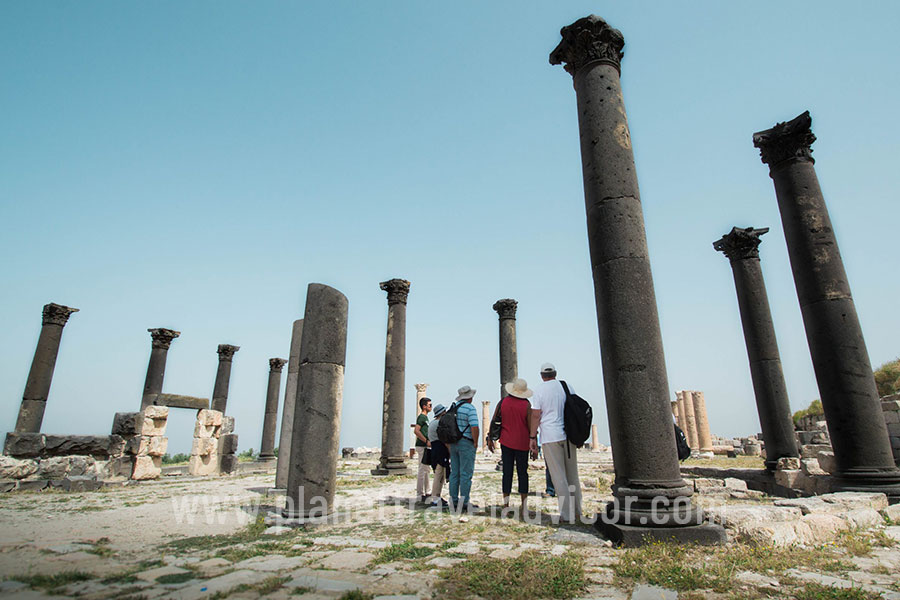
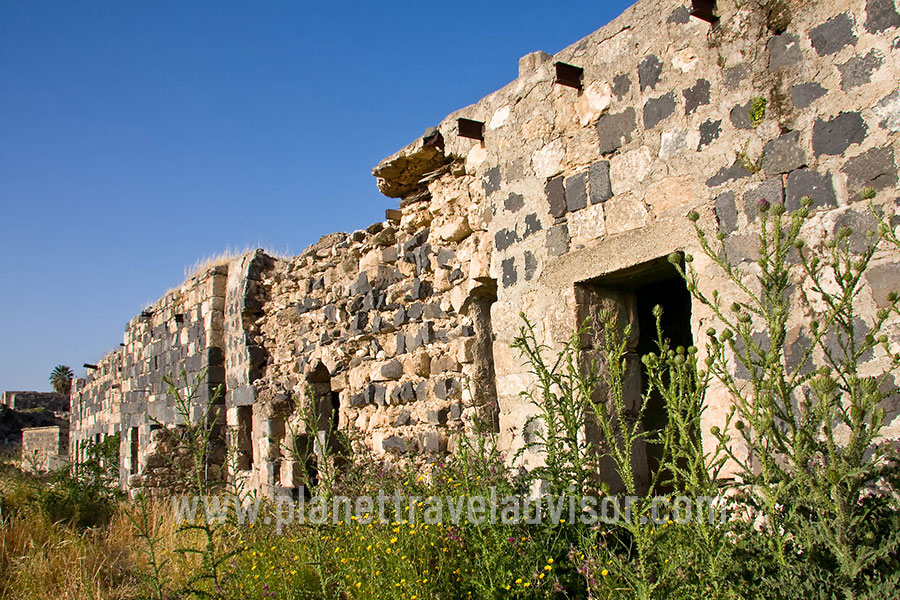
The Umm Qais ruins preserve significant remains of ancient Gadara, including public streets, religious complexes, theaters, baths, and burial structures. Although the site is less extensively reconstructed than Jerash, its surviving monuments offer valuable evidence of Roman and Byzantine urban life.
Decumanus Maximus
One of the most important features is the Decumanus Maximus, the ancient road running through the city.
Sections of this colonnaded street remain visible, with stone paving and surviving columns indicating the route through Gadara's former commercial and public areas.
Walking along the road helps visitors understand the city's original layout. Shops, public buildings, and other structures once occupied spaces beside the street, making it a central part of everyday urban activity.
The contrast between black basalt architectural elements and lighter stone surfaces gives the ruins a distinctive appearance.
Basilica Terrace and Byzantine remains
The Basilica Terrace is another important archaeological area.
It contains remains of a monumental architectural complex that was later associated with Christian religious buildings. The surviving columns, foundations, and paved spaces help illustrate the transformation of the city during the Byzantine period.
One notable feature is the octagonal church complex, whose unusual plan distinguishes it from more conventional rectangular basilicas.
Visitors can examine the arrangement of surviving stone structures while enjoying views across the surrounding landscape.
Roman baths and ancient tombs
Gadara also contained public bathing complexes, reflecting the importance of communal facilities in Roman urban life.
Archaeological excavations have revealed evidence of bathing installations, water infrastructure, and buildings associated with public activity.
The city also preserves ancient tombs and funerary structures, demonstrating the range of burial traditions used by its inhabitants.
Not every monument is equally preserved or accessible. Some remains are fragmentary, while others continue to be studied and conserved.
For a practical sightseeing route, begin with the West Theatre and nearby monumental terrace, continue through the principal archaeological streets and Byzantine remains, and finish with the Ottoman village and museum. The precise route may change according to site access and conservation work.
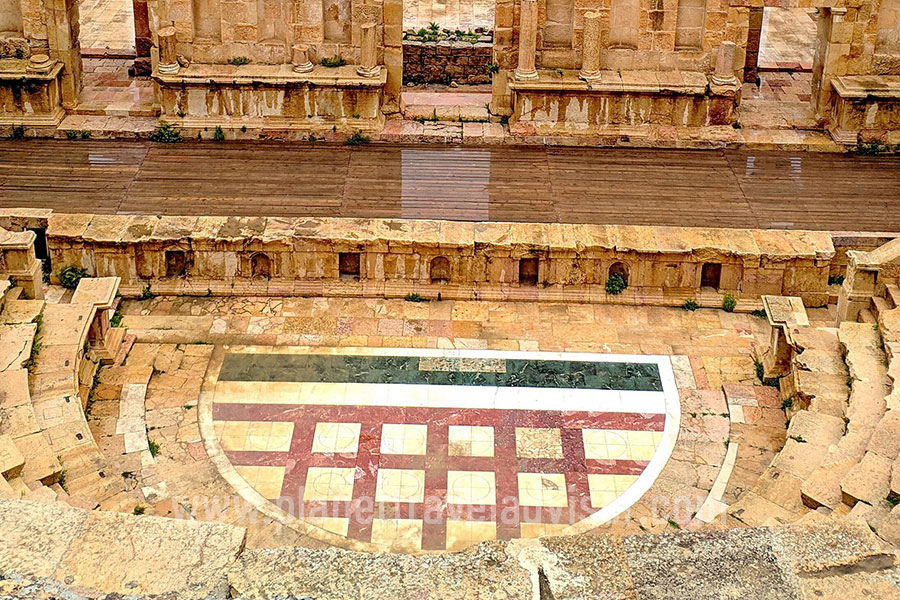
The Umm Qais Roman theater is among the best-known monuments at ancient Gadara. The West Theatre is particularly distinctive because it was constructed largely from dark basalt, a volcanic stone widely used in the city's architecture.
Built during the second half of the second century AD, the theater occupies a slope near the ancient city's western acropolis.
Its semicircular seating area, known as the cavea, was designed to accommodate spectators attending performances and public gatherings.
Archaeological interpretation indicates that the theater could accommodate approximately 3,000 people, making it an important public venue within the Roman city.
The seating was divided into sections by stairways, allowing spectators to move between different levels. Vaulted corridors and entrances beneath parts of the seating helped manage access to the auditorium.
The orchestra, a space in front of the seating used in ancient performances, remains an important feature of the surviving structure.
Although parts of the theater have been damaged over time, enough remains to understand its original form and relationship to the surrounding city.
Why is the theater special?
The dark basalt creates a visual contrast with the green hills and pale landscape beyond the archaeological site. Its semicircular arrangement also provides a clear example of how Roman theaters were adapted to natural slopes.
The surviving architecture is valuable for understanding entertainment and public life in Gadara. The theater was a place where performances and gatherings brought members of the community together.
For photography, views from the upper seating levels can reveal the theater's overall shape. Visitors should use permitted paths and avoid unstable stones or restricted sections.
Gadara also possessed a North Theatre, although its surviving remains are less complete than those of the West Theatre.
Together, the two theaters demonstrate the scale and cultural importance of the ancient city.
The Umm Qais Archaeological Museum provides an important introduction to the people who lived in ancient Gadara. It is housed in Beit Rousan, a restored historic residence within the former Ottoman village.
The building itself is part of the attraction. Its traditional stone architecture and courtyard reflect the domestic style of the settlement that developed over the ancient city.
Beit Rousan was associated with the Rousan family and was restored as part of heritage conservation efforts during the late twentieth century. It subsequently became a museum for archaeological discoveries from Umm Qais and the surrounding region.
The museum underwent further rehabilitation and reopened with renewed exhibitions in 2020.
Archaeological collections
The museum displays artifacts representing different historical periods, helping visitors understand how Gadara developed over time.
Its collections have included pottery and ceramics from the Hellenistic, Roman, Byzantine, and Islamic periods, together with objects recovered from ancient tombs.
Sculptures and architectural fragments provide additional evidence of the city's religious, artistic, and public life.
Among the most significant discoveries associated with the site is a seated sculpture of Tyche, the ancient goddess commonly connected with a city's fortune and prosperity.
The museum's courtyard has also been used to display substantial archaeological pieces, including basalt sarcophagi, column capitals, architectural elements, and mosaics.
The exact exhibition arrangement can change, so visitors interested in specific objects should confirm whether they are currently on display.
Why visit the museum?
The museum helps explain the archaeological remains encountered outdoors. Pottery, inscriptions, sculpture, and architectural objects reveal details that are not always obvious when walking among ruined buildings.
It is particularly worthwhile for travelers interested in ancient history or those visiting Umm Qais without a specialist archaeological guide.
Allow approximately 20–40 minutes for the museum, depending on your interests and the exhibits available during your visit.
Although archaeology is the main attraction, the best things to do in Umm Qais also include landscape photography, cultural experiences, local food, and outdoor activities.
Enjoy the panoramic viewpoints
The hilltop setting provides some of northern Jordan's most distinctive views.
From the archaeological terraces, visitors can look toward Lake Tiberias, the Yarmouk Valley, and the surrounding highlands. On clear days, the landscape extends across several important geographical and historical areas.
The viewpoints are particularly attractive during spring, when the hills are greener, and later in the day when softer light brings out the contours of the surrounding valleys.
Explore the Ottoman village
The historic Ottoman village provides a different perspective on Umm Qais.
Its traditional buildings, narrow passages, and stone courtyards illustrate a more recent chapter of local history.
Some historic structures have been restored or repurposed as part of heritage preservation initiatives, while others remain visible as architectural remains.
Walking through this area helps visitors understand how later communities adapted and inhabited a landscape containing ancient structures.
Experience local Jordanian food
Umm Qais offers opportunities to enjoy food associated with northern Jordan's agricultural traditions.
Visitors may find local restaurants and community-based culinary experiences featuring seasonal vegetables, olive oil, traditional breads, and regional dishes.
Some tourism initiatives also offer cooking activities hosted by local residents. These experiences normally require advance arrangements rather than being available as standard archaeological admission activities.
Discover community-based tourism
Umm Qais was selected among the UN World Tourism Organization's Best Tourism Villages in 2022, recognizing its approach to rural tourism, cultural preservation, and local development.
Visitors can explore community-based activities such as traditional cooking, handicrafts, and beekeeping through participating local operators.
These experiences offer opportunities to engage with contemporary village life alongside the destination's archaeological heritage.
Explore nearby nature and hiking routes
Umm Qais is associated with the northern section of the Jordan Trail, a long-distance walking route extending across the country.
The surrounding region includes agricultural landscapes, valleys, and woodland areas near Yarmouk Forest Reserve.
Travelers interested in hiking should distinguish short local walks from the more demanding multi-day Jordan Trail route. Trail conditions, access arrangements, weather, and border-area restrictions should be checked before setting out.
For most first-time visitors, combining the archaeological site, museum, village, and panoramic viewpoints provides a satisfying introduction without requiring a long hike.
Understanding how to get to Umm Qais is important because the archaeological site lies outside Jordan's main urban tourism centers.
The journey from Amman generally takes around two to three hours by road, depending on traffic, the departure location, and the chosen route.
Most visitors travel north toward Irbid before continuing through smaller towns and villages to Umm Qais.
Traveling by rental car
Renting a car offers flexibility, particularly for travelers planning to visit more than one destination in northern Jordan.
You can leave Amman early, explore Umm Qais at your own pace, and stop at other archaeological or scenic locations along the way.
Use updated navigation and allow additional time for traffic around Amman and Irbid.
Private transfer or guided tour
A private transfer or organized excursion can be convenient for travelers who prefer not to drive.
It is particularly useful when combining Umm Qais with Jerash or Ajloun, as transportation between several destinations can otherwise require additional arrangements.
A knowledgeable guide can also help explain the less obvious archaeological remains and historical significance of ancient Gadara.
Travelers planning to explore several regions can compare Jordan tours that combine historical sites with transportation and guided sightseeing.
Public transportation
Public transportation to Umm Qais is possible but generally requires more planning than traveling by private vehicle.
The usual approach involves taking transportation from Amman to Irbid and then arranging a local minibus or taxi for the remaining journey.
Local minibus schedules can be irregular, and return services may become less convenient later in the day.
Visitors relying on public transport should verify departure points and return options locally rather than assuming frequent connections.
Can you combine Umm Qais with Jerash and Ajloun?
Yes, although the number of stops should reflect how much time you want to spend at each location.
Jerash is one of Jordan's most important Roman archaeological cities, while Ajloun is known for its medieval hilltop castle and forested landscape.
A full-day itinerary could include Umm Qais and one of these destinations. Visiting all three is possible with an early start and efficient transport, but it leaves considerably less time for detailed sightseeing.
For travelers particularly interested in archaeology, giving Umm Qais at least two to three hours is preferable to rushing through the site.
Umm Qais opening hours vary according to the season, so visitors should check official information before traveling.
Jordan's official archaeological-site schedules publish the following general visiting hours:
| Visiting Period | Published Opening Hours |
|---|---|
| Winter schedule | 8:00 AM–4:00 PM |
| Summer schedule | 8:00 AM–6:30 PM |
| April and May transitional schedule | 8:00 AM–5:30 PM |
| Ramadan schedule | 9:00 AM–5:00 PM |
The official schedule groups some months under overlapping seasonal headings. For that reason, the exact closing time for a particular travel date should be confirmed directly rather than inferred from the season alone.
The Jordan Pass attraction directory also displays simplified hours that may differ from the more detailed seasonal timetable.
Check the official archaeological-site opening hours before your visit.
Umm Qais entrance fees
According to the official Jordanian tourism and ticketing authorities, the standard published admission prices are:
| Visitor Category | Entrance Fee |
|---|---|
| Non-Jordanian visitors | 5 JOD |
| Jordanian visitors | 0.25 JOD |
| Children under 12 | Free, according to the official e-ticketing site |
The standard archaeological-site admission includes the Umm Qais Museum.
Visitors can review the latest prices and admission arrangements through the official Jordan e-ticketing website.
Is Umm Qais included in the Jordan Pass?
Yes. The Umm Qais archaeological site and Umm Qais Museum are listed among the attractions included with the Jordan Pass.
Travelers holding an eligible and valid pass can use it for admission according to the applicable terms.
Because prices, opening hours, and access arrangements can change, checking the official sources shortly before the visit is the most reliable approach.
The best time to visit Umm Qais is generally during spring or autumn, when temperatures are more comfortable for exploring its exposed archaeological ruins.
Unlike indoor museums, much of the ancient city is open to the weather. Seasonal conditions can therefore make a noticeable difference to the experience.
Spring: March to May
Spring is especially attractive for visitors interested in scenery, photography, and outdoor exploration.
The hills around Umm Qais are often green, and seasonal wildflowers can appear across parts of the surrounding landscape.
Temperatures are generally more comfortable than in summer, making it easier to walk between archaeological monuments and enjoy the viewpoints.
Spring is also a good time to combine historical sightseeing with suitable nature activities.
Summer: June to August
Summer offers longer daylight hours, but temperatures can be high, particularly during the middle of the day.
The archaeological site has exposed walking areas with limited shade, so early visits are generally preferable.
Bring drinking water, sunscreen, a hat, and comfortable footwear. Plan breaks and avoid unnecessary exertion during particularly hot conditions.
Autumn: September to November
Autumn can provide pleasant sightseeing conditions as temperatures gradually become milder.
It is a practical option for travelers who want to explore the ruins without the strongest summer heat.
The landscape may be drier than in spring, but clear weather can still provide excellent opportunities for photography.
Winter: December to February
Winter brings cooler conditions, with occasional rain, wind, and unsettled weather.
The landscape can become greener after rainfall, but wet stone surfaces may be slippery, particularly around archaeological paths and steps.
Visitors should bring suitable layers and check weather forecasts before traveling.
Best time of day for photography
Morning is a sensible choice for comfortable walking, particularly during warmer months. Later afternoon light can also produce attractive photographs of the basalt theater, ancient columns, and surrounding valleys.
The ideal photographic conditions depend on cloud cover, haze, and the direction of light. Views toward distant landmarks may be less clear on hazy days.
For a relaxed experience, allow enough time to explore both the archaeological remains and the panoramic terraces rather than visiting only for a few photographs.
Umm Qais offers an opportunity to explore several chapters of Jordanian history within one distinctive hilltop landscape. The Roman theater, ancient streets, Byzantine remains, and archaeological museum reveal the importance of Gadara, while the Ottoman village preserves evidence of a much more recent community.
The surrounding views and local cultural experiences make the destination rewarding beyond its ruins. Plan enough time to explore the site properly, check the seasonal opening schedule, and consider combining your visit with Jerash or Ajloun.
If you are building a wider itinerary, exploring Jordan tours can help connect Umm Qais with other historical and natural attractions across the country.




A curated list of the most popular travel packages based on different destinations.
Explore Siq Petra, its Nabataean water system, ancient carvings, Treasury walk, history, opening hours, tickets, photography tips, and visitor advice.
Plan your trip with this Amman travel guide covering top sights, food, neighborhoods, transport, day trips, where to stay, and practical visitor tips.
Explore Amman Citadel with practical tips on history, top sights, tickets, opening hours, Jordan Pass access, timing, transport, and nearby attractions.
Plan your Amman Roman Theatre visit with current ticket prices, opening hours, Jordan Pass details, history, nearby sights, and practical travel tips.
Explore the best souqs in Amman, from Al-Balad and the Gold Souq to Souq Jara, with shopping tips, souvenirs, timing, and nearby sights.
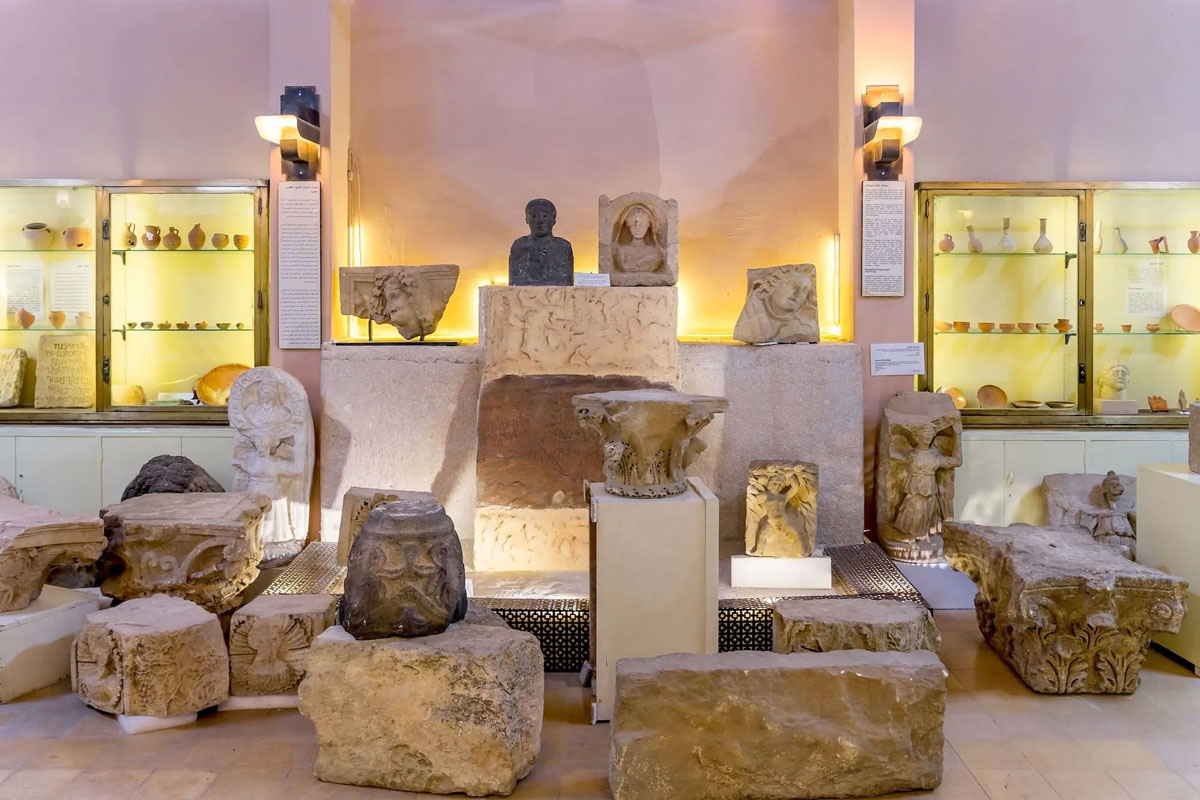
Explore the Jordan Archaeological Museum in Amman, including top artifacts, tickets, Jordan Pass, opening hours, Citadel tips, and visitor advice.
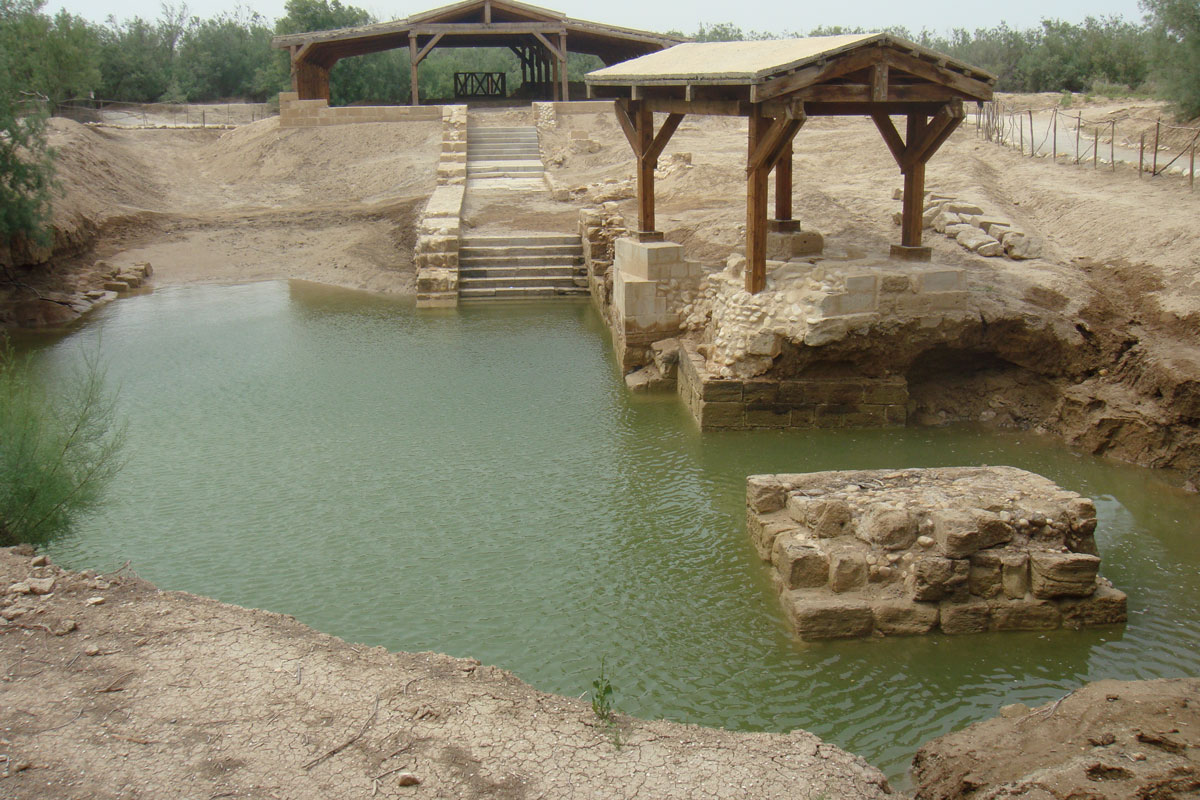
Plan your visit to the Baptism Site in Jordan with its biblical history, archaeology, tickets, opening hours, Jordan Pass details, and nearby stops.
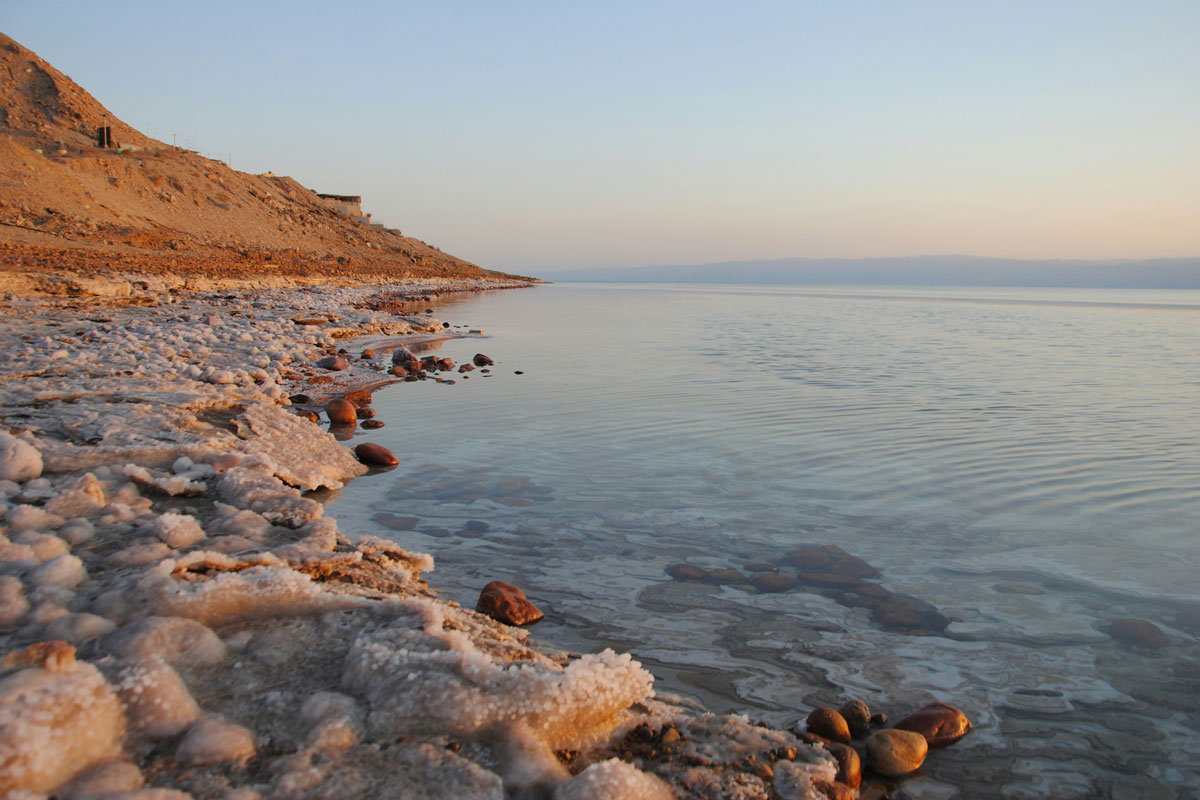
Plan your Dead Sea Jordan visit with tips on floating, beaches, resorts, transport, best times, safety, nearby attractions, and how long to stay.
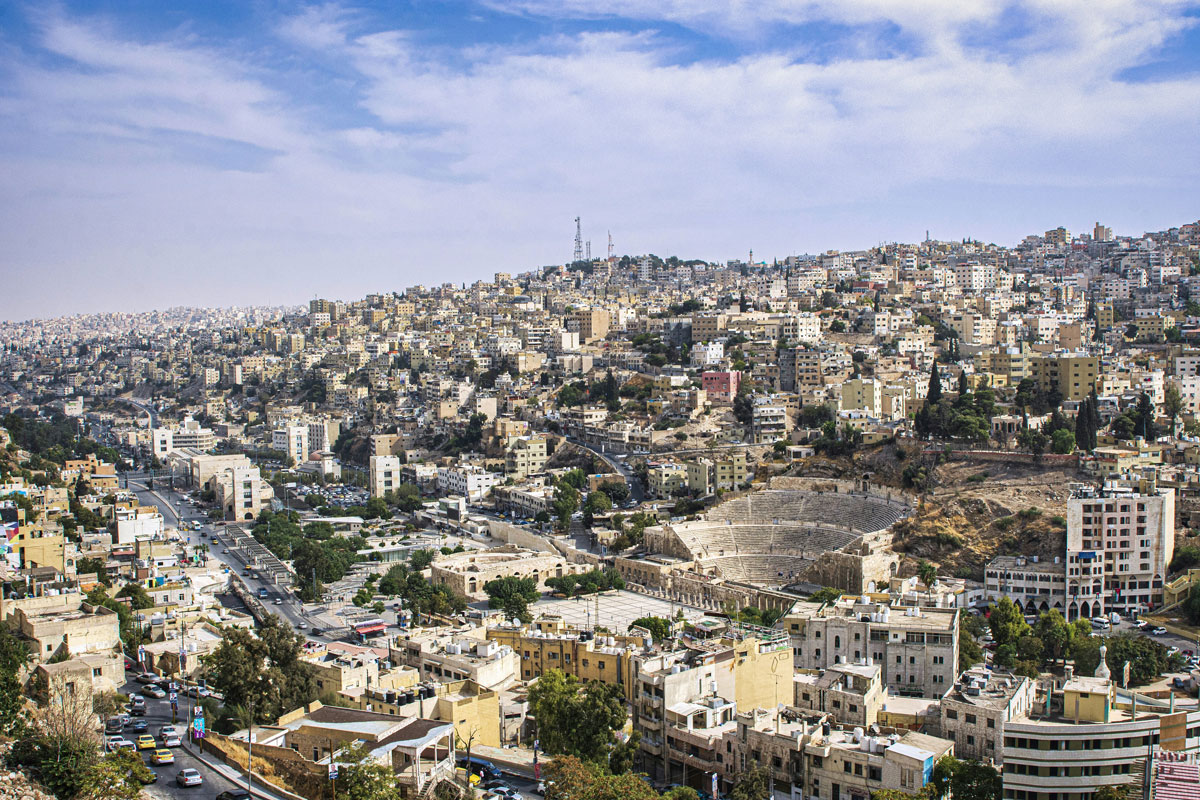
Explore Downtown Amman with tips on the Roman Theatre, souks, local food, walking routes, the Citadel, safety, transport, and the best time to visit.
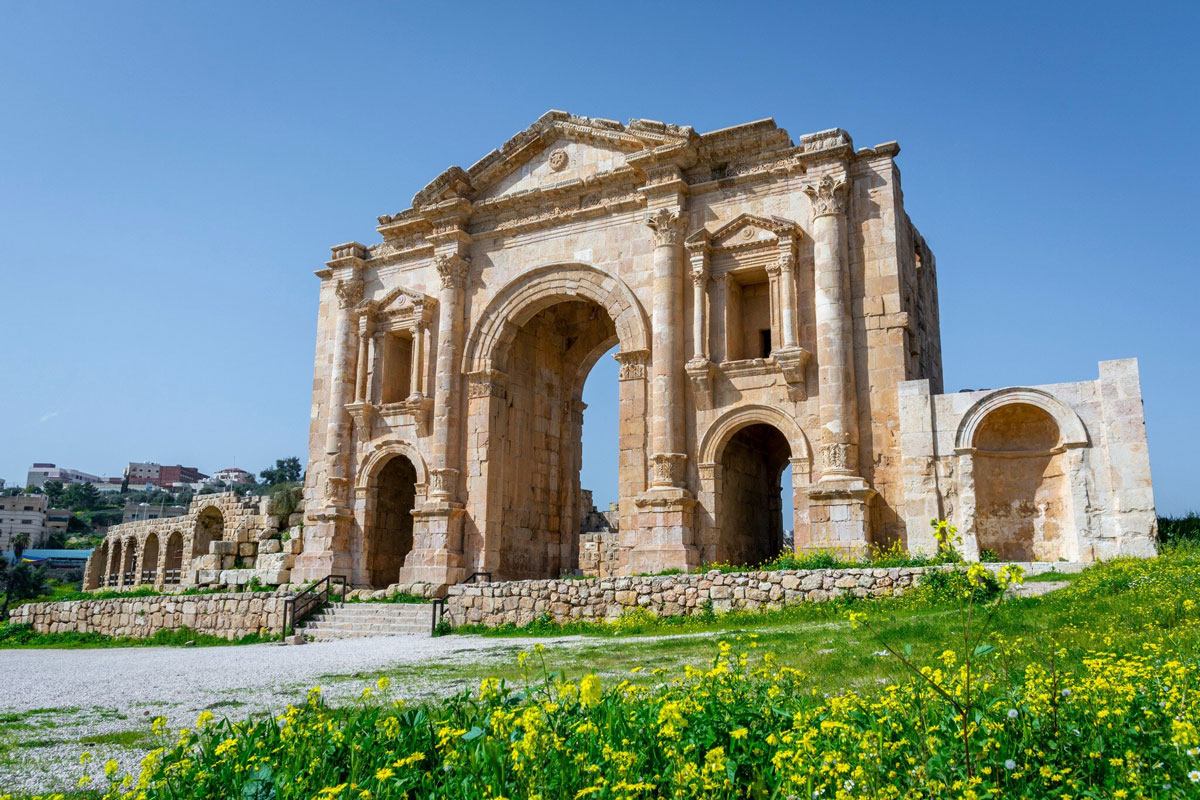
Plan your visit to Hadrian’s Arch Jerash with its history, architecture, tickets, opening hours, Jordan Pass details, nearby sites, and travel tips.
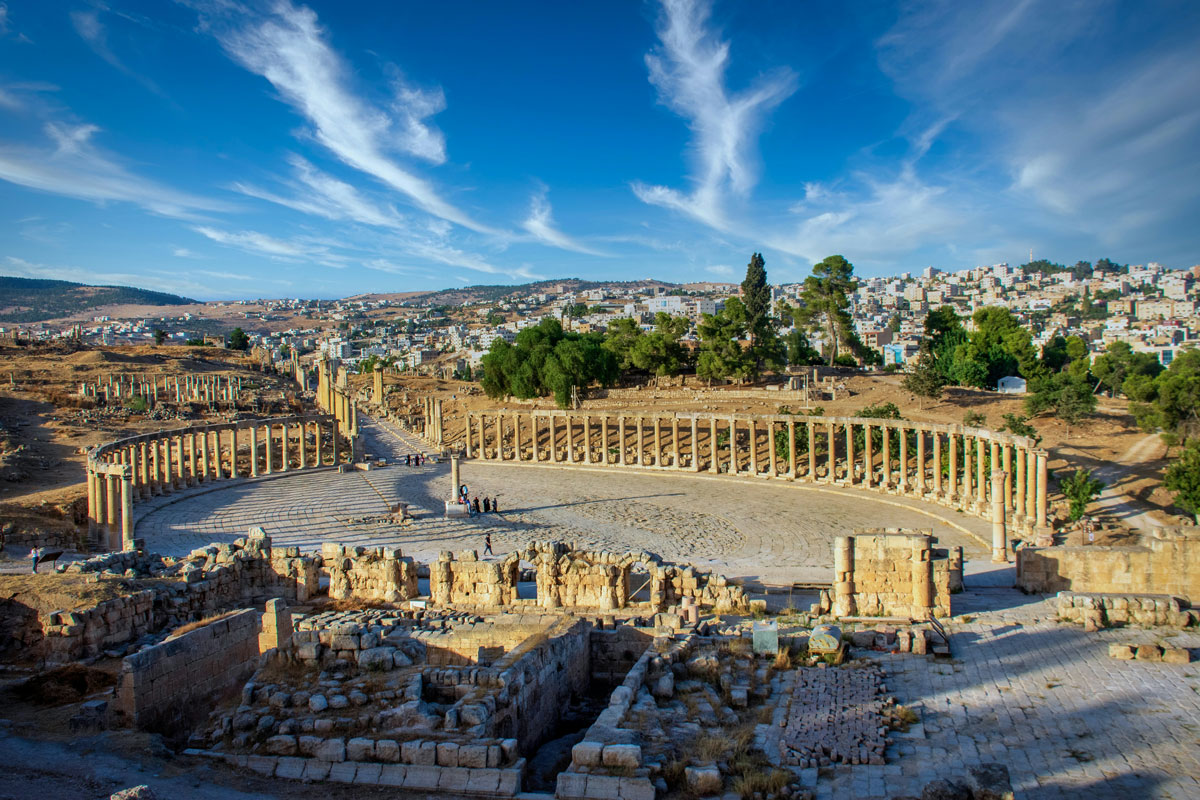
Plan your first visit to Jerash Jordan with the best ruins to see, walking route, tickets, Jordan Pass details, opening hours, timing, and travel tips.
Explore the Jordan River's biblical history, where Jesus was baptized, how to visit from Amman, and the best nearby places to include on your Jordan trip.
We go beyond just booking trips—we create unforgettable travel experiences that match your dreams!



One of the smoothest tours we have ever booked. We booked the "4 Day Trip to Cappadocia and Pamukkale" package and were impressed by how professionally everything was arranged. The itinerary gave us enough time to enjoy Cappadocia and Pamukkale without feeling rushed, and all transfers and day tours ran on time. The communication before arrival was clear and helpful, which made planning much easier. What we appreciated most was the balance between guided sightseeing and free time, so the whole trip felt comfortable and enjoyable. If you are looking for a reliable way to explore Turkey, this is a great option. It was the perfect mix of sightseeing, comfort, and great logistics.
One of the smoothest tours we have ever booked. We booked the "8 Days Nha Trang Beach Escape" package and were impressed by how professionally everything was arranged. The itinerary gave us enough time to enjoy Nha Trang without feeling rushed, and all transfers and day tours ran on time. The communication before arrival was clear and helpful, which made planning much easier. What we appreciated most was the balance between guided sightseeing and free time, so the whole trip felt comfortable and enjoyable. If you are looking for a reliable way to explore Vietnam, this is a great option. It was the perfect mix of sightseeing, comfort, and great logistics.
This trip exceeded all our expectations. We booked the "Discover Turkey in 6 Days from Istanbul to Ephesus" package and were impressed by how professionally everything was arranged. The itinerary gave us enough time to enjoy Istanbul and Ephesus without feeling rushed, and all transfers and day tours ran on time. The communication before arrival was clear and helpful, which made planning much easier. What we appreciated most was the balance between guided sightseeing and free time, so the whole trip felt comfortable and enjoyable. If you are looking for a reliable way to explore Turkey, this is a great option. We would absolutely recommend it to anyone visiting this destination.
We loved how easy and enjoyable this entire experience was. We booked the "14 Day Romantic Holiday Through Vietnam" package and were impressed by how professionally everything was arranged. The itinerary gave us enough time to enjoy Vietnam without feeling rushed, and all transfers and day tours ran on time. The communication before arrival was clear and helpful, which made planning much easier. What we appreciated most was the balance between guided sightseeing and free time, so the whole trip felt comfortable and enjoyable. If you are looking for a reliable way to explore Vietnam, this is a great option. We came home with amazing memories and would book again.
We loved how easy and enjoyable this entire experience was. We booked the "15 Days Egypt & Jordan Tour Package" package and were impressed by how professionally everything was arranged. The itinerary gave us enough time to enjoy Egypt and Jordan without feeling rushed, and all transfers and day tours ran on time. The communication before arrival was clear and helpful, which made planning much easier. What we appreciated most was the balance between guided sightseeing and free time, so the whole trip felt comfortable and enjoyable. If you are looking for a reliable way to explore Jordan, this is a great option. We came home with amazing memories and would book again.











Comments (02)
Mr. Bowmik Haldar,
05 June, 2024Outstanding News & Insight! Thank you so much for sharing like this article
Jacoline Juie,
05 June, 2023However, here are some well-regarded car dealerships known for their customer service, inventory, and overall reputation. It's always a good idea to research and read reviews specific...
Leave Your Comment: