 Visit Turkey
 Visit Vietnam
 Visit Cambodia
 Visit Dubai
 Visit Jordan


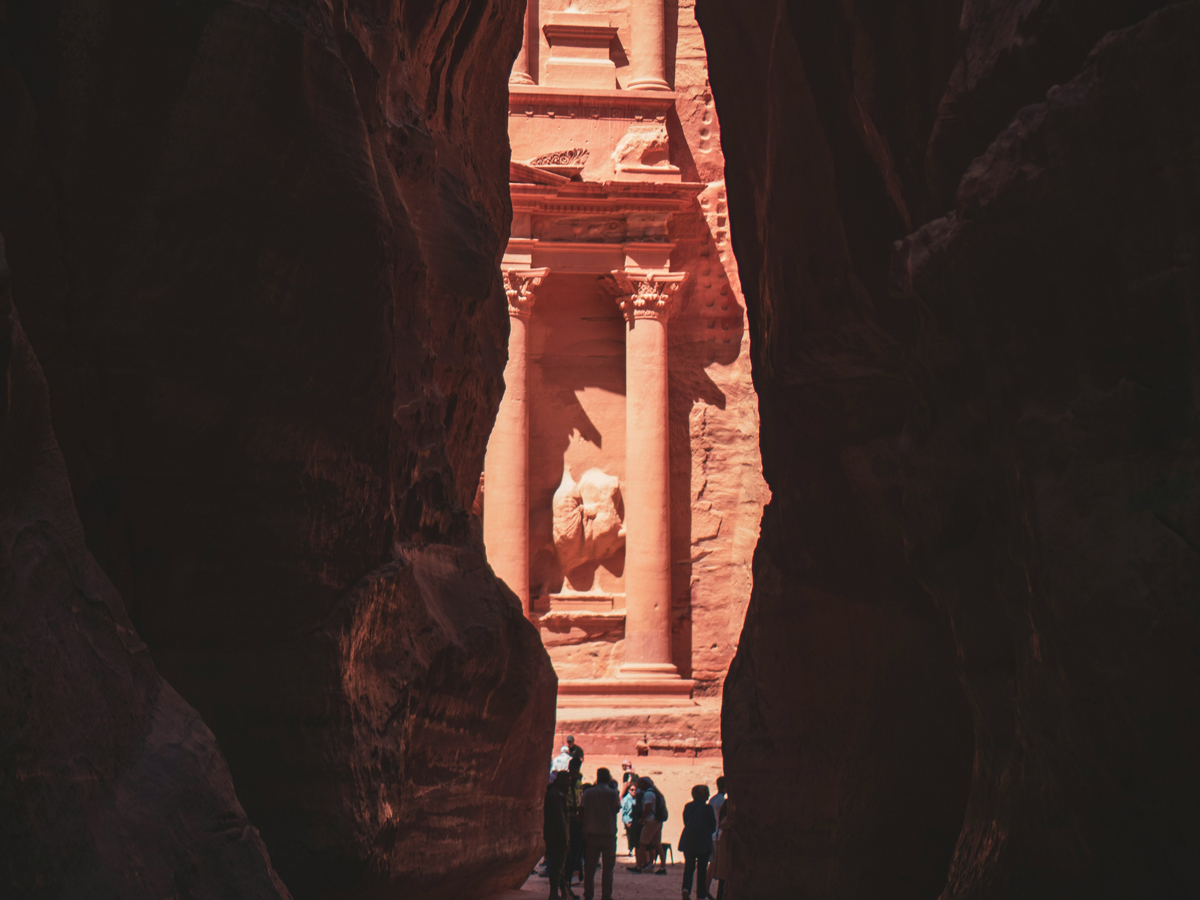
Siq Petra Guide for First-Time Visitors
Explore Siq Petra, its Nabataean water system, ancient carvings, Treasury walk, history, opening hours, tickets, photography tips, and visitor advice.



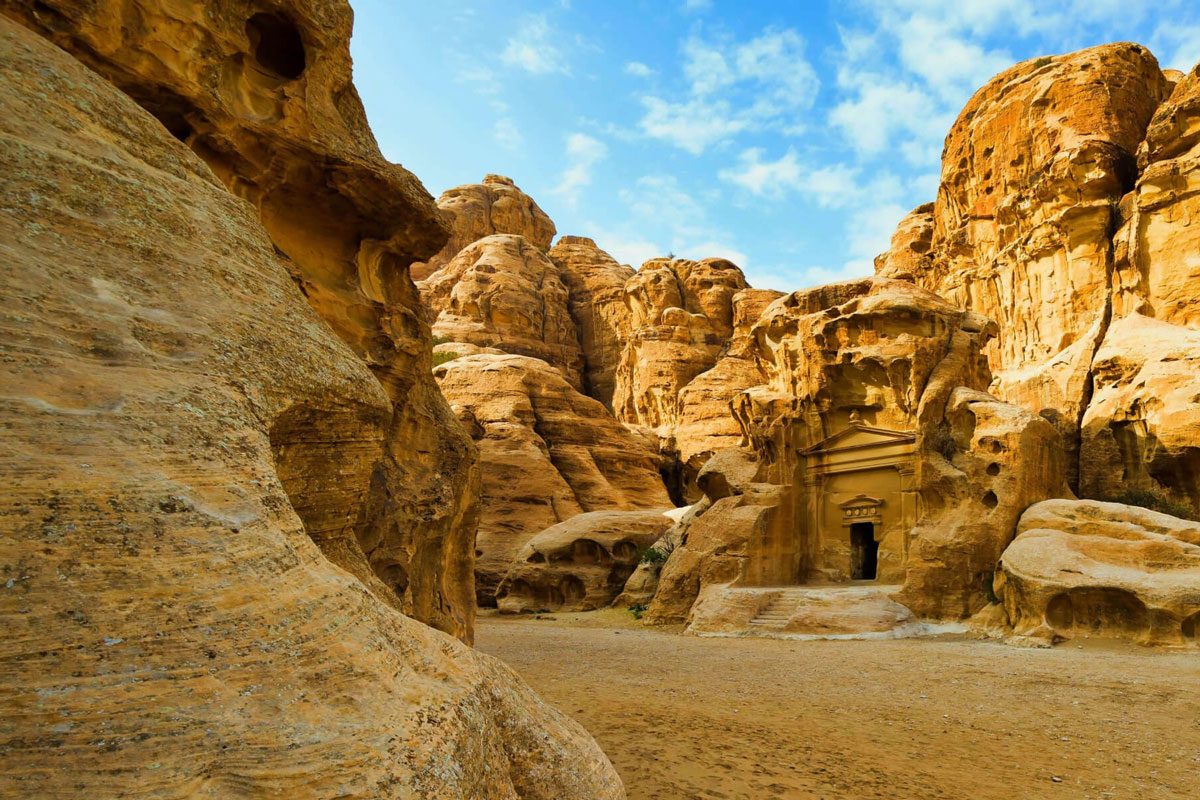
Just a short drive north of Petra's famous Treasury lies Little Petra, a smaller Nabataean archaeological site where ancient trading history survives in sandstone chambers, carved facades, and remarkably preserved paintings. Known locally as Siq al-Barid, this narrow canyon once welcomed merchants traveling through the region, providing spaces for rest, dining, and business.
Unlike the vast archaeological city of Petra, Little Petra can be explored at a slower pace, allowing visitors to examine its rock-cut architecture up close. Its most fascinating feature is the Painted Biclinium, a chamber containing rare Nabataean wall paintings.
This guide explores the history of Little Petra, its most important attractions, the nearby Neolithic village of Al Beidha, and everything travelers need to know before visiting.
Little Petra, officially known as Siq al-Barid, is an ancient Nabataean settlement approximately 8 kilometers north of Petra's main visitor entrance. The Arabic name means "Cold Canyon," referring to the narrow passage and high sandstone walls that keep much of the site shaded during the day.
The site developed as part of the wider Nabataean trading network that connected southern Arabia with the Mediterranean world. While Petra became an important political and commercial center, Siq al-Barid served as a stopping place for merchants arriving with valuable goods, including incense and other commodities traded across the region.
Its location was especially useful for caravans approaching Petra from the north. Travelers could rest, meet other merchants, and conduct business before continuing their journeys.
The Nabataeans adapted the surrounding sandstone cliffs to create dining chambers, carved entrances, and communal spaces. The remains of cisterns, dams, and water channels also reveal their ability to manage water in a region where reliable supplies were essential.
One particularly interesting feature is the presence of several triclinia, or dining halls. These chambers may have hosted merchants, visitors, and ceremonial gatherings. Communal dining was an important part of Nabataean social life, although the precise purpose of every surviving room cannot be established with certainty.
The significance of Little Petra therefore extends beyond its architecture. It reveals how the Nabataeans organized trade, hospitality, agriculture, and everyday activities outside their main city.
Although Little Petra covers a much smaller area than Petra, its narrow canyon contains several archaeological features worth examining carefully. Most visitors follow the passage inward, stopping at the main rock-cut structures along the way.
The entrance and sandstone canyon
The visit begins at a narrow opening between towering sandstone walls. The passage gradually reveals chambers, carved doorways, and small open spaces that were once part of a busy trading settlement.
Unlike Petra's long main Siq, this canyon is relatively short. Its compact layout makes it possible to appreciate the relationships between the different structures without walking long distances.
The rock-cut temple and carved facades
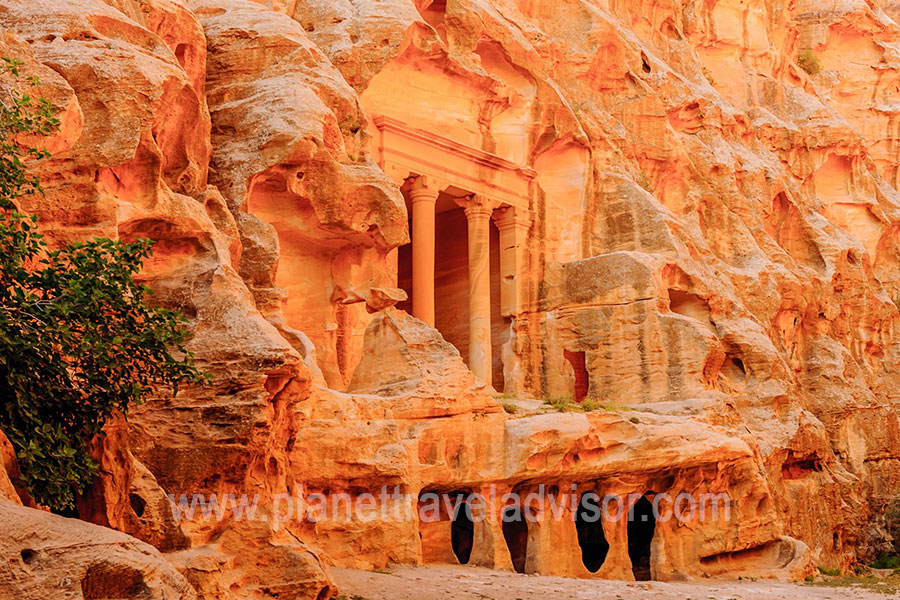
One of the first prominent structures is a facade carved into the cliff, featuring a classical-style entrance and architectural details. The building is commonly interpreted as having served a religious or ceremonial purpose, although its precise original function is uncertain.
The facade demonstrates how Nabataean builders combined local rock-cutting traditions with architectural influences from the wider Mediterranean world.
The ancient dining chambers
Further along the canyon are several large rooms carved directly into the sandstone. These triclinia provide some of the clearest evidence of Little Petra's role as a place of hospitality.
Their interiors are relatively simple compared with the elaborate exterior facades, but their arrangement suggests spaces designed for gatherings rather than ordinary private houses alone.
The Painted House and Nabataean frescoes
The Painted House, also called the Painted Biclinium, is one of Little Petra's most important archaeological discoveries.
Located in an elevated rock-cut chamber, it preserves rare examples of Nabataean interior painting. The surviving decorations include grapevines, birds, flowers, and small winged figures, reflecting artistic influences associated with the Hellenistic world.
Conservation work carried out between 2006 and 2010 helped reveal and stabilize paintings that had been obscured by accumulated soot and other deposits.
These artworks are particularly valuable because so few substantial examples of Nabataean mural painting remain in their original setting. Access to the chamber and its protected paintings may be controlled for conservation reasons, so visitors should respect any barriers or restrictions.
Rock-cut staircases and water systems
Throughout Little Petra, narrow steps lead toward chambers and higher sections of the rock face. Some are heavily weathered, making them difficult or unsafe to climb.
Visitors can also look for evidence of ancient water management, including channels and storage spaces. These practical features demonstrate how the settlement supported travelers and agricultural activity in its surroundings.
The canyon viewpoint
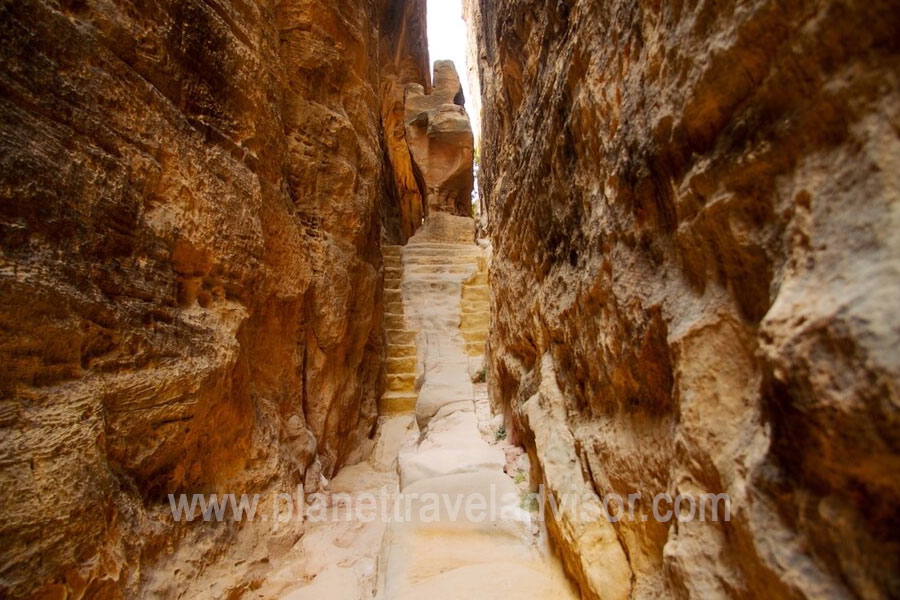
Near the far end of the site, an ascending rocky passage leads toward higher ground and views of the surrounding sandstone landscape.
Reaching elevated viewpoints can involve steep, uneven, or exposed steps. The main archaeological attractions can still be appreciated without attempting these climbs, making them optional rather than essential parts of the visit.
A visit to Little Petra also provides an opportunity to discover a much older chapter of Jordan's history at the nearby Al Beidha Neolithic Village.
Although the names Al Beidha and Little Petra are sometimes used together, they refer to different archaeological places. Little Petra belongs primarily to the Nabataean period, while the Neolithic settlement preserves evidence of communities that lived in this region thousands of years earlier.
Excavations at Beidha have revealed several phases of prehistoric occupation, including early houses, hearths, tools, burial practices, and evidence of food production. These discoveries help archaeologists understand how communities gradually developed more permanent settlements and increasingly organized domestic spaces.
Some buildings were circular, while later construction included different layouts and more elaborate internal arrangements. The archaeological remains provide evidence of changing building techniques and social organization.
Research at the settlement began in the late 1950s and continued through several excavation seasons, including work led by archaeologist Diana Kirkbride. The site's chronology has been reassessed over time, but its importance in the study of early Neolithic settlement is well established.
For travelers interested in archaeology, combining Al Beidha with Little Petra adds considerable historical depth. The two locations demonstrate how people occupied and adapted to the Petra region across very different periods of human history.
Little Petra and Petra share the same Nabataean heritage, but they offer noticeably different experiences.
Petra is a vast archaeological landscape containing monumental tombs, temples, ceremonial spaces, and an extensive network of ancient routes. Little Petra is a smaller settlement where visitors can examine individual chambers and architectural features within a much shorter walking area.
| Feature | Little Petra | Petra |
|---|---|---|
| Main character | Ancient caravan settlement | Major Nabataean city |
| Most notable sights | Painted House, dining chambers, carved facades | Treasury, Monastery, Royal Tombs |
| Recommended visit | 45–90 minutes | At least one full day |
| Admission | Generally free | Paid entry |
| Walking requirements | Relatively short visit, with optional steep sections | Extensive walking and more demanding routes |
| Atmosphere | Often quieter | Usually busier around famous monuments |
The biggest difference is not simply their size. Petra demonstrates the monumental achievements of Nabataean architecture, while Little Petra provides a closer look at the spaces associated with trade, hospitality, and everyday activities.
For visitors with limited time, Petra should remain the priority. However, travelers staying in Wadi Musa for two or more days can include Little Petra without substantially disrupting their itinerary.
Visiting both sites creates a more complete understanding of the civilization that shaped this remarkable landscape.
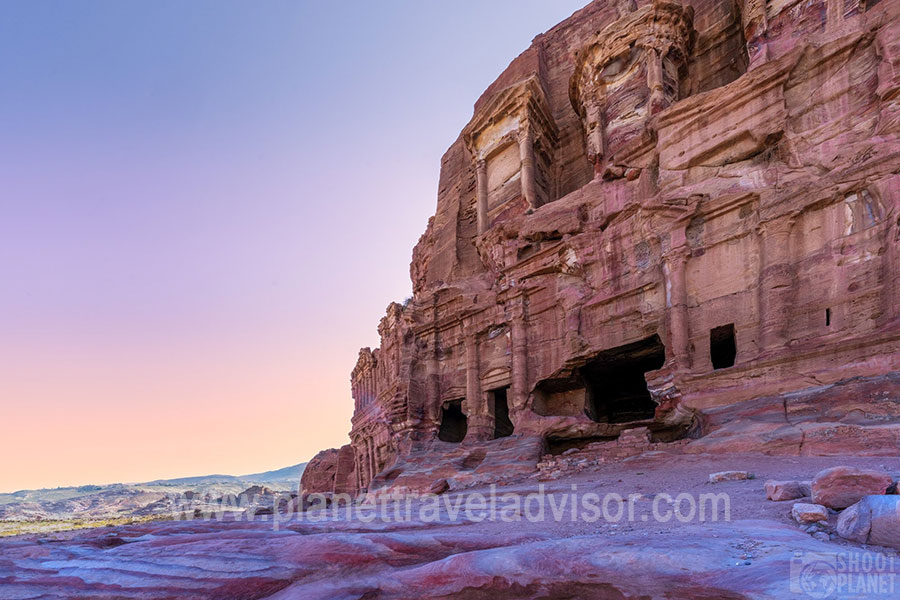
Little Petra is located approximately 8 kilometers north of Petra's main visitor entrance, near the Al Beidha area. The drive from Wadi Musa usually takes around 15–20 minutes, depending on the starting point and road conditions.
The route follows local roads through the sandstone landscape surrounding Petra. Because Little Petra has a separate entrance from the main archaeological city, visitors should arrange transportation directly to Siq al-Barid rather than assume they can reach it through Petra's main gate.
The most practical transportation options include:
Public transportation specifically serving Little Petra is limited, so it is better not to rely on finding a regular bus service.
Travelers organizing a broader journey can also explore travel packages to Jordan that combine the Petra region with other destinations such as Wadi Rum, Amman, and the Dead Sea.
If you plan to visit Little Petra independently, consider scheduling it before your main Petra sightseeing day or during a quieter afternoon. This allows enough time to appreciate the smaller archaeological site without rushing between locations.
One of the practical advantages of Little Petra is that visiting the archaeological site itself is generally free. This makes it an accessible addition to a Petra itinerary, especially for travelers who want to explore more of the region's Nabataean history.
However, admission arrangements at Little Petra should not be confused with those at the main Petra archaeological site.
As of October 2026, the official Petra authority lists the following visitor information:
| Visitor information | Current details |
|---|---|
| Little Petra admission | Free for an ordinary site visit |
| Little Petra listed visiting hours | Daily, 6:30 AM–5:00 PM |
| Little Petra ticket office, winter 2026–27 | 7:00 AM–2:00 PM |
| Main Petra one-day ticket | 50 JOD for eligible overnight visitors |
| Main Petra two-day ticket | 55 JOD for eligible overnight visitors |
| Main Petra three-day ticket | 60 JOD for eligible overnight visitors |
The winter ticket-office schedule applies from October 2, 2026, to March 1, 2027. It is separate from the ordinary Little Petra visiting hours. The Little Petra ticket office is relevant to services and access arrangements associated with the wider Petra experience.
For visitors who are not staying overnight in Jordan, the official one-day Petra entrance rate is 90 JOD. Different ticket categories are available for Jordanian citizens, residents, and certain other visitors.
Travelers planning the Monastery Back Trail should confirm Petra admission requirements separately, even if they begin their journey near Little Petra. Guide services and optional transportation may also involve additional charges.
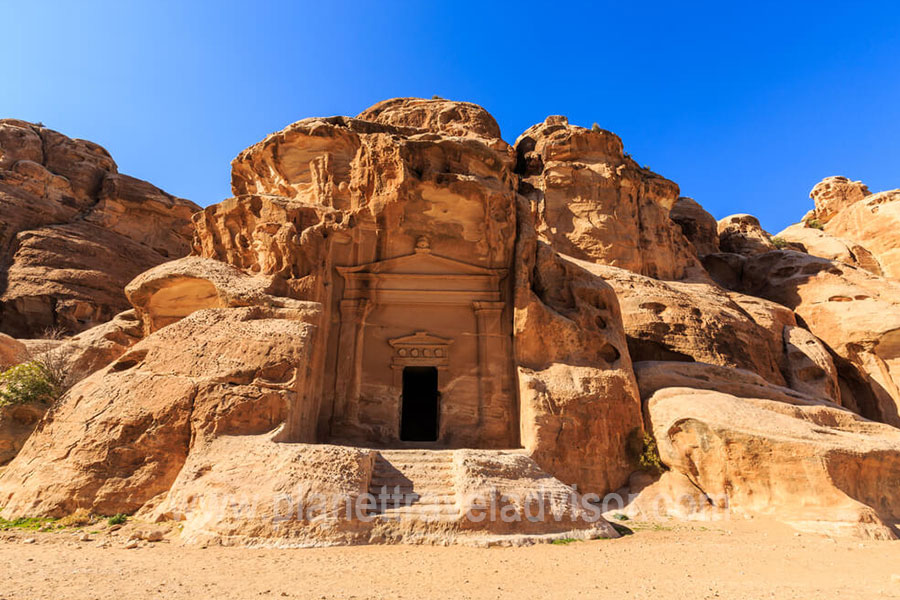
The best time to visit Little Petra is generally during spring and autumn, when temperatures are more comfortable for walking through the archaeological site and exploring the surrounding landscape.
March to May and September to November are particularly popular periods for sightseeing in the Petra region. Although the narrow canyon provides considerable shade, visitors should still prepare for changing temperatures and exposed sections outside the main passage.
Spring brings relatively comfortable walking conditions and can be a good choice for combining Little Petra with longer outdoor excursions. Autumn offers similar advantages, especially for travelers planning several days around Petra.
Summer can be very hot, particularly during the middle of the day. An early visit is generally preferable to avoid spending too much time outdoors during the hottest hours. Winter is often quieter, but temperatures can be cold, especially in the morning, and rain may affect walking conditions.
For photography, early morning and late afternoon can create attractive light on exposed sandstone facades. Inside the canyon, however, deep shade may limit natural light, so the best photographic conditions depend on the particular chamber or rock face.
Visitors who want to photograph architectural details should allow time for the light to change rather than rushing through the entire site.
One of the most interesting ways to connect Little Petra with the main archaeological city is the Little Petra to Petra Back Trail, also known as the Al Dayr or Monastery Back Trail.
This route approaches Petra's famous Monastery, Ad Deir, from the northern side of the archaeological landscape.
The official Petra authority describes the complete walking route as approximately 7 kilometers in one direction, with a walking time of around 3 hours and 15 minutes to 3 hours and 30 minutes without extended stops. It is classified as a moderate hike, although sections involve substantial climbing, descending, and uneven terrain.
Along the way, travelers encounter landscapes that differ considerably from Petra's main tourist route. The trail passes agricultural areas, rugged sandstone mountains, and locations associated with earlier settlements, including the wider Al Beidha archaeological landscape.
As the route approaches the Monastery, hikers can enjoy views toward Wadi Araba before reaching one of Petra's most impressive rock-cut monuments.
The Monastery itself stands approximately 48 meters high and is among the largest carved facades at Petra.
For visitors considering the route, several practical points are important:
The Petra authority also advertises a transport service involving a shuttle and a Jeep transfer toward the Monastery Back Trail, with a listed Jeep fare of 5 JOD per person. This is a separate service, and the exact route and operating arrangements should be checked before departure.
The Back Trail should not be confused with an ordinary visit to Little Petra. Travelers who only want to explore Siq al-Barid can enjoy its principal attractions without committing to several hours of hiking.
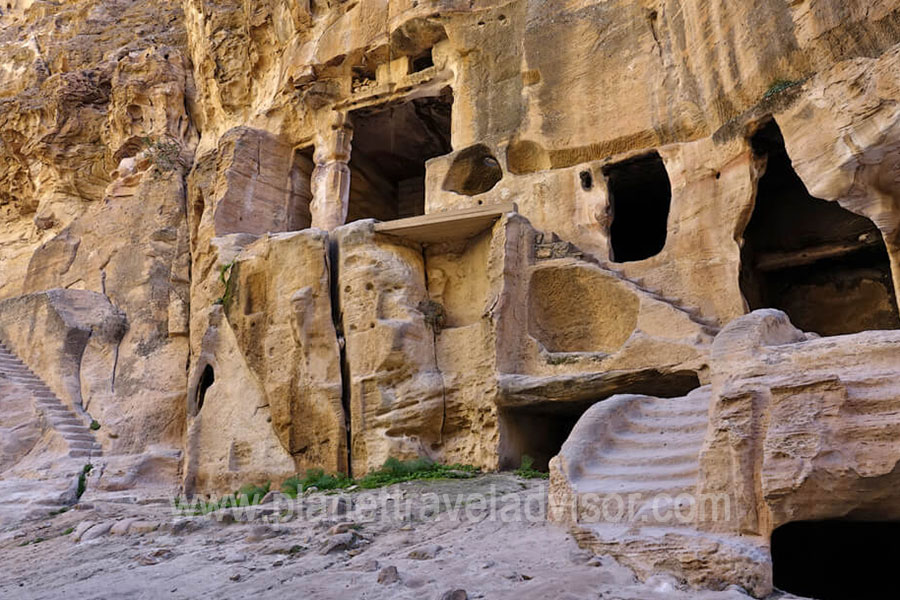
Little Petra is relatively straightforward to explore, but a few practical decisions can make the experience more comfortable and rewarding.
Finally, travelers planning several days in Jordan should think about how Little Petra fits into the wider journey. Combining cultural sightseeing with time for rest and outdoor exploration can be more enjoyable than trying to visit too many destinations in a single day.
Little Petra offers an engaging introduction to Nabataean life beyond Petra's famous monuments. Its carved dining chambers, ancient water systems, and rare Painted House frescoes reveal how trade and hospitality helped shape the region.
For most visitors, an hour or two is enough to appreciate the main site, while archaeological enthusiasts may want additional time for Al Beidha.
Whether visiting independently or incorporating it into one of the available Jordan tours, Little Petra deserves consideration as a meaningful complement to the main archaeological city.




A curated list of the most popular travel packages based on different destinations.
Explore Siq Petra, its Nabataean water system, ancient carvings, Treasury walk, history, opening hours, tickets, photography tips, and visitor advice.
Plan your trip with this Amman travel guide covering top sights, food, neighborhoods, transport, day trips, where to stay, and practical visitor tips.
Explore Amman Citadel with practical tips on history, top sights, tickets, opening hours, Jordan Pass access, timing, transport, and nearby attractions.
Plan your Amman Roman Theatre visit with current ticket prices, opening hours, Jordan Pass details, history, nearby sights, and practical travel tips.
Explore the best souqs in Amman, from Al-Balad and the Gold Souq to Souq Jara, with shopping tips, souvenirs, timing, and nearby sights.
Explore the Jordan Archaeological Museum in Amman, including top artifacts, tickets, Jordan Pass, opening hours, Citadel tips, and visitor advice.
Plan your visit to the Baptism Site in Jordan with its biblical history, archaeology, tickets, opening hours, Jordan Pass details, and nearby stops.
Plan your Dead Sea Jordan visit with tips on floating, beaches, resorts, transport, best times, safety, nearby attractions, and how long to stay.
Explore Downtown Amman with tips on the Roman Theatre, souks, local food, walking routes, the Citadel, safety, transport, and the best time to visit.
Plan your visit to Hadrian’s Arch Jerash with its history, architecture, tickets, opening hours, Jordan Pass details, nearby sites, and travel tips.
Plan your first visit to Jerash Jordan with the best ruins to see, walking route, tickets, Jordan Pass details, opening hours, timing, and travel tips.
Explore the Jordan River's biblical history, where Jesus was baptized, how to visit from Amman, and the best nearby places to include on your Jordan trip.
We go beyond just booking trips—we create unforgettable travel experiences that match your dreams!



We loved how easy and enjoyable this entire experience was. We booked the "7 Days Istanbul Cappadocia Pamukkale Ephesus Tour" package and were impressed by how professionally everything was arranged. The itinerary gave us enough time to enjoy Istanbul, Cappadocia, Ephesus, and Pamukkale without feeling rushed, and all transfers and day tours ran on time. The communication before arrival was clear and helpful, which made planning much easier. What we appreciated most was the balance between guided sightseeing and free time, so the whole trip felt comfortable and enjoyable. If you are looking for a reliable way to explore Turkey, this is a great option. We came home with amazing memories and would book again.
We loved how easy and enjoyable this entire experience was. We booked the "15 Days Egypt & Jordan Tour Package" package and were impressed by how professionally everything was arranged. The itinerary gave us enough time to enjoy Egypt and Jordan without feeling rushed, and all transfers and day tours ran on time. The communication before arrival was clear and helpful, which made planning much easier. What we appreciated most was the balance between guided sightseeing and free time, so the whole trip felt comfortable and enjoyable. If you are looking for a reliable way to explore Jordan, this is a great option. We came home with amazing memories and would book again.
A beautifully organized journey from start to finish. We booked the "Explore Turkey in 9 Days from Ephesus to Cappadocia" package and were impressed by how professionally everything was arranged. The itinerary gave us enough time to enjoy Cappadocia and Ephesus without feeling rushed, and all transfers and day tours ran on time. The communication before arrival was clear and helpful, which made planning much easier. What we appreciated most was the balance between guided sightseeing and free time, so the whole trip felt comfortable and enjoyable. If you are looking for a reliable way to explore Turkey, this is a great option. The itinerary was well balanced and never felt rushed.
This trip exceeded all our expectations. We booked the "7 Days Phnom Penh, Siem Reap & Koh Rong Sanloem Tour" package and were impressed by how professionally everything was arranged. The itinerary gave us enough time to enjoy Siem Reap, Phnom Penh, and Koh Rong Sanloem without feeling rushed, and all transfers and day tours ran on time. The communication before arrival was clear and helpful, which made planning much easier. What we appreciated most was the balance between guided sightseeing and free time, so the whole trip felt comfortable and enjoyable. If you are looking for a reliable way to explore Cambodia, this is a great option. We would absolutely recommend it to anyone visiting this destination.
Everything about this package felt thoughtfully planned. We booked the "12 Days Best Cultural and Heritage Vietnam Tour" package and were impressed by how professionally everything was arranged. The itinerary gave us enough time to enjoy Vietnam without feeling rushed, and all transfers and day tours ran on time. The communication before arrival was clear and helpful, which made planning much easier. What we appreciated most was the balance between guided sightseeing and free time, so the whole trip felt comfortable and enjoyable. If you are looking for a reliable way to explore Vietnam, this is a great option. The guides, transfers, and pacing all worked together perfectly.











Comments (02)
Mr. Bowmik Haldar,
05 June, 2024Outstanding News & Insight! Thank you so much for sharing like this article
Jacoline Juie,
05 June, 2023However, here are some well-regarded car dealerships known for their customer service, inventory, and overall reputation. It's always a good idea to research and read reviews specific...
Leave Your Comment: