 Visit Turkey
 Visit Vietnam
 Visit Cambodia
 Visit Dubai
 Visit Jordan


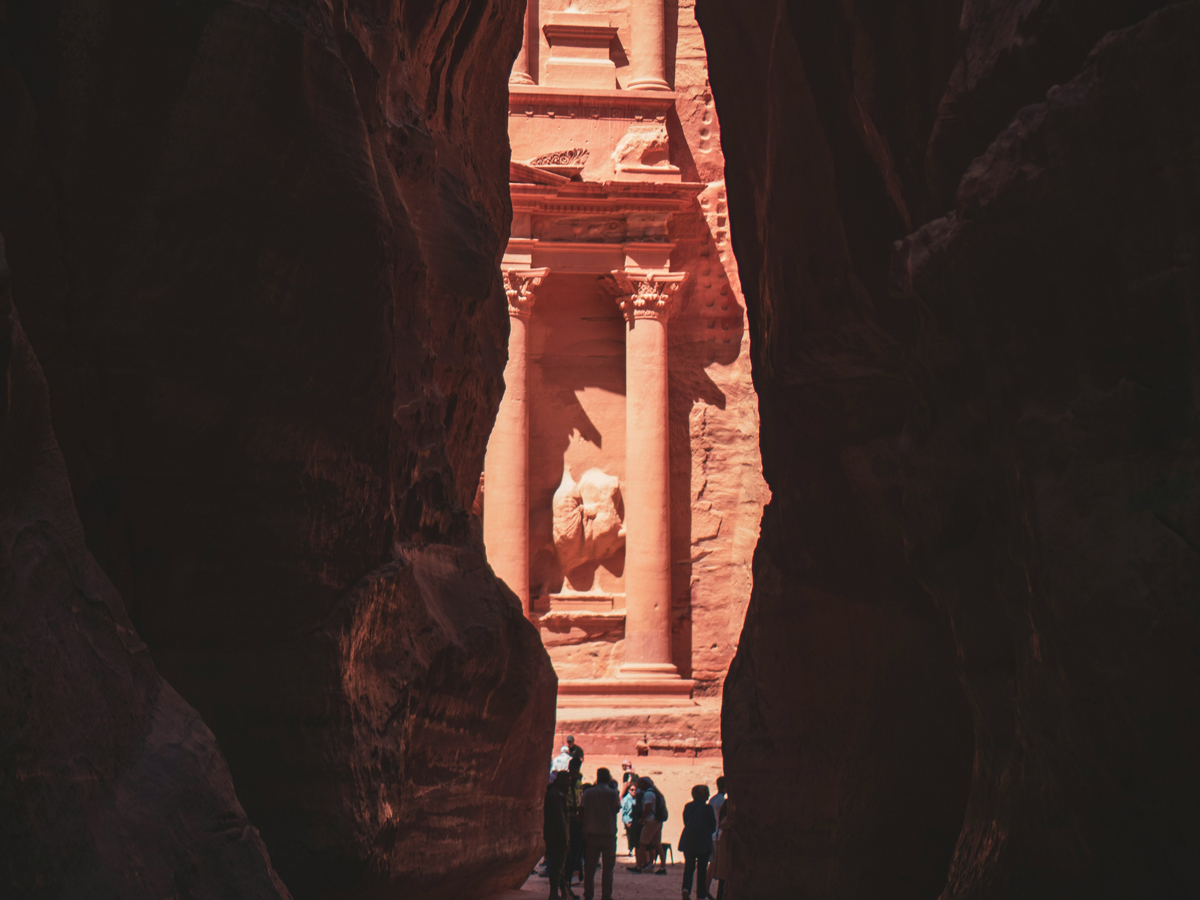
Siq Petra Guide for First-Time Visitors
Explore Siq Petra, its Nabataean water system, ancient carvings, Treasury walk, history, opening hours, tickets, photography tips, and visitor advice.



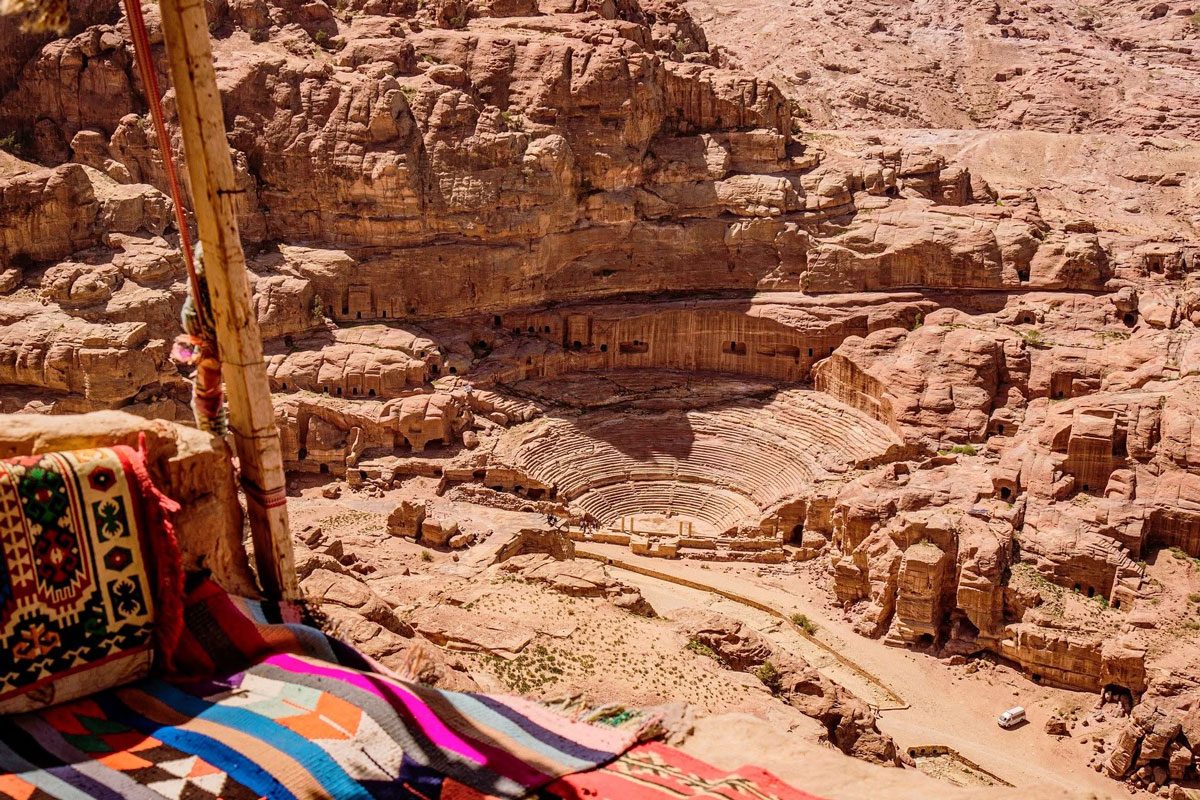
The Petra Theatre is one of the most impressive monuments in Jordan's ancient city of Petra, where thousands of spectators once gathered in an auditorium carved directly into sandstone cliffs. Although commonly described as the Roman Theatre, it was originally constructed by the Nabataeans during the first century AD and later modified under Roman rule.
Located along Petra's Main Trail, the theatre offers a fascinating perspective on the city's architectural achievements, public life, and cultural traditions. Its semicircular seating, surviving stage remains, and unusual rock-cut construction distinguish it from many other ancient theatres.
This guide explores the history of Petra Theatre, its architectural features, seating capacity, and practical information for travelers planning to visit this remarkable archaeological monument.
The Petra Theatre was constructed during the early first century AD, probably under the reign of King Aretas IV, when the Nabataean Kingdom was experiencing an important period of economic prosperity and monumental building.
The Nabataeans developed Petra into a major trading center connecting Arabia with the Mediterranean world. The city's wealth supported impressive architectural projects, including temples, tombs, public buildings, and elaborate water-management systems. The theatre formed part of this developing urban landscape.
Unlike the more familiar tomb facades carved into Petra's sandstone mountains, the theatre was designed to accommodate large public gatherings. Its construction required extensive excavation of the natural rock, demonstrating the Nabataeans' ability to create monumental spaces within the surrounding terrain.
The builders also cut through parts of earlier rock-cut tombs and facades to create the auditorium. Traces of these older structures can still be seen in the cliff face behind the seating, providing evidence of how Petra's urban landscape changed over time.
The theatre's precise original function remains uncertain. Archaeologists have suggested that it could have hosted religious assemblies, ceremonial activities, and community gatherings. The presence of what may have been an altar in the orchestra has contributed to interpretations of its possible religious role.
However, no surviving historical documentation establishes a complete program of the events held there. It is therefore more accurate to describe the theatre as an important public gathering place than to assume it was used exclusively for dramatic performances.
The monument also attracted archaeological attention during the twentieth century. Excavations led by archaeologist Philip C. Hammond in the early 1960s contributed significantly to understanding its construction phases, stage design, architectural decoration, and later modifications.
Today, the theatre remains an important source of information about the social and cultural life of ancient Petra.
Despite its frequent identification as the Petra Roman Theatre, the monument was not originally built by the Romans.
The Nabataeans constructed the theatre before the Roman annexation of their kingdom in AD 106, when the territory became part of the Roman province of Arabia.
Nevertheless, its design reflects architectural traditions that were widespread throughout the Mediterranean world. The semicircular seating arrangement, orchestra, and formal stage area demonstrate how the Nabataeans adopted and adapted elements of classical theatre architecture.
After Petra came under Roman administration, the theatre underwent modifications. The Romans rebuilt the stage's rear wall, known as the scaenae frons, and are generally credited with alterations that increased the theatre's capacity.
These changes reflected Petra's continuing role as an urban center within the Roman Empire. The theatre may have accommodated theatrical and musical performances, poetry readings, civic meetings, and other public events during this period, although the exact nature and frequency of these activities are not fully documented.
Roman architectural decoration also contributed to the appearance of the stage building, which incorporated constructed masonry rather than relying entirely on the carved sandstone hillside.
The theatre later suffered damage, including destruction associated with the major earthquake of AD 363. Architectural elements were subsequently displaced or reused, and much of the original stage structure no longer survives.
The monument's importance lies partly in this combination of building traditions. Rather than being simply Roman or Nabataean, the Petra Theatre illustrates how Nabataean architecture evolved through interaction with the wider Mediterranean world.
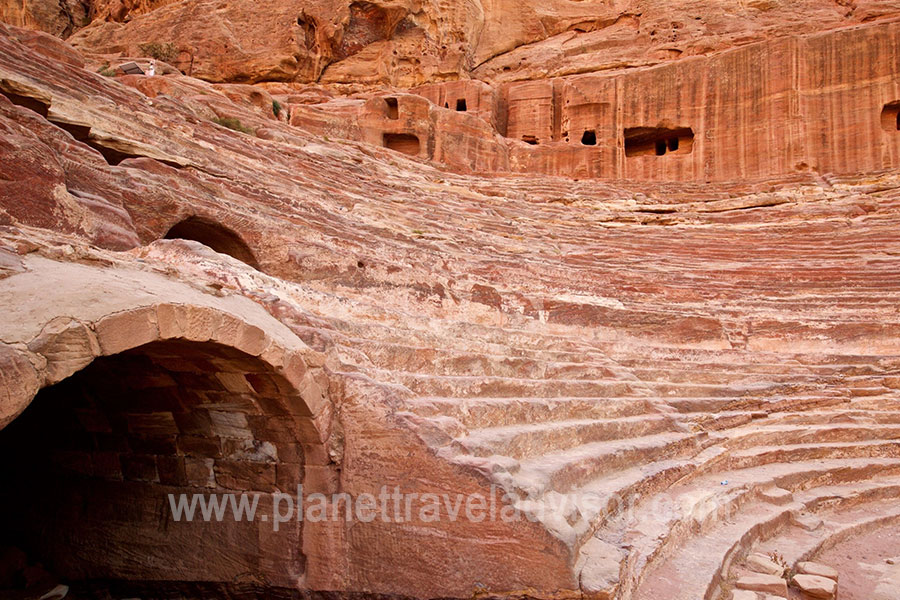
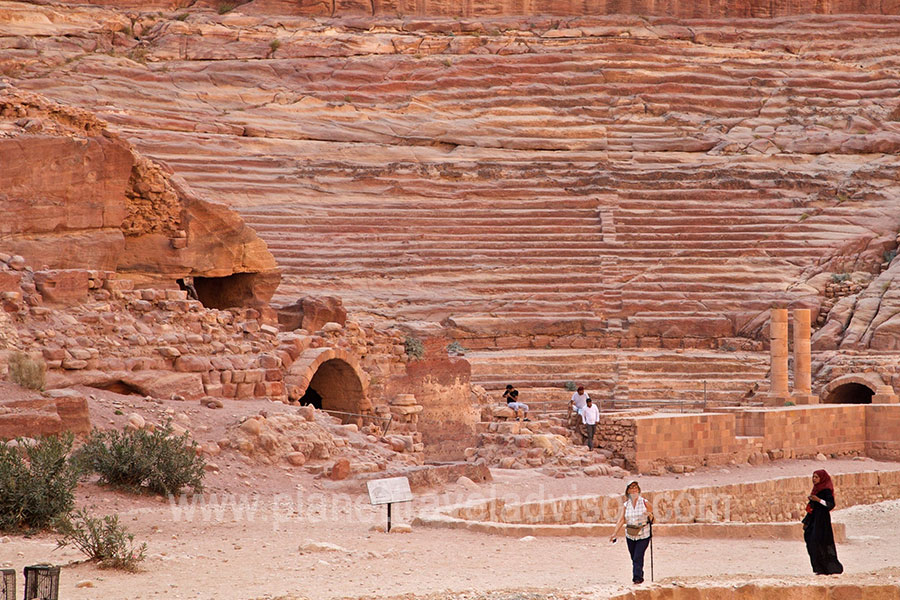
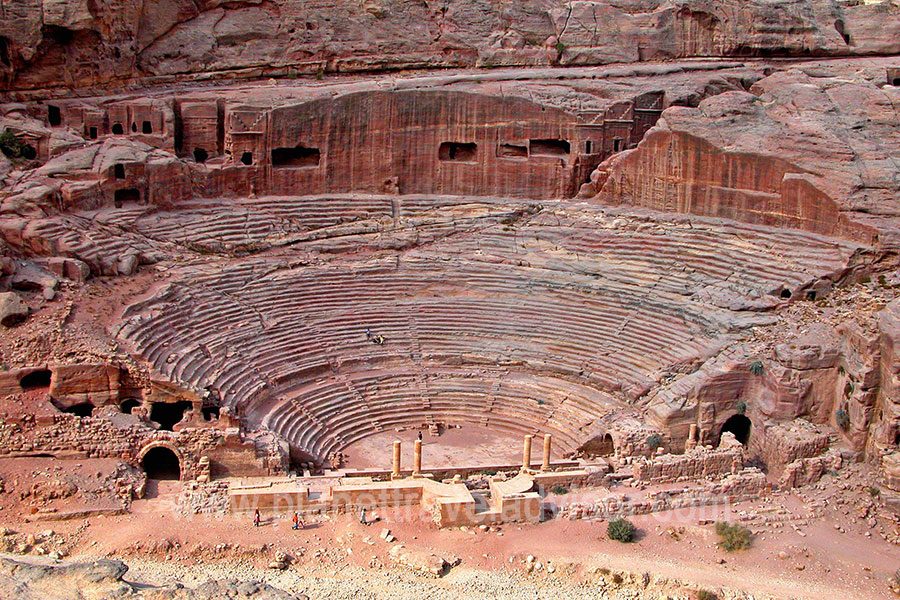
The most remarkable architectural feature of Petra Theatre is its auditorium carved directly into the sandstone mountainside. Instead of constructing the entire seating structure from separate stone blocks, Nabataean builders shaped much of the natural rock into an enormous semicircular arrangement.
The seating area, known as the cavea, is divided into three horizontal sections separated by passageways. Approximately 45 rows of seats extend around the central performance area, while seven radial stairways provided movement between the different levels.
At the base of the auditorium lies the orchestra, a semicircular space situated between the audience and the stage. In ancient theatrical architecture, this area could serve ceremonial, musical, or performance-related functions.
The stage building originally included constructed architectural elements, decorative features, and entrances for performers. Although much of this structure has disappeared, surviving remains help archaeologists reconstruct its original layout.
One especially distinctive feature is the interaction between the theatre and the older tombs carved into the surrounding cliff. Openings and remnants of earlier facades can still be identified above the seating, revealing that the auditorium was created within an already developed archaeological landscape.
How many people could Petra Theatre hold?
Published estimates vary considerably. The official Petra Main Trail description gives a capacity of approximately 4,000 spectators, while another official monument description states that the theatre could accommodate up to 6,000.
Other archaeological and travel references suggest larger capacities, including estimates of approximately 8,500 spectators after Roman modifications.
These differences may reflect different interpretations of the seating arrangement, construction phases, and later enlargement. Consequently, the safest conclusion is that the theatre accommodated several thousand people, making it one of Petra's major public structures.
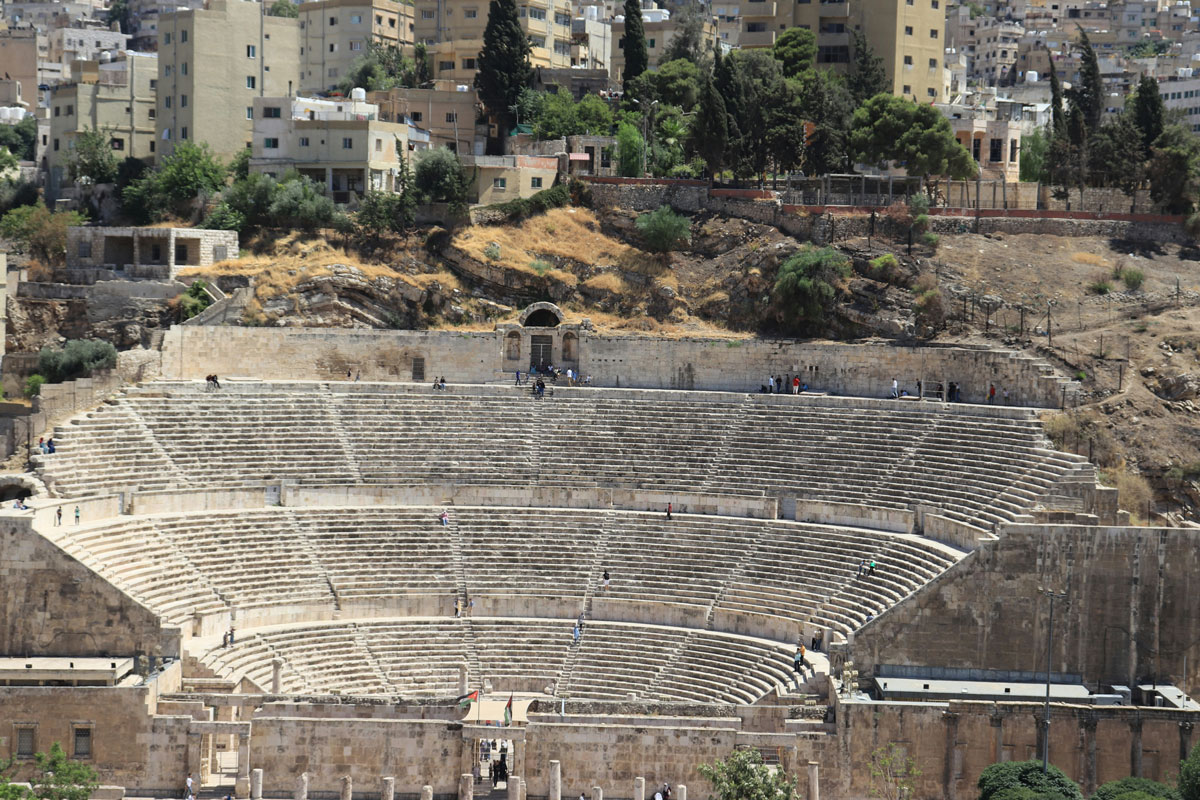
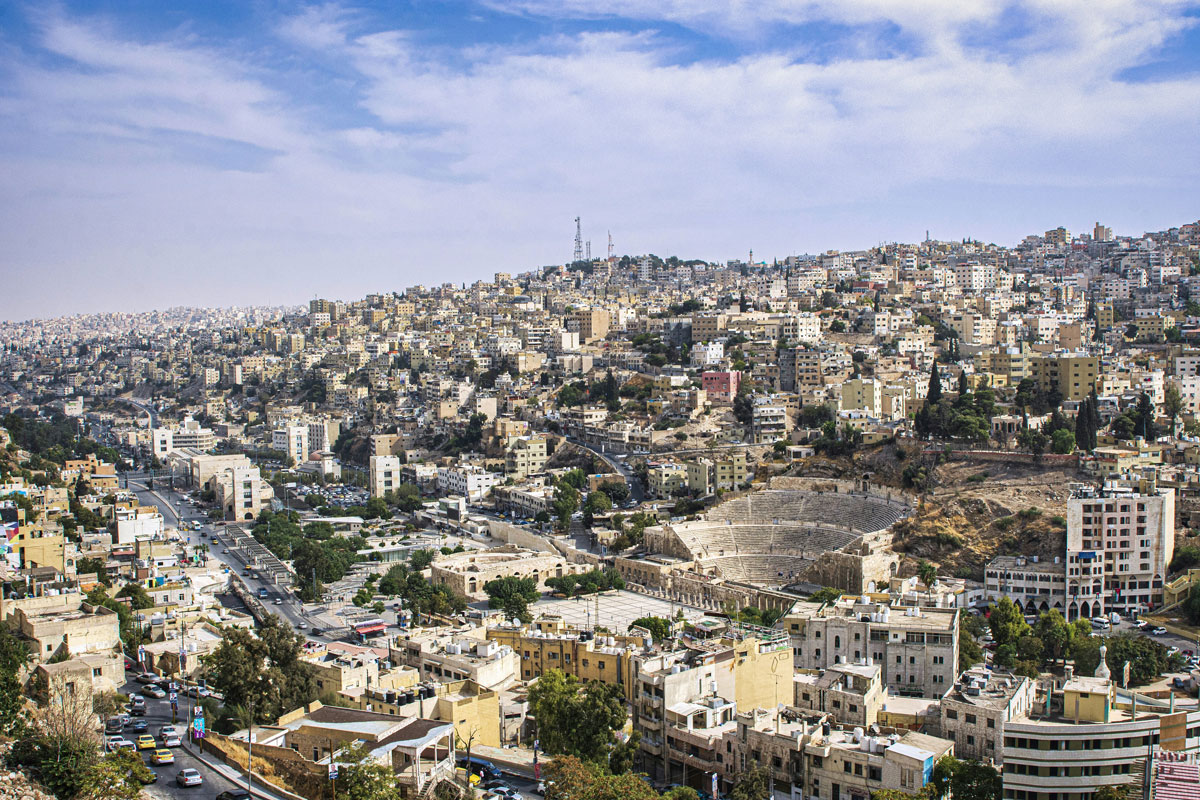
The rock-cut design also distinguishes Petra Theatre from structures such as the Roman Theatre in Amman, where the architectural setting and construction approach are different.
For modern visitors, the surviving rows of seats provide an immediate sense of the monument's scale. Viewed from the main path, the auditorium rises against the cliffs, with the natural sandstone forming both its structural foundation and dramatic backdrop.
The Petra Theatre is located within Petra Archaeological Park, at the foot of the mountain associated with the High Place of Sacrifice. It stands along the Main Trail, making it one of the major monuments visitors encounter while exploring the ancient city.
Travelers entering Petra through the main Visitor Center in Wadi Musa follow the route through Bab al-Siq and the Siq, the narrow sandstone gorge leading to the famous Treasury, Al-Khazneh.
After leaving the Treasury, the path continues through the Outer Siq and past the Street of Facades, where numerous ancient tombs are carved into the cliffs. The theatre appears further along this route, before the main path continues toward the Colonnaded Street and the central archaeological area.
The official Petra Main Trail extends approximately 3.9 kilometers one way, ending near Qasr al-Bint. The tourism authority classifies it as an easy route and estimates around 1 hour and 30 minutes to 1 hour and 45 minutes of walking without extended sightseeing stops. The theatre is encountered before the end of this trail.
Travelers should allow approximately 10–20 minutes to appreciate the theatre itself, although photography and detailed historical explanations may require additional time.
The monument is readily visible from the established walking route, so visitors do not need to complete a difficult mountain hike to see it. However, walking through Petra involves uneven surfaces, extended distances, and limited shade in certain areas.
Visitors with reduced mobility should consider transportation arrangements and accessibility information in advance. The theatre's historic seating and elevated areas are not equivalent to modern accessible viewing platforms.
For travelers planning a wider itinerary, the monument can easily be incorporated into a guided Petra experience. Exploring available Jordan trips may help organize Petra sightseeing alongside destinations such as Wadi Rum, Jerash, and the Dead Sea.
The Petra Theatre does not require a separate entrance ticket. It is located within the main Petra Archaeological Park, and visitors can view it as part of their regular archaeological site admission.
Ticket prices depend on the visitor's eligibility, nationality or residency status, and the number of days spent exploring Petra.
As of October 2026, the official admission prices for eligible international visitors staying overnight in Jordan are:
| Ticket Type | Entrance Fee |
|---|---|
| One-day Petra ticket | 50 JOD |
| Two-day Petra ticket | 55 JOD |
| Three-day Petra ticket | 60 JOD |
| One-day ticket for non-accommodated visitors in Jordan | 90 JOD |
| Children under 12 | Free daytime admission |
Travelers should bring a valid passport when purchasing or validating admission tickets. Multi-day tickets are intended for consecutive days.
Visitors can also consider the Jordan Pass, which includes daytime admission to Petra and other participating attractions. The Jordan Wanderer package currently costs 70 JOD and includes one day at Petra, while higher-tier packages cover two or three consecutive days. Eligibility conditions apply to any associated visa-fee waiver.
Petra Theatre Opening Hours
The theatre follows the applicable opening schedule of Petra Archaeological Park rather than operating as a separate attraction.
The official seasonal schedule lists the following hours:
| Season | Petra Archaeological Park Hours |
|---|---|
| March 2–October 1, 2026 | 6:00 AM–6:00 PM |
| October 2, 2026–March 1, 2027 | 6:30 AM–5:00 PM |
These hours may change because of weather conditions, conservation work, or operational decisions.
Can You Enter Petra Theatre?
The auditorium can be viewed from the established visitor route, but access to individual seating levels, staircases, or the stage may be restricted for conservation and safety reasons.
The Petra authority prohibits unauthorized climbing and entry into closed areas. Visitors should therefore follow marked pathways and not attempt to climb the ancient seating or enter restricted structures, even when they appear physically accessible.
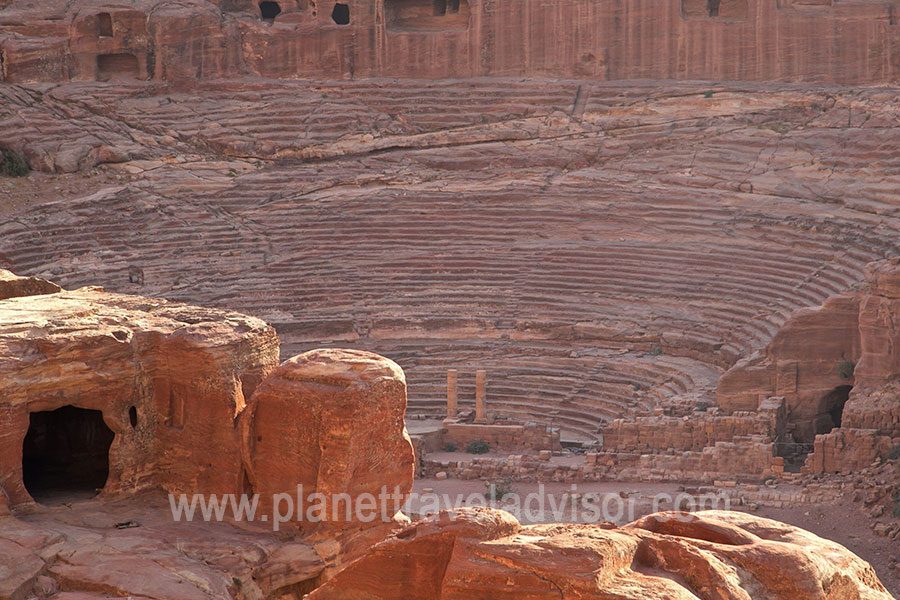
The Petra Theatre provides excellent opportunities for architectural photography because its curved sandstone seating contrasts with the cliffs surrounding it.
One of the most effective compositions is a wide photograph from the established Main Trail viewing area. This perspective allows the rows of seats, central orchestra, and surrounding rock face to appear together, emphasizing the theatre's scale and unusual construction.
Photographers interested in architectural details can focus on the repeating horizontal seating lines, surviving stage remains, and openings associated with older tombs above the auditorium.
Lighting conditions change throughout the day. The theatre faces approximately east, so morning light and shifting shadows can reveal different textures across the sandstone. Later light may emphasize the warm colors of the surrounding cliffs, depending on the season and viewing position.
For travelers using a smartphone, a wide-angle setting can help capture the entire auditorium. A moderate zoom is useful for photographing the carved seating without approaching fragile or restricted areas.
Including a small number of visitors along the permitted pathway can also provide a sense of scale, although photographs should respect other people's privacy.
Because the sandstone is vulnerable to erosion, photographs should always be taken from authorized viewing locations. Climbing on the monument for a higher viewpoint is neither necessary nor appropriate.
For the best overall experience, allow time to examine the theatre from more than one safe viewpoint before continuing along Petra's Main Trail.
The Petra Theatre is an important reminder that Petra was more than a city of monumental tombs. Its rock-cut auditorium, Nabataean origins, and later Roman modifications reveal the architectural creativity and changing public life of the ancient city.
Located conveniently along the Main Trail, the theatre deserves a stop during any Petra visit. Taking time to examine its curved seating and surviving architectural details adds valuable context to the surrounding archaeological landscape.
Travelers interested in combining Petra's historical attractions with other significant sites in Jordan can explore Jordan tours to build a broader cultural itinerary.



A curated list of the most popular travel packages based on different destinations.
Explore Siq Petra, its Nabataean water system, ancient carvings, Treasury walk, history, opening hours, tickets, photography tips, and visitor advice.
Plan your trip with this Amman travel guide covering top sights, food, neighborhoods, transport, day trips, where to stay, and practical visitor tips.
Explore Amman Citadel with practical tips on history, top sights, tickets, opening hours, Jordan Pass access, timing, transport, and nearby attractions.
Plan your Amman Roman Theatre visit with current ticket prices, opening hours, Jordan Pass details, history, nearby sights, and practical travel tips.
Explore the best souqs in Amman, from Al-Balad and the Gold Souq to Souq Jara, with shopping tips, souvenirs, timing, and nearby sights.
Explore the Jordan Archaeological Museum in Amman, including top artifacts, tickets, Jordan Pass, opening hours, Citadel tips, and visitor advice.
Plan your visit to the Baptism Site in Jordan with its biblical history, archaeology, tickets, opening hours, Jordan Pass details, and nearby stops.
Plan your Dead Sea Jordan visit with tips on floating, beaches, resorts, transport, best times, safety, nearby attractions, and how long to stay.
Explore Downtown Amman with tips on the Roman Theatre, souks, local food, walking routes, the Citadel, safety, transport, and the best time to visit.
Plan your visit to Hadrian’s Arch Jerash with its history, architecture, tickets, opening hours, Jordan Pass details, nearby sites, and travel tips.
Plan your first visit to Jerash Jordan with the best ruins to see, walking route, tickets, Jordan Pass details, opening hours, timing, and travel tips.
Explore the Jordan River's biblical history, where Jesus was baptized, how to visit from Amman, and the best nearby places to include on your Jordan trip.
We go beyond just booking trips—we create unforgettable travel experiences that match your dreams!



We loved how easy and enjoyable this entire experience was. We booked the "7 Days Istanbul Cappadocia Pamukkale Ephesus Tour" package and were impressed by how professionally everything was arranged. The itinerary gave us enough time to enjoy Istanbul, Cappadocia, Ephesus, and Pamukkale without feeling rushed, and all transfers and day tours ran on time. The communication before arrival was clear and helpful, which made planning much easier. What we appreciated most was the balance between guided sightseeing and free time, so the whole trip felt comfortable and enjoyable. If you are looking for a reliable way to explore Turkey, this is a great option. We came home with amazing memories and would book again.
A beautifully organized journey from start to finish. We booked the "14 Days Exploring the Panorama of Vietnam" package and were impressed by how professionally everything was arranged. The itinerary gave us enough time to enjoy Vietnam without feeling rushed, and all transfers and day tours ran on time. The communication before arrival was clear and helpful, which made planning much easier. What we appreciated most was the balance between guided sightseeing and free time, so the whole trip felt comfortable and enjoyable. If you are looking for a reliable way to explore Vietnam, this is a great option. The itinerary was well balanced and never felt rushed.
A beautifully organized journey from start to finish. We booked the "8 Day Tour of Istanbul Cappadocia and Ephesus" package and were impressed by how professionally everything was arranged. The itinerary gave us enough time to enjoy Istanbul, Cappadocia, and Ephesus without feeling rushed, and all transfers and day tours ran on time. The communication before arrival was clear and helpful, which made planning much easier. What we appreciated most was the balance between guided sightseeing and free time, so the whole trip felt comfortable and enjoyable. If you are looking for a reliable way to explore Turkey, this is a great option. The itinerary was well balanced and never felt rushed.
This trip exceeded all our expectations. We booked the "Discover Vietnam on a 21 Day Journey" package and were impressed by how professionally everything was arranged. The itinerary gave us enough time to enjoy Vietnam without feeling rushed, and all transfers and day tours ran on time. The communication before arrival was clear and helpful, which made planning much easier. What we appreciated most was the balance between guided sightseeing and free time, so the whole trip felt comfortable and enjoyable. If you are looking for a reliable way to explore Vietnam, this is a great option. We would absolutely recommend it to anyone visiting this destination.
We loved how easy and enjoyable this entire experience was. We booked the "8 Days Gallipoli, Pergamum, Pamukkale, Ephesus & Cappadocia Tour" package and were impressed by how professionally everything was arranged. The itinerary gave us enough time to enjoy Cappadocia, Ephesus, Pamukkale, Gallipoli, and Pergamum without feeling rushed, and all transfers and day tours ran on time. The communication before arrival was clear and helpful, which made planning much easier. What we appreciated most was the balance between guided sightseeing and free time, so the whole trip felt comfortable and enjoyable. If you are looking for a reliable way to explore Turkey, this is a great option. We came home with amazing memories and would book again.











Comments (02)
Mr. Bowmik Haldar,
05 June, 2024Outstanding News & Insight! Thank you so much for sharing like this article
Jacoline Juie,
05 June, 2023However, here are some well-regarded car dealerships known for their customer service, inventory, and overall reputation. It's always a good idea to research and read reviews specific...
Leave Your Comment: