 Visit Turkey
 Visit Vietnam
 Visit Cambodia
 Visit Dubai
 Visit Jordan


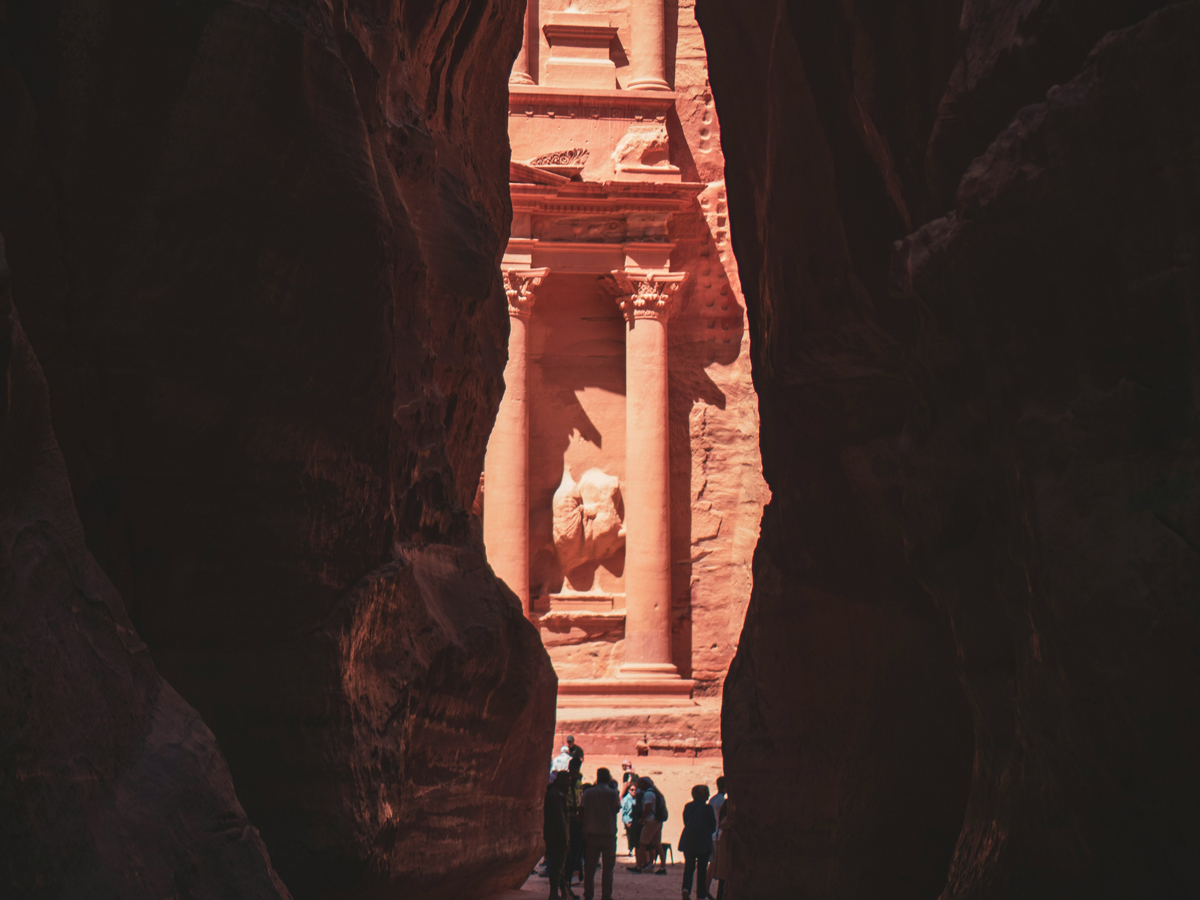
Siq Petra Guide for First-Time Visitors
Explore Siq Petra, its Nabataean water system, ancient carvings, Treasury walk, history, opening hours, tickets, photography tips, and visitor advice.



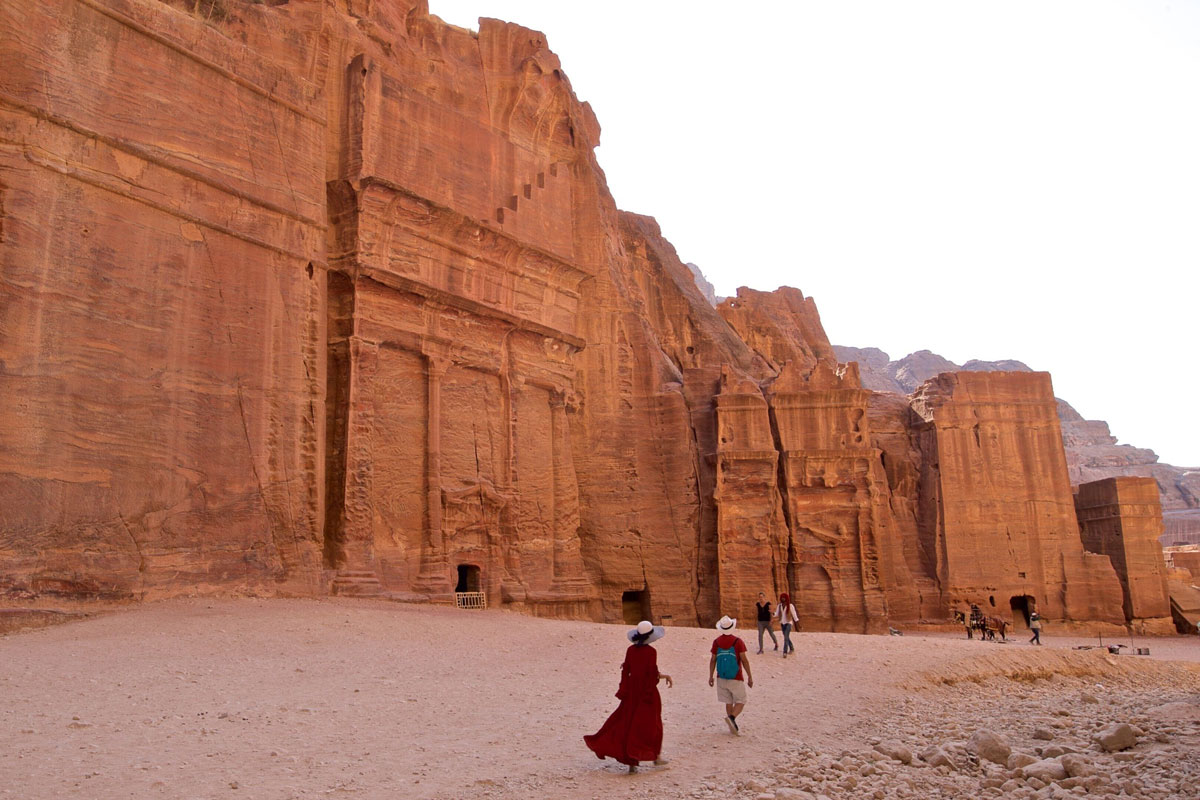
Just beyond Petra's famous Treasury, the sandstone cliffs begin to reveal another remarkable part of the ancient city. Rows of carved entrances, decorative stonework, and imposing burial chambers form the Street of Facades in Petra, one of the most distinctive examples of Nabataean funerary architecture.
Unlike the elaborate Treasury, these tombs have simpler designs, yet their arrangement tells an equally interesting story. They reveal how the Nabataeans honored their dead, developed their architectural traditions, and transformed natural cliffs into monumental structures.
For travelers exploring Petra in Jordan, the Street of Facades is more than another stop along the walking route. Understanding its history, notable tombs, and architectural details makes it easier to appreciate what has survived for nearly two thousand years.
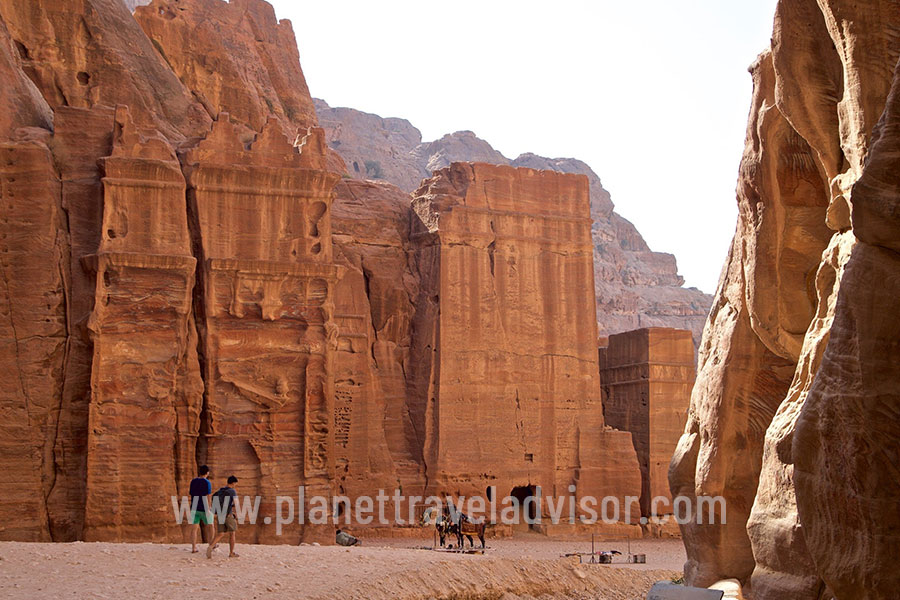
The Street of Facades is an ancient burial area within Petra Archaeological Park in southern Jordan. It consists of numerous rock-cut tombs arranged in rows along the sandstone cliffs of the Outer Siq, between the Treasury and Petra's Theatre.
The tombs were carved directly into the rock rather than constructed from individual stone blocks. Many feature rectangular entrances, flat surfaces, and distinctive stepped decorations above their façades.
The different openings and varying heights create the appearance of a street lined with buildings. However, this was primarily a funerary area rather than an ordinary residential neighborhood or commercial street.
The Street of Facades is part of the larger archaeological landscape of Petra, a UNESCO World Heritage Site recognized for its extraordinary combination of rock-cut architecture, ancient engineering, and cultural influences.
Although visitors often focus on the Treasury, the Street of Facades provides a closer look at the simpler architectural traditions that were also central to Nabataean society.
.
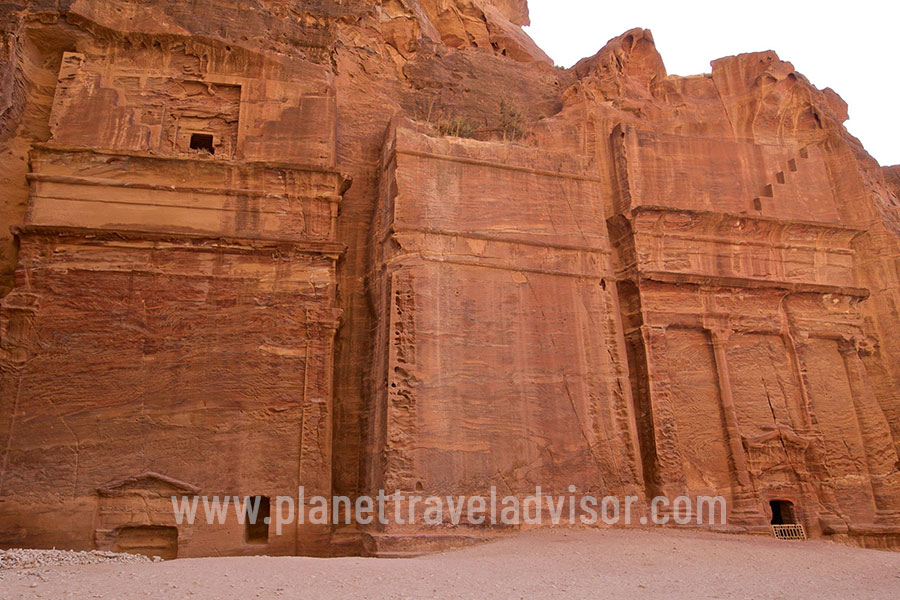
The Street of Facades dates to the period when Petra was an important center of the Nabataean Kingdom. The Petra Tourism Development Region Authority broadly dates this group of tombs to approximately 50 BC–AD 50, although individual monuments are not all precisely dated.
The Nabataeans were an ancient Arabian people who established a prosperous kingdom with Petra as their capital. Their position along major trading routes connected them with communities across Arabia, Egypt, Syria, and the Mediterranean world.
Trade contributed to the city's prosperity and exposed its inhabitants to different artistic and architectural traditions. These influences can still be seen in Petra's temples, tombs, and other surviving monuments.
Burial architecture was particularly important in Nabataean society. Rock-cut tombs provided places for the dead while also creating lasting monuments associated with families and social identity.
The Street of Facades reflects this tradition through its numerous burial chambers and carved entrances.
Not every tomb can be connected to a known individual or family. Archaeologists have limited inscriptions and securely datable objects from many of Petra's tombs, making their original ownership and precise chronology difficult to establish.
Nevertheless, their design provides valuable evidence of how Nabataean funerary architecture developed during the kingdom's most prosperous centuries.
The name comes from the appearance of the tombs, which form ascending rows across the sandstone cliff face.
The individual façades resemble the fronts of buildings standing beside one another. Their rectangular entrances and repeated decorative features create a remarkably consistent appearance, even though the monuments were carved at different heights.
One distinctive element is the crow-stepped design found above several tomb entrances. These stepped outlines resemble architectural forms known from ancient Near Eastern traditions.
Despite the name, the Street of Facades should not be confused with Petra's Colonnaded Street, which served a different function within the ancient city.
The Street of Facades is associated primarily with burial monuments, while the Colonnaded Street was an important urban thoroughfare with surrounding civic and commercial structures.
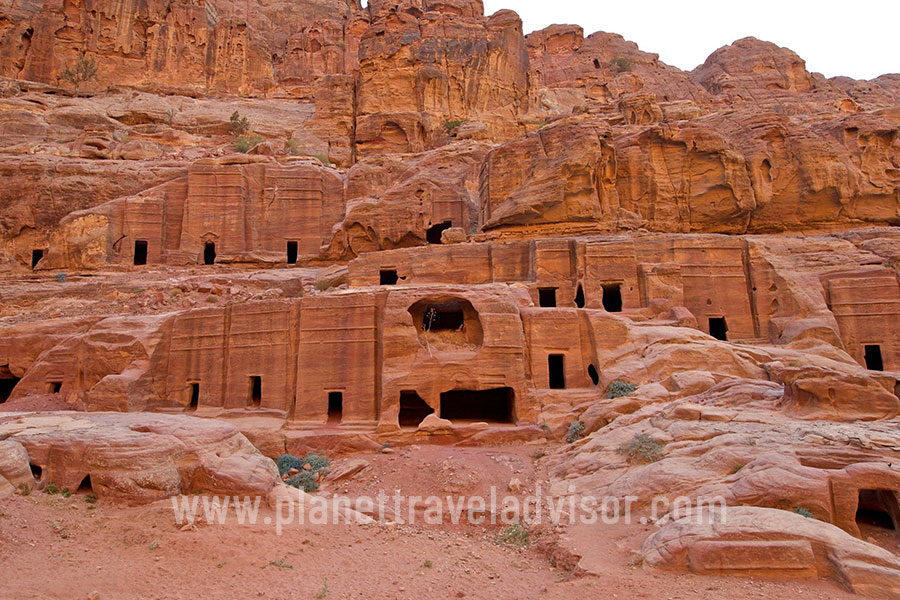
Although many tombs along the Street of Facades have similar appearances, several stand out because of their size, unusual construction, or surviving funerary features.
Three particularly interesting examples are Tombs 67, 70, and 825, all described in Petra's official archaeological visitor information.
Tomb 67 is notable for its unusual upper burial chamber, which distinguishes it from many of the surrounding rock-cut tombs.
According to a local Bedouin story recorded in Petra's official visitor guide, the chamber was once associated with a thief who sought refuge there. This tradition explains its nickname, the "Thief Tomb," although the story should not be treated as evidence of the tomb's original purpose.
The monument illustrates how Nabataean builders adapted burial spaces to the natural shape of the sandstone.
When viewing Tomb 67, pay particular attention to its elevated chamber and its relationship with the neighboring tombs.
Tomb 70 is one of the most prominent monuments in the Outer Siq area. Rising more than 15 meters, it was carved on three sides and features distinctive stepped decorative elements.
Its tall, tower-like form makes it noticeably different from the smaller rectangular tomb entrances nearby.
The monument's prominent position and scale suggest that it held particular importance, although the identity of its original occupants remains uncertain.
Its architectural features also demonstrate how the Nabataeans could transform an exposed rock formation into a monumental structure.
For visitors interested in the details of Petra's rock-cut tombs, Tomb 70 is among the most rewarding examples to examine from the designated viewing areas.
Located opposite Tomb 70, Tomb 825 provides particularly useful evidence of Nabataean burial practices.
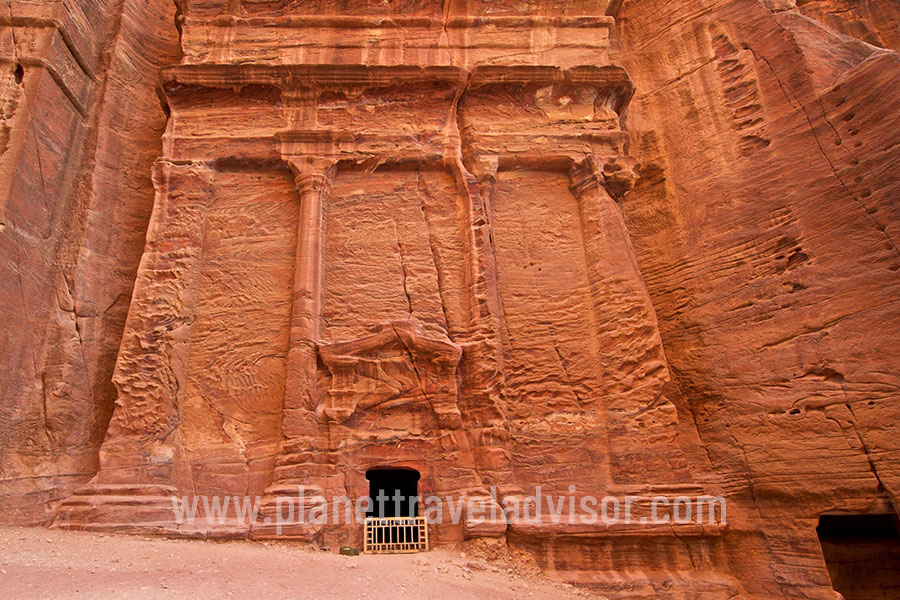
Its façade includes half-crow-step decoration and an Egyptian-style cavetto, a curved architectural feature commonly found near the tops of certain ancient monuments.
Inside, archaeologists have identified seventeen graves and a vaulted recess.
The monument also contains funerary inscriptions preserving Nabataean personal names, making it especially valuable for understanding the people connected with Petra's burial traditions.
Unlike many monuments whose original owners remain unidentified, inscriptions associated with Tomb 825 offer more direct evidence of the individuals commemorated in this part of the ancient city.
Together, these three tombs show that the Street of Facades was not simply a collection of identical entrances. Its monuments varied in construction, decoration, and burial arrangements.
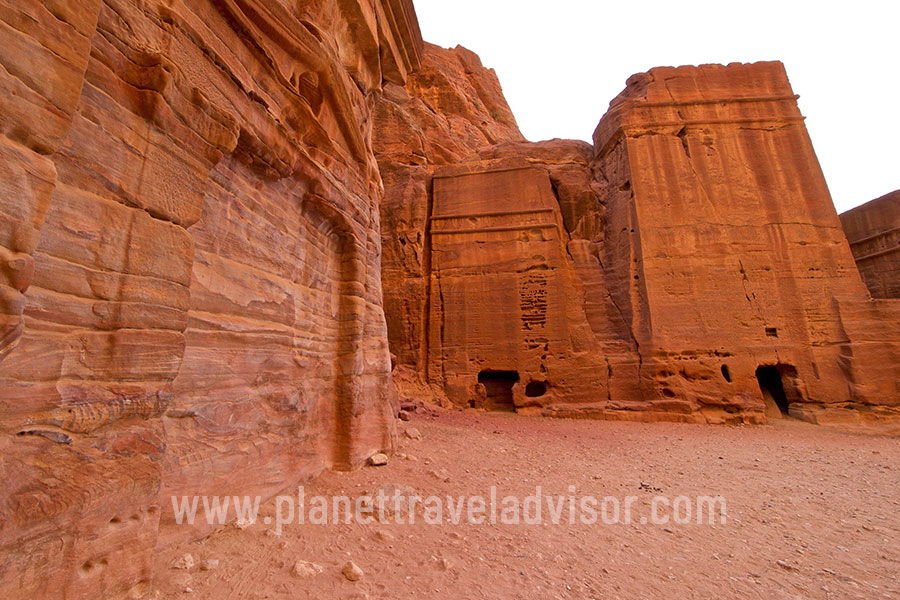
The architecture of the Street of Facades is characterized by simplicity, repetition, and the careful adaptation of natural sandstone cliffs.
Many tombs feature vertical rectangular façades, relatively modest openings, and stepped decorative elements. These features distinguish them from the more elaborate classical architecture found elsewhere in Petra.
The crow-stepped decoration is particularly significant. Scholars have associated this architectural form with ancient Near Eastern traditions, including designs found in Assyrian and Mesopotamian architecture.
Other elements reflect wider cultural influences, including Egyptian and Hellenistic traditions.
This mixture of styles is an important feature of Nabataean architecture. Rather than copying a single architectural tradition, the builders developed distinctive combinations suited to their own cultural and religious practices.
The construction process also required considerable skill. Craftsmen worked directly into existing sandstone formations, shaping entrances, exterior walls, and interior chambers from the natural rock.
Because the structures were carved rather than assembled, their proportions depended partly on the size and condition of the surrounding cliffs.
Today, weathering has softened many carved details. Even so, the remaining façades reveal the precision and planning behind these ancient monuments.
The Street of Facades is located inside Petra Archaeological Park, near Wadi Musa in southern Jordan.
It lies within the Outer Siq area, shortly after the Treasury when following Petra's main sightseeing route toward the ancient city center.
Visitors approaching from the main entrance will generally follow this sequence:
Petra Visitor Center → The Siq → The Treasury → Street of Facades → Petra Theatre
After emerging from the Siq and reaching the Treasury, continue along the established route into the wider valley.
As the path opens beyond the Treasury, groups of rock-cut tombs become visible across the surrounding cliffs.
Their repeated entrances and stepped architectural details help identify the Street of Facades.
You do not need to complete a separate mountain hike to see the main façades. They are visible along Petra's established Main Trail, making this attraction accessible to many visitors already exploring the archaeological park on foot.
The most straightforward way to visit the Street of Facades is by following Petra's Main Trail from the Visitor Center.
The official Main Trail covers approximately 3.9 kilometers one way to Qasr al-Bint, passing the Siq, Treasury, Street of Facades, Theatre, and other major monuments.
The Street of Facades is reached before the end of this route, so travelers can see it without walking the entire trail.
A useful approach is to allow extra time after visiting the Treasury. Continue toward the Theatre and pause where the rock-cut tombs are clearly visible.
Spend some time examining the differences between their entrances, elevations, and decorative elements rather than treating the entire area as a single landmark.
Entrance fees: The Street of Facades is included in standard daytime admission to Petra Archaeological Park. According to the official Petra fee schedule, a one-day ticket for an accommodated international visitor costs 50 Jordanian dinars, while two-day and three-day tickets cost 55 and 60 dinars respectively. Different visitor categories have different rates.
Opening hours: For the official winter season from October 2, 2026, to March 1, 2027, Petra Archaeological Park is scheduled to open from 6:30 AM to 5:00 PM. Hours change seasonally.
A licensed guide can also explain the historical meaning of individual tombs, point out architectural details, and help distinguish the different parts of the ancient city.
For visitors planning a wider itinerary, organized travel packages to Jordan can help combine Petra with other important destinations while simplifying transportation and sightseeing arrangements.
Spring and autumn are generally the most comfortable seasons to explore Petra, with milder temperatures than the hottest summer months.
March through May and September through November are particularly suitable for travelers planning longer walks through the archaeological park.
During summer, high temperatures can make the exposed sections of Petra's trails more demanding. Early starts, adequate drinking water, and regular rest breaks become especially important.
Winter can offer pleasant walking conditions on clear days, but colder weather and occasional rain require additional preparation.
Heavy rainfall is a particular concern because Petra's narrow valleys and surrounding drainage channels can experience dangerous flash flooding. Visitors should follow official weather warnings and any park restrictions.
For photography, morning and late-afternoon light can reveal different textures in the sandstone. However, direct sunlight and shadows change with the season and the orientation of individual tombs.
Rather than planning around a guaranteed lighting angle, allow enough time to examine the façades from several permitted positions.
Allow approximately 20–30 minutes to appreciate the Street of Facades during a general Petra visit.
This is a suggested sightseeing duration rather than an official recommended time.
Travelers mainly interested in photography may need less time, while visitors who enjoy history or archaeological details may prefer a longer stop.
Remember that this estimate covers time spent observing the Street of Facades itself. It does not include walking from the Petra Visitor Center, exploring the Treasury, or continuing toward the city center.
Those activities require substantially more time.
If Petra is your main reason for visiting Jordan, allowing at least a full day for the archaeological park will provide a more relaxed experience than rushing between its major landmarks.
The Street of Facades is conveniently located near several of Petra's best-known archaeological monuments.
The Treasury (Al-Khazneh)
The Treasury is one of Petra's most recognizable monuments and stands near the point where the Siq opens into the ancient city.
Its elaborate façade provides an interesting contrast with the simpler tomb designs of the Street of Facades.
Comparing the two helps visitors understand the range of architectural styles used by the Nabataeans.
Petra Theatre
Continuing along the Main Trail brings visitors toward Petra's ancient Theatre, a large performance structure carved partly into the natural sandstone.
Its seating and surrounding rock formations illustrate how the Nabataeans incorporated public architecture into Petra's mountainous landscape.
The Theatre also provides a useful geographical reference for understanding the position of the Street of Facades.
The Royal Tombs
The Royal Tombs are another important group of monumental rock-cut structures, including the Urn Tomb, Silk Tomb, Corinthian Tomb, and Palace Tomb.
These tombs are generally more elaborate and imposing than those along the Street of Facades.
Their scale and decorative features demonstrate the variety of architectural approaches used across Petra.
Although the name suggests royal burials, the identities of many original occupants are not securely established.
Visiting these monuments alongside the Street of Facades offers a broader understanding of Petra's funerary architecture.
The Street of Facades is relatively straightforward to include in a Petra itinerary, but a few practical decisions can improve the visit.
Wear sturdy walking shoes. Petra's trails include sand, stone, and uneven surfaces, even along the main sightseeing route.
Carry enough water. Much of the archaeological park is exposed to the sun, particularly during warmer months.
Use a wide-angle lens. This makes it easier to capture multiple tombs and their position within the sandstone cliffs.
Look beyond the largest monuments. Smaller entrances and decorative details are important parts of the archaeological story.
Stay on designated routes. Climbing monuments or entering restricted areas can damage fragile archaeological remains and create safety risks.
Follow local guidance. Respect signs, park staff instructions, and any temporary closures.
Photographs often work best when they show more than a single tomb entrance. Including the surrounding cliff face helps communicate the unusual arrangement that gives the Street of Facades its name.
For a closer view, concentrate on architectural details that can be photographed safely from approved areas.
The stepped decorations, rectangular doorways, natural sandstone layers, and differences between individual façades all make worthwhile subjects.
The Street of Facades in Petra offers a valuable introduction to the burial traditions and architectural skills of the Nabataeans.
Its rows of carved entrances, unusual tomb designs, and surviving decorative details reveal a quieter but historically important side of the ancient city.
Taking time to observe Tombs 67, 70, and 825, while understanding their relationship to Petra's wider archaeological landscape, makes this part of the Main Trail much more meaningful.
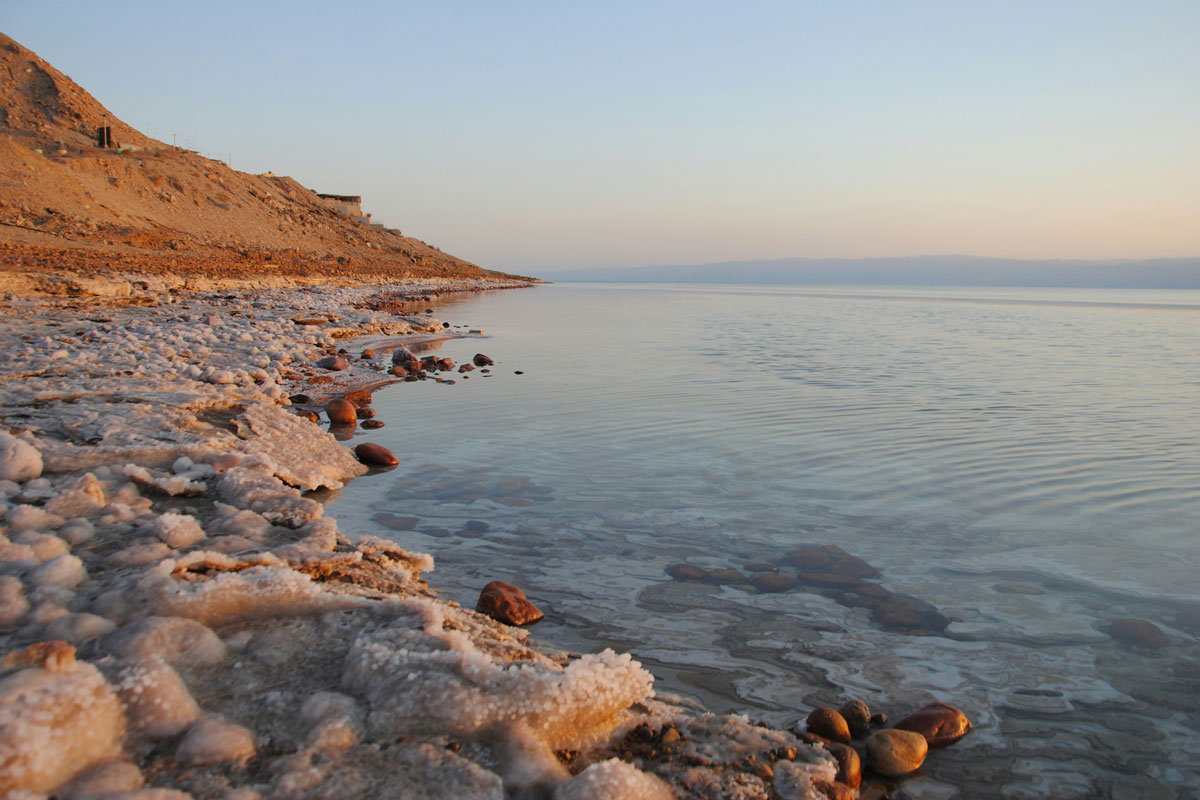
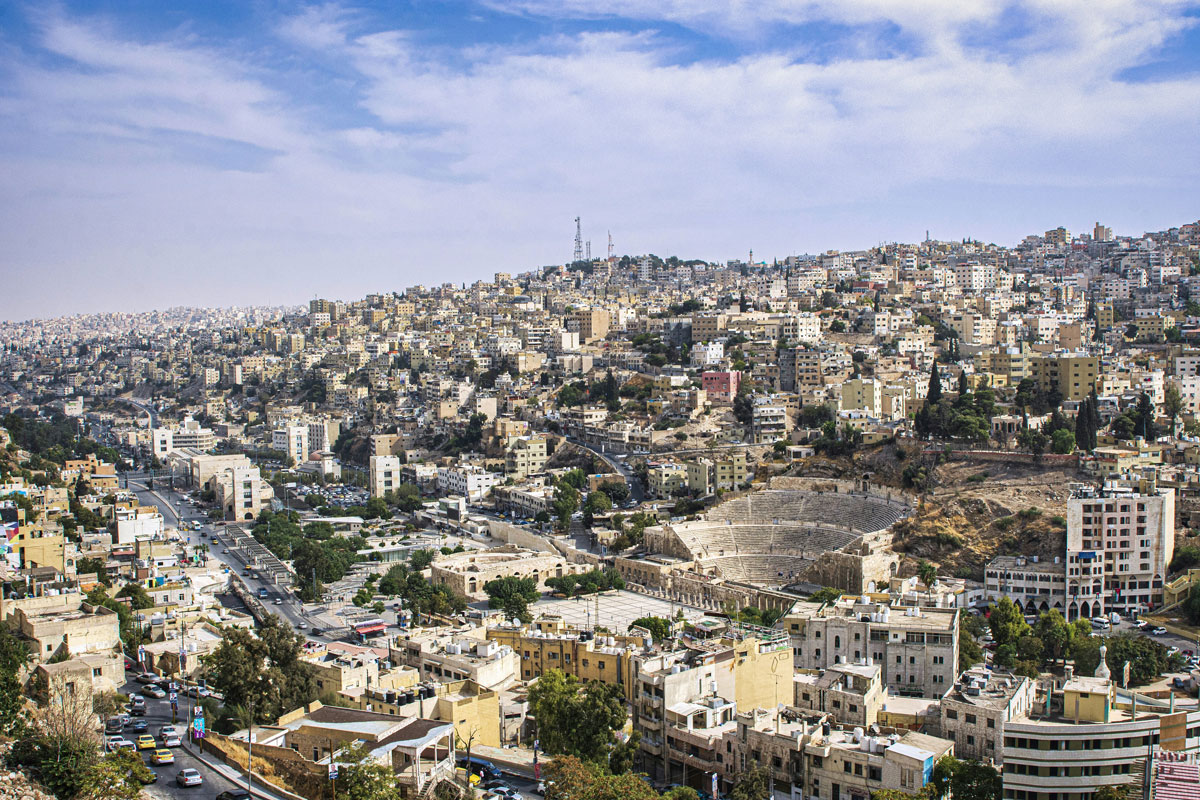
For travelers who want to explore Petra alongside Wadi Rum, Amman, or the Dead Sea, Jordan tours offer a practical starting point for organizing a wider journey through the country's history and landscapes.



A curated list of the most popular travel packages based on different destinations.
Explore Siq Petra, its Nabataean water system, ancient carvings, Treasury walk, history, opening hours, tickets, photography tips, and visitor advice.
Plan your trip with this Amman travel guide covering top sights, food, neighborhoods, transport, day trips, where to stay, and practical visitor tips.
Explore Amman Citadel with practical tips on history, top sights, tickets, opening hours, Jordan Pass access, timing, transport, and nearby attractions.
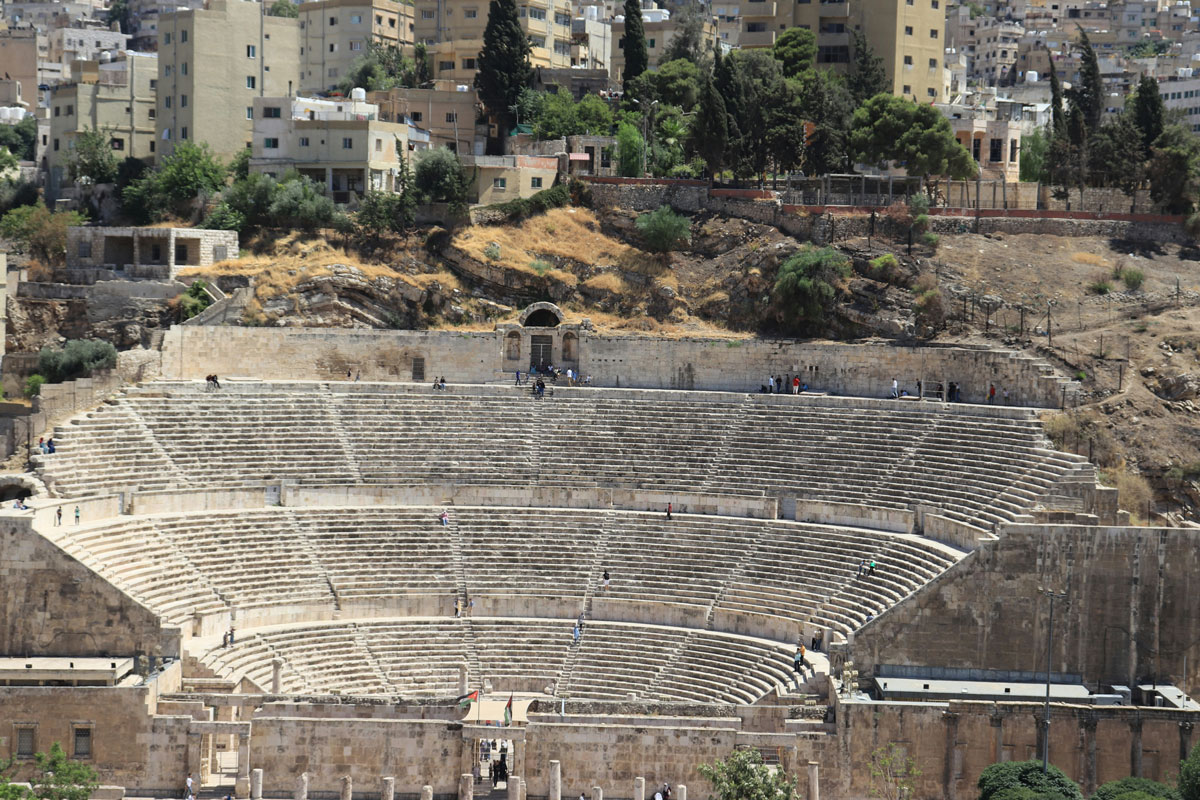
Plan your Amman Roman Theatre visit with current ticket prices, opening hours, Jordan Pass details, history, nearby sights, and practical travel tips.
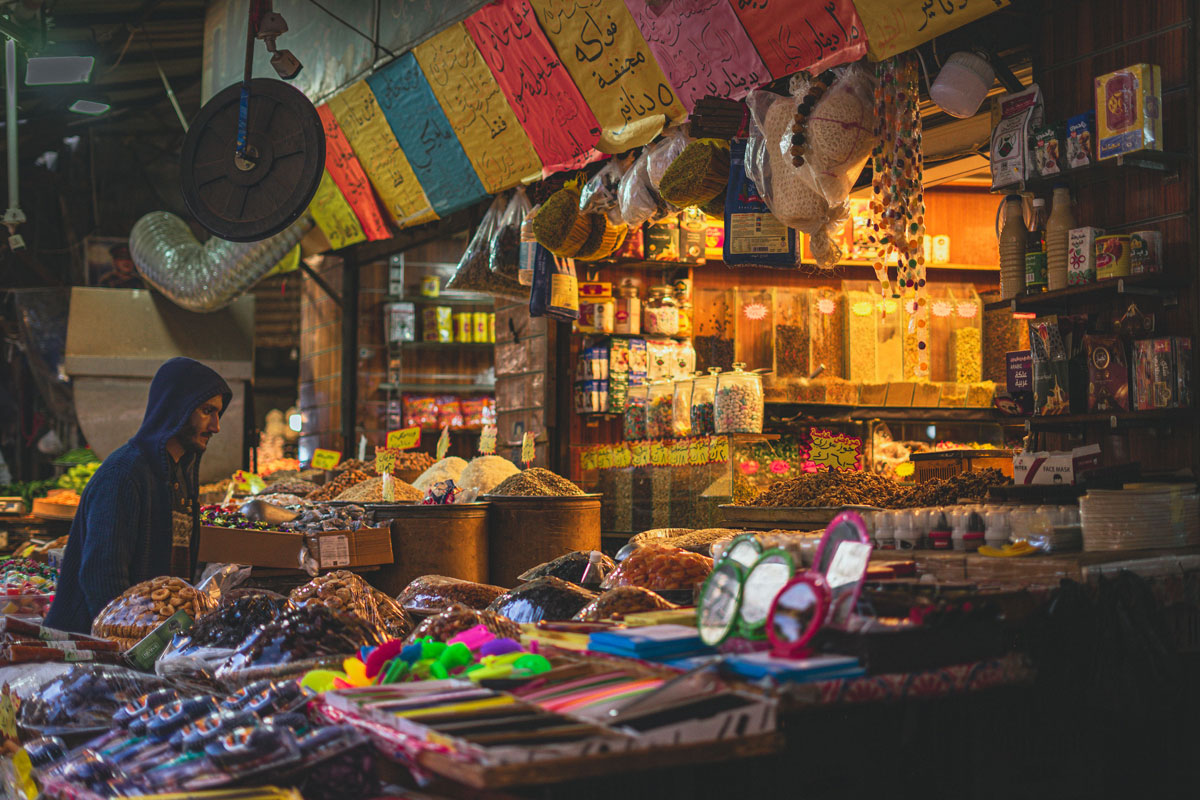
Explore the best souqs in Amman, from Al-Balad and the Gold Souq to Souq Jara, with shopping tips, souvenirs, timing, and nearby sights.
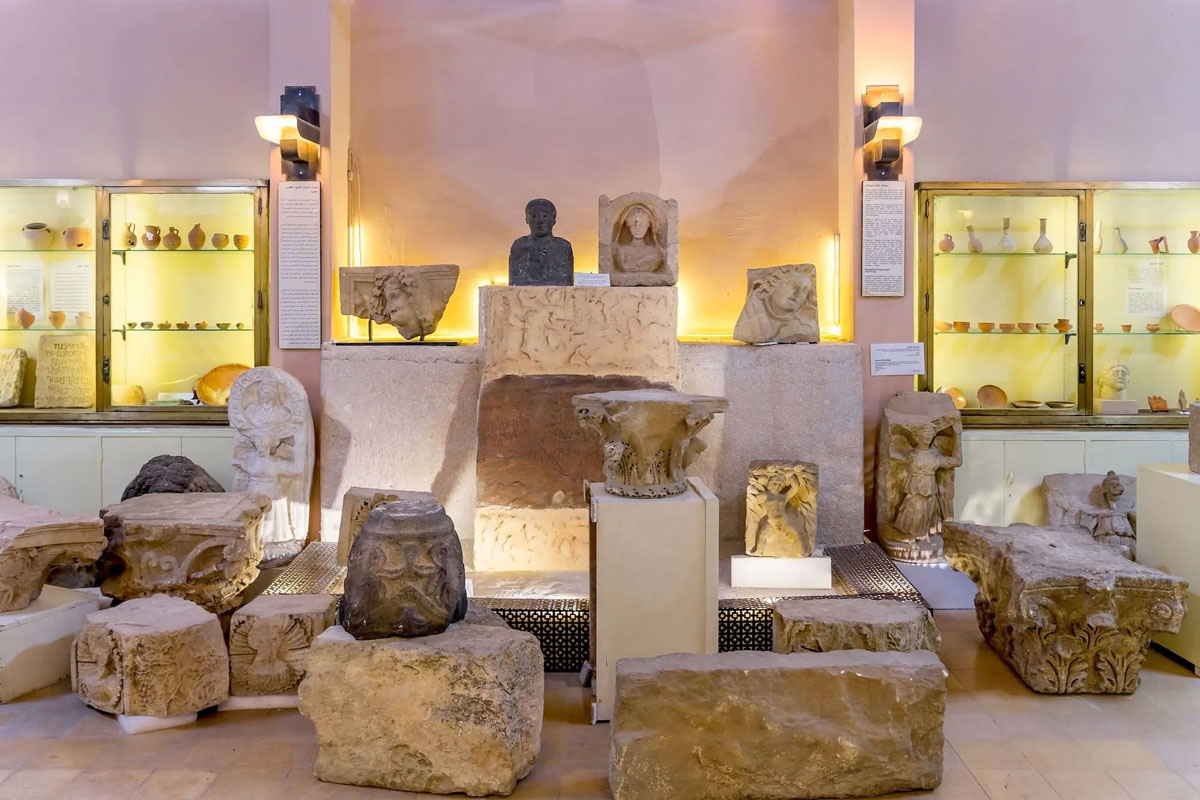
Explore the Jordan Archaeological Museum in Amman, including top artifacts, tickets, Jordan Pass, opening hours, Citadel tips, and visitor advice.
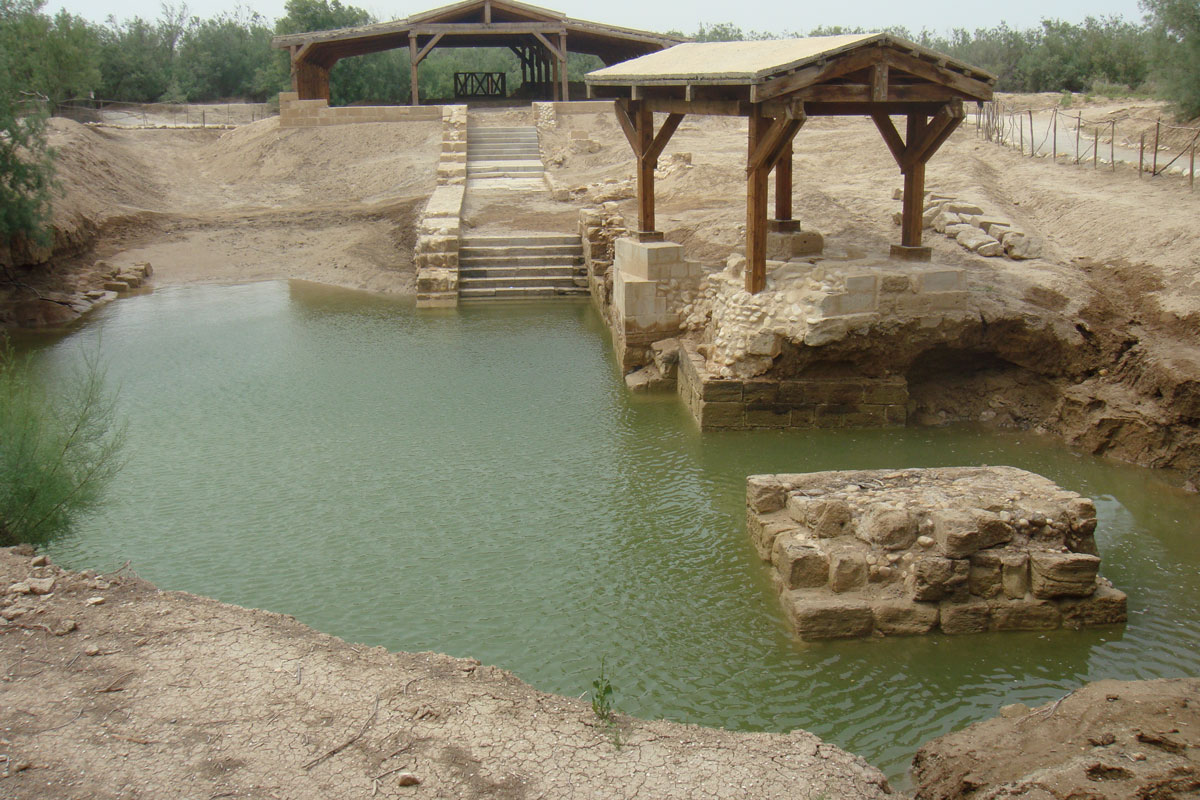
Plan your visit to the Baptism Site in Jordan with its biblical history, archaeology, tickets, opening hours, Jordan Pass details, and nearby stops.
Plan your Dead Sea Jordan visit with tips on floating, beaches, resorts, transport, best times, safety, nearby attractions, and how long to stay.
Explore Downtown Amman with tips on the Roman Theatre, souks, local food, walking routes, the Citadel, safety, transport, and the best time to visit.
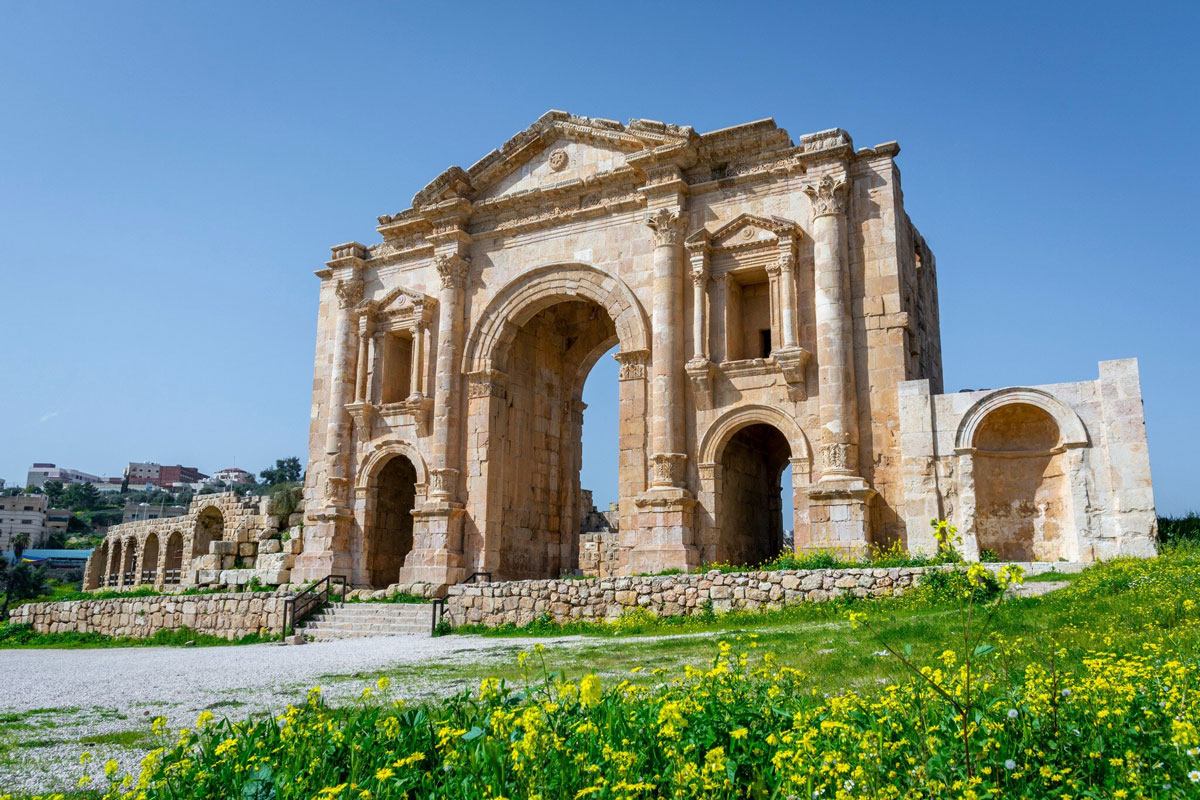
Plan your visit to Hadrian’s Arch Jerash with its history, architecture, tickets, opening hours, Jordan Pass details, nearby sites, and travel tips.
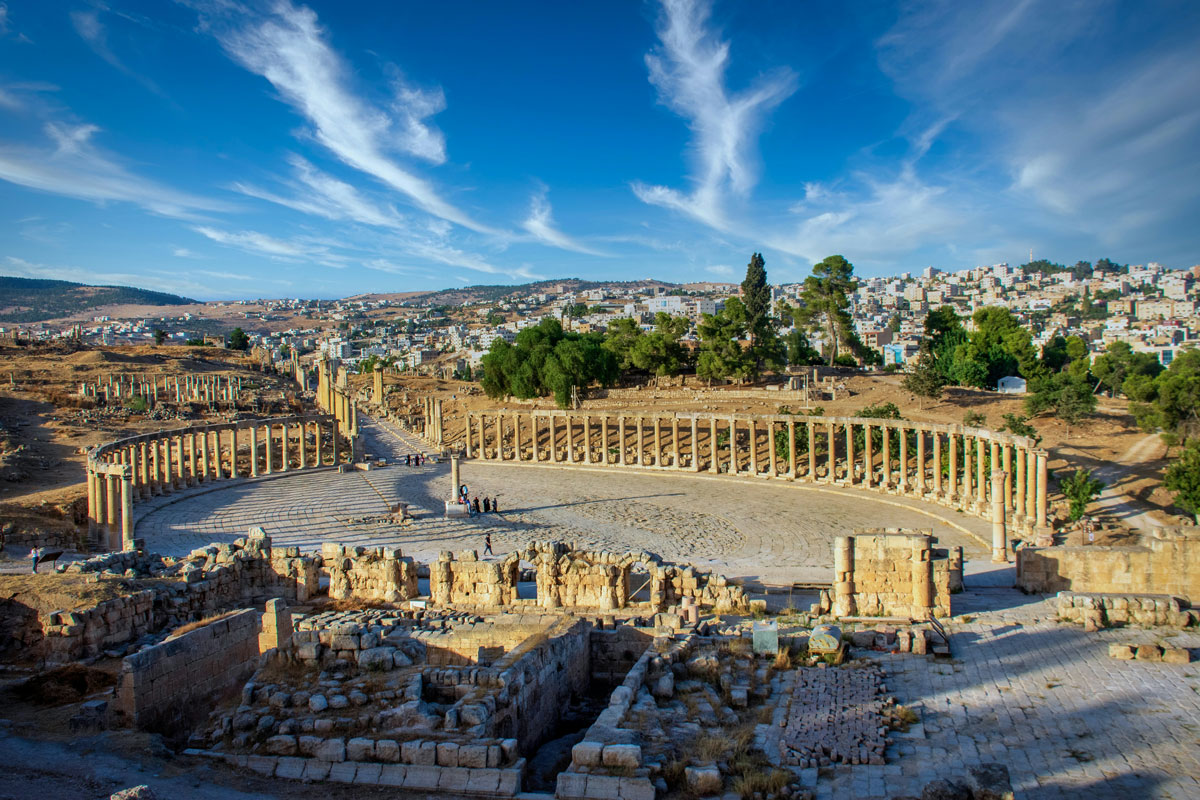
Plan your first visit to Jerash Jordan with the best ruins to see, walking route, tickets, Jordan Pass details, opening hours, timing, and travel tips.
Explore the Jordan River's biblical history, where Jesus was baptized, how to visit from Amman, and the best nearby places to include on your Jordan trip.
We go beyond just booking trips—we create unforgettable travel experiences that match your dreams!



This trip exceeded all our expectations. We booked the "5 Days Con Dao Island Beach Vacation" package and were impressed by how professionally everything was arranged. The itinerary gave us enough time to enjoy Con Dao without feeling rushed, and all transfers and day tours ran on time. The communication before arrival was clear and helpful, which made planning much easier. What we appreciated most was the balance between guided sightseeing and free time, so the whole trip felt comfortable and enjoyable. If you are looking for a reliable way to explore Vietnam, this is a great option. We would absolutely recommend it to anyone visiting this destination.
This trip exceeded all our expectations. We booked the "8 Days Real Taste of Vietnam Tour" package and were impressed by how professionally everything was arranged. The itinerary gave us enough time to enjoy Vietnam without feeling rushed, and all transfers and day tours ran on time. The communication before arrival was clear and helpful, which made planning much easier. What we appreciated most was the balance between guided sightseeing and free time, so the whole trip felt comfortable and enjoyable. If you are looking for a reliable way to explore Vietnam, this is a great option. We would absolutely recommend it to anyone visiting this destination.
We loved how easy and enjoyable this entire experience was. We booked the "8 Days Tour to Hill Tribe Heaven in North Vietnam" package and were impressed by how professionally everything was arranged. The itinerary gave us enough time to enjoy Vietnam without feeling rushed, and all transfers and day tours ran on time. The communication before arrival was clear and helpful, which made planning much easier. What we appreciated most was the balance between guided sightseeing and free time, so the whole trip felt comfortable and enjoyable. If you are looking for a reliable way to explore Vietnam, this is a great option. We came home with amazing memories and would book again.
One of the smoothest tours we have ever booked. We booked the "8 Days Nha Trang Beach Escape" package and were impressed by how professionally everything was arranged. The itinerary gave us enough time to enjoy Nha Trang without feeling rushed, and all transfers and day tours ran on time. The communication before arrival was clear and helpful, which made planning much easier. What we appreciated most was the balance between guided sightseeing and free time, so the whole trip felt comfortable and enjoyable. If you are looking for a reliable way to explore Vietnam, this is a great option. It was the perfect mix of sightseeing, comfort, and great logistics.
A beautifully organized journey from start to finish. We booked the "5 Days Trip through Istanbul, Gallipoli, and Troy" package and were impressed by how professionally everything was arranged. The itinerary gave us enough time to enjoy Istanbul, Gallipoli, and Troy without feeling rushed, and all transfers and day tours ran on time. The communication before arrival was clear and helpful, which made planning much easier. What we appreciated most was the balance between guided sightseeing and free time, so the whole trip felt comfortable and enjoyable. If you are looking for a reliable way to explore Turkey, this is a great option. The itinerary was well balanced and never felt rushed.











Comments (02)
Mr. Bowmik Haldar,
05 June, 2024Outstanding News & Insight! Thank you so much for sharing like this article
Jacoline Juie,
05 June, 2023However, here are some well-regarded car dealerships known for their customer service, inventory, and overall reputation. It's always a good idea to research and read reviews specific...
Leave Your Comment: